
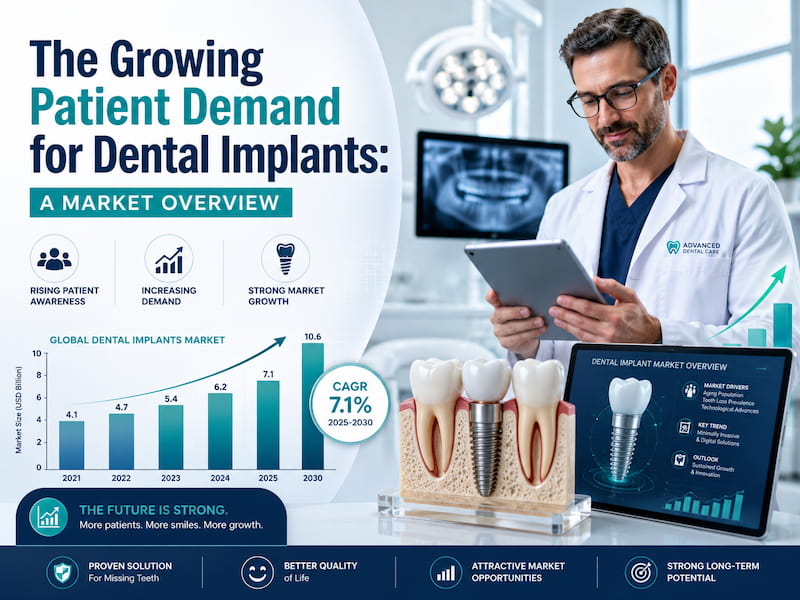
Patient demand for dental implants has transitioned from a niche, high-cost luxury to a mainstream requirement in modern restorative dentistry. According to global market analysis, the rise in demand is primarily driven by an aging global population, increased health literacy, and significant advancements in digital dentistry that have made procedures more predictable and less invasive. As patients increasingly seek permanent solutions to tooth loss rather than traditional removable appliances, dental practices are adjusting their clinical workflows and financial models to meet this sustained shift in consumer behavior.
The global dental implant market, valued at approximately $4.6 billion in 2022, is projected to maintain steady growth through the end of the decade, according to data from Grand View Research. This expansion is not considered a temporary trend but a structural change in how oral healthcare is perceived by patients, particularly those aged 55 and older. Unlike previous generations, today’s older adults are remaining active for longer periods and are prioritizing functional, long-term dental solutions that offer the look and feel of natural teeth.
Dr. Helena Fischer, Editor of Health at World Today Journal, notes that this shift is supported by high levels of patient research. Before entering a consultation, many patients have already engaged with online educational content, including clinical explainers and patient testimonials. This level of pre-appointment familiarity fundamentally alters the dialogue between clinician and patient, moving the focus away from basic procedural validation and toward specific clinical requirements, timelines, and financial planning.
Demographic Shifts and Patient Expectations
The primary driver of the current market trajectory is the global aging population. As life expectancy increases, the cumulative risk of tooth loss due to periodontal disease or trauma also rises. Data from the World Health Organization indicates that oral diseases remain a significant burden, with severe tooth loss affecting a large percentage of the global elderly population. Modern patients are increasingly rejecting traditional, removable dentures, which can cause bone resorption and functional discomfort over time.

Clinicians report that patients now arrive at appointments with high expectations for aesthetic outcomes and durability. This desire for a “permanent” solution has forced dental practices to prioritize implant dentistry as a core service. The shift is most pronounced in developed markets where disposable income remains stable, allowing patients to invest in premium, long-term restorative options. The demand is further bolstered by the increasing visibility of implant success stories through social media and digital peer-to-peer networks, which have reduced the perceived “intimidation factor” once associated with oral surgery.
Technological Advancements and Clinical Efficiency
Clinical innovation has played a critical role in lowering the barrier to entry for both providers and patients. The adoption of digital intraoral scanning and 3D imaging has significantly improved the precision of implant placement. According to the American Dental Association (ADA), the integration of these digital workflows allows for computer-guided surgery, which minimizes tissue trauma and reduces recovery time.

These technological improvements have led to shorter treatment timelines, a factor that is frequently cited by patients as a major influence on their decision-making process. When a procedure is perceived as less invasive and more efficient, the rate of treatment acceptance increases. Furthermore, the use of advanced materials, such as zirconia and improved titanium alloys, has enhanced the predictability of osseointegration, reducing the risk of implant failure and bolstering the reputation of the performing practice.
Financial Models and Practice Strategy
Despite the high demand, cost remains the primary barrier to treatment acceptance. The financial burden of implant procedures often creates a bottleneck in the patient journey. Practices that successfully convert inquiries into procedures frequently employ transparent, phased payment strategies rather than presenting a single, large invoice. According to industry reports on dental practice management, the integration of third-party financing and flexible monthly payment plans is a key determinant in increasing patient case acceptance.
Successful practices treat implants as a signature service rather than a peripheral offering. This strategy involves training the entire clinical and administrative team, from the receptionist who handles the first inquiry to the assistant who manages post-operative care. By providing a consistent, high-confidence communication strategy throughout the patient’s journey, practices can effectively differentiate themselves in a competitive market. The focus is on building trust, as patients often conduct extensive research and compare multiple providers before committing to an invasive, multi-stage dental procedure.
What Happens Next
The dental implant sector is expected to continue its growth trajectory as digital integration becomes standard in general dental practices. The next phase of development will likely involve further refinement of “same-day” implant protocols and the continued expansion of third-party financing options to address the cost barrier. Industry observers and practice owners should monitor updates from major dental regulatory bodies and upcoming clinical research regarding surface technology and long-term implant success rates, which will be discussed at international dental congresses throughout 2024 and 2025.

As the market continues to evolve, practices that prioritize team-wide education and transparent financial communication are positioned to capture the largest share of this growing demand. We encourage readers to share their experiences with dental restoration technology in the comments below or join the conversation on our social media channels.