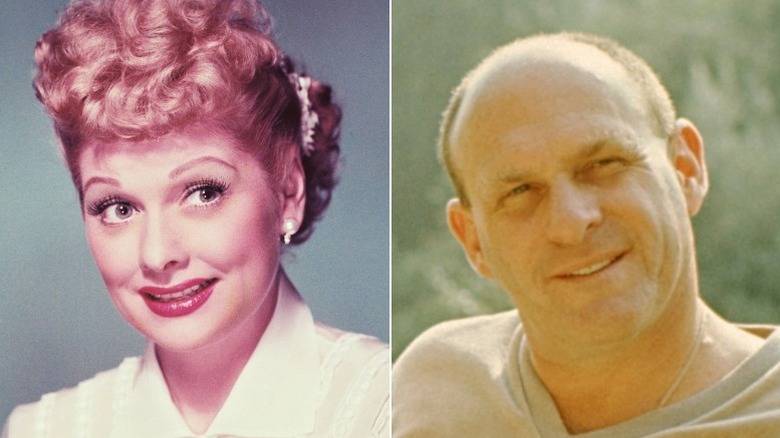
The production of the seminal 1950s sitcom I Love Lucy is often remembered for its effortless humor and the seamless chemistry between its stars, Lucille Ball and Desi Arnaz. To the millions of viewers who tuned in weekly, the program appeared to be a perfectly synchronized operation. However, the reality of the set was occasionally defined by intense creative friction, particularly between Ball and the show’s director, William Asher.
Asher, who would go on to have a prolific career directing iconic television comedies, joined the production during its early years. While history remembers the show as a triumph of comedic timing, archival interviews from the director reveal that his tenure began with a significant behind-the-scenes clash that threatened the stability of the project. This tension centered on the fundamental question of creative control and the high-pressure environment of mid-century television production.
The Roots of Creative Conflict
The discord reportedly emerged during the production of the second episode under Asher’s direction. According to accounts provided by Asher during his participation in the American Masters documentary series, he observed a jarring inconsistency during rehearsals: the cast was delivering lines and blocking scenes in ways that contradicted his original instructions. Upon further investigation, Asher discovered that Ball had been providing the cast with her own directorial notes without consulting him.
For a director, this undermined the established chain of command and the cohesive vision required for a series of such technical complexity. Asher later recalled that he chose to confront Ball directly in front of the cast and crew, issuing an ultimatum: if she wished to direct the series, she should assume the role entirely rather than retaining him to oversee the production. The confrontation, while professional in its objective, was emotionally charged, leading to a visible reaction from Ball and a pause in the day’s work.
Desi Arnaz and the Resolution of Tensions
The situation escalated when Desi Arnaz, who served as both the lead actor and a producer on the show, intervened. Initially, the environment was tense, with reports suggesting that Arnaz expressed frustration toward Asher upon seeing his wife upset. However, the professional dynamics of the show ultimately favored mediation over conflict. Once the director explained the necessity of a single, unified creative vision to maintain the show’s pace and quality, Arnaz reportedly acknowledged the validity of the director’s concerns.
Rather than permitting the feud to derail the production, Arnaz facilitated a private dialogue between Ball and Asher. This resolution highlighted the dual nature of I Love Lucy: it was both a groundbreaking artistic endeavor and a high-stakes business enterprise where personal insecurities often intersected with professional responsibilities. The show’s reliance on Ball’s specific comedic instincts—which were deeply personal and tied to her physical performance—meant that she was often protective of her craft, a factor Asher later identified as a source of her anxiety rather than mere ego.
A Partnership Built on Mutual Respect
Following their initial disagreement, the relationship between Ball and Asher evolved into a successful professional collaboration and a lasting personal friendship. To mitigate the tensions that arose from the pressures of filming, the pair began conducting private rehearsals the night before shooting. These sessions provided Ball with a safe space to experiment with her performance, easing the anxiety that accompanied the delivery of complex comedic routines.

This adjustment proved beneficial for the show’s longevity and the quality of the performances. By creating a collaborative environment, they moved past the early friction that had threatened to disrupt the production. Asher’s later reflections on his time with Ball and Arnaz underscored the deep, albeit complicated, affection that existed between the couple during the height of the show’s success. He noted that despite the eventual dissolution of their marriage, the bond they shared during their years of collaboration remained a significant, if bittersweet, chapter in television history.
The story of this behind-the-scenes conflict serves as a reminder of the immense pressures faced by the pioneers of the television industry. For audiences interested in the history of American television, the Television Academy’s archives continue to provide context on the evolution of sitcom production. We invite our readers to share their thoughts on how these early creative struggles shaped the legacy of classic television in the comments section below.
Related reading
- Trump Calls Off Iran Strike: US Negotiates New Middle East Framework Amid Rising Tensions
- LA Galaxy vs FC Dallas: Matchday 19 Lineups – MLS
- Justin Hardy, BAFTA-Nominated Director, Dies at 61 After Heart Attack (archyworldys.com)
- Japanese Star’s Shocking Saudi Move: British Fans React to Surprise Transfer (archynewsy.com)