
For decades, Türkiye’s greatest economic asset was its youth. The “demographic dividend”—a surge in the working-age population relative to dependents—fueled the country’s industrialization, powered its vibrant consumer markets, and provided a competitive edge in global manufacturing. However, as we look toward the horizon of 2026 through 2035, that engine is beginning to stall.
The narrative of Türkiye as a perpetually young nation is shifting. Recent data reveals a precipitous decline in fertility rates and a steady climb in the median age, signaling a transition that could reshape the nation’s economic trajectory. For investors, policymakers, and global markets, the question is no longer whether Türkiye will age, but how it will manage the structural shocks that accompany demographic decline.
As Chief Editor of Business at World Today Journal, I have tracked similar patterns in East Asia and Western Europe. The transition from a youth-driven economy to an aging one is rarely seamless. When the birth rate drops below the replacement level, the ripples are felt everywhere: from the availability of skilled labor and the sustainability of pension funds to the overall velocity of GDP growth. Türkiye is now entering this critical window.
The strategic variables of population size and composition are as vital to a country’s long-term stability as its foreign reserves or trade balances. For Türkiye, the decade between 2026 and 2035 will be a defining era of adjustment. The battle against demographic decline is not merely a social concern—it is a fundamental economic imperative.
The Fertility Cliff: Analyzing the Numbers
The most alarming indicator of Türkiye’s demographic shift is the collapse of the total fertility rate (TFR). For a population to remain stable without migration, a TFR of 2.1 children per woman is required. Türkiye has not only fallen below this threshold but is doing so at an accelerating pace.
According to data from the Turkish Statistical Institute (TUIK), the fertility rate has seen a steady decline over the last decade, recently dipping to approximately 1.51 children per woman. This trend represents a sharp departure from the high-growth patterns of the late 20th century and aligns Türkiye more closely with the demographic profiles of Southern European nations like Italy and Spain.
Several intersecting factors are driving this decline. Economic volatility, including high inflation and the rising cost of living, has made the financial burden of raising children prohibitive for many young couples. Shifting social norms, increased female participation in the workforce, and a trend toward later marriage have fundamentally altered the family structure in urban centers like Istanbul, Ankara, and Izmir.
This “fertility cliff” creates a compounding effect. As fewer children are born today, the future labor pool shrinks, leading to a tighter job market and higher wage pressures that, while beneficial for the individual worker, can erode the competitive advantage of Türkiye’s export-oriented manufacturing sector.
The Labor Market and the Middle-Income Trap
From a macroeconomic perspective, the shrinking share of the youth population threatens to push Türkiye deeper into the “middle-income trap.” This economic phenomenon occurs when a country reaches a certain level of income but struggles to transition from low-cost labor to a high-value, innovation-driven economy.
Historically, Türkiye leveraged its young, affordable workforce to attract foreign direct investment (FDI) in textiles, automotive, and electronics. However, as the working-age population peaks and begins to contract, the “low-cost” advantage disappears. Between 2026 and 2035, businesses will likely face acute labor shortages in both blue-collar manufacturing and high-tech services.
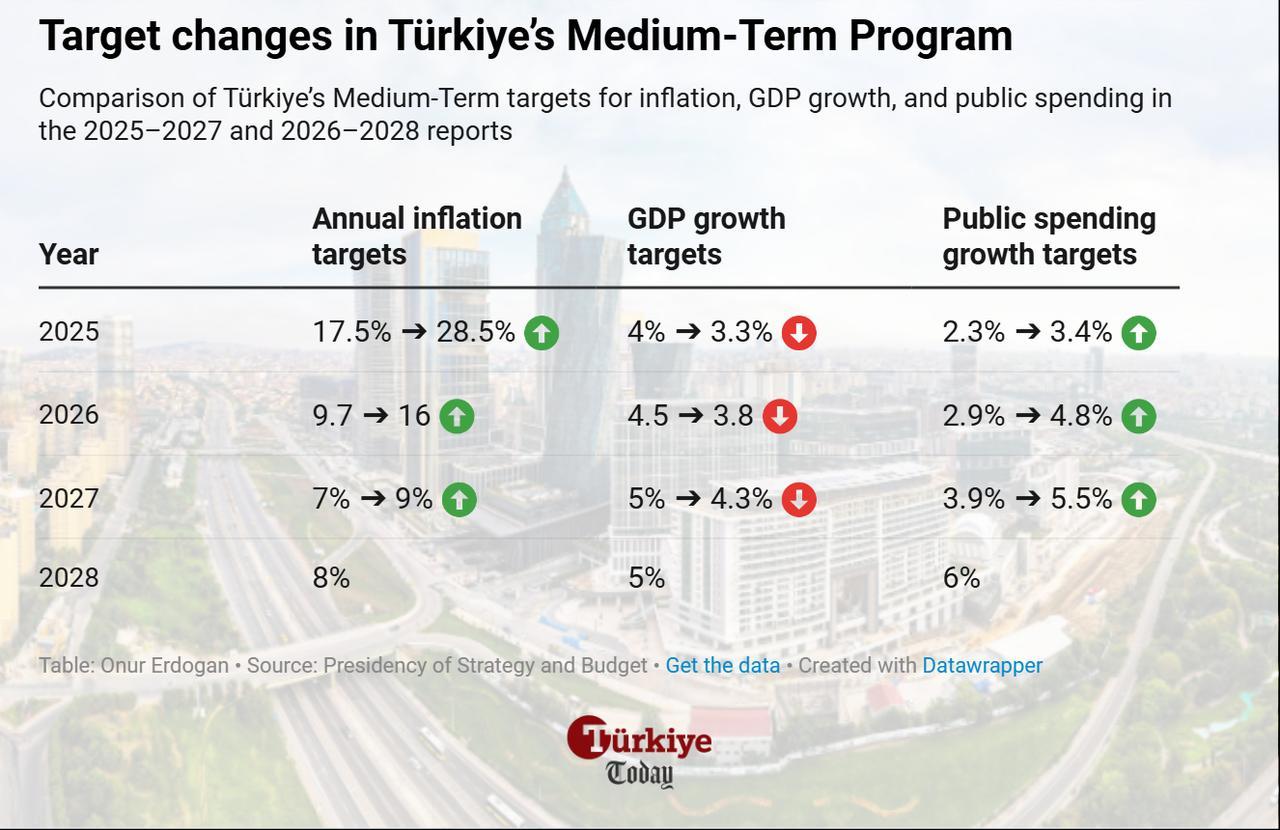
The impact on GDP growth is direct. Economic growth is essentially a function of labor force growth and productivity growth. With the labor force growth slowing, the entire burden of maintaining GDP expansion falls on productivity. This means Türkiye must pivot rapidly toward automation, artificial intelligence, and higher-value industrial output to offset the loss of raw human capital.
the “dependency ratio”—the number of dependents (children and elderly) compared to the working-age population—is set to rise. As the ratio tilts toward the elderly, a larger portion of the national income must be diverted from productive investment (infrastructure, R&D) toward social maintenance (healthcare, pensions).
The Pension Crisis and Fiscal Sustainability
Perhaps the most immediate fiscal challenge lies in the sustainability of the social security system. Türkiye’s pension model, managed largely through the Social Security Institution (SGK), was designed for a pyramid-shaped population: many young workers paying in to support a few retirees.
As the population pyramid inverts, this model becomes mathematically unsustainable. With a declining birth rate and an increasing life expectancy, the number of pensioners is growing faster than the number of contributors. This creates a widening deficit in the social security budget, which must be covered by the general treasury, thereby increasing the national debt and limiting the government’s ability to fund other strategic priorities.
The pressure to raise the retirement age is a political minefield but an economic necessity. Any attempt to adjust pension eligibility or indexation is met with significant public resistance, yet failing to do so risks a systemic fiscal crisis. The window for a gradual, managed transition is closing; by 2030, the acceleration of the aging process will likely force more drastic interventions.
Strategic Responses: Automation and Migration
To counter the effects of demographic decline, Türkiye has two primary levers: technological leapfrogging and strategic migration management.
Automation and AI: The transition to “Industry 4.0” is no longer optional. By integrating robotics and AI into the manufacturing heartlands of Marmara and Aegean regions, Türkiye can maintain output levels despite a shrinking workforce. The goal is to move from “labor-intensive” to “capital-intensive” growth. However, this requires a massive overhaul of the education system to ensure the remaining workforce is skilled enough to manage these technologies.
Migration Dynamics: Türkiye has already become a primary hub for displaced populations and migrants. While this has created significant social and political tension, from a purely economic standpoint, migration can act as a temporary demographic buffer. Immigrants often fill the low-skilled labor gaps that local youth are increasingly avoiding. However, relying on migration as a long-term demographic strategy is risky and depends heavily on successful integration and legal frameworks.
Demographic Shift: 2020 vs. 2035 (Projected)
| Metric | Approx. 2020 Status | Projected 2035 Trend | Economic Impact |
|---|---|---|---|
| Fertility Rate | Above Replacement | Well Below Replacement | Shrinking future labor pool |
| Median Age | Young/Mid-range | Significantly Higher | Increased healthcare costs |
| Dependency Ratio | Low (Youth-heavy) | High (Elderly-heavy) | Fiscal strain on pensions |
| Growth Driver | Labor Quantity | Labor Productivity/AI | Need for rapid tech pivot |
The Geopolitical Dimension of Demographics
Demographics are not just about economics; they are about power. A nation’s influence is often tied to its vitality and its ability to project strength through its population. As Türkiye’s population ages, its internal focus may shift from external expansion and regional leadership to internal stability and elder care.
the shrinking youth population may affect the military’s recruitment capabilities and the dynamism of the country’s entrepreneurial ecosystem. The “startup culture” that has flourished in Istanbul over the last decade thrives on youthful risk-taking. A society that trends older tends to become more risk-averse, potentially slowing the pace of innovation.
Key Takeaways for Stakeholders
- For Investors: Expect a shift in consumer demand from youth-centric products to healthcare, pharmaceuticals, and specialized elderly services (the “Silver Economy”).
- For Policymakers: Urgent reforms to the pension system and an aggressive push toward vocational training in automation are required to prevent a growth plateau.
- For Businesses: Labor shortages in manufacturing will likely drive up wages, necessitating investment in efficiency and technology to protect margins.
- For the Public: The rising dependency ratio will likely lead to increased pressure on public health services and potential changes to retirement laws.
What Happens Next?
The trajectory of Türkiye’s demographic battle will be closely monitored through the upcoming census cycles and annual TUIK reports. The most critical near-term indicator will be whether the government introduces comprehensive “pronatalist” policies—such as childcare subsidies or tax incentives for larger families—similar to those attempted in South Korea or Japan, though history suggests these are often insufficient on their own.
The next major checkpoint will be the release of the updated long-term population projections from the United Nations Population Division, which will provide a comparative benchmark for Türkiye’s decline against other emerging economies.
Türkiye stands at a crossroads. The demographic dividend that powered its rise is fading, but a well-managed transition to a high-productivity, tech-driven economy could create a new kind of stability. The battle for 2035 begins with the policies enacted today.
Do you believe automation can fully offset a shrinking workforce, or is a demographic collapse inevitable for emerging markets? Share your thoughts in the comments below.