The Unexpected Link Between Foams, Artificial Intelligence, and the Building Blocks of Life
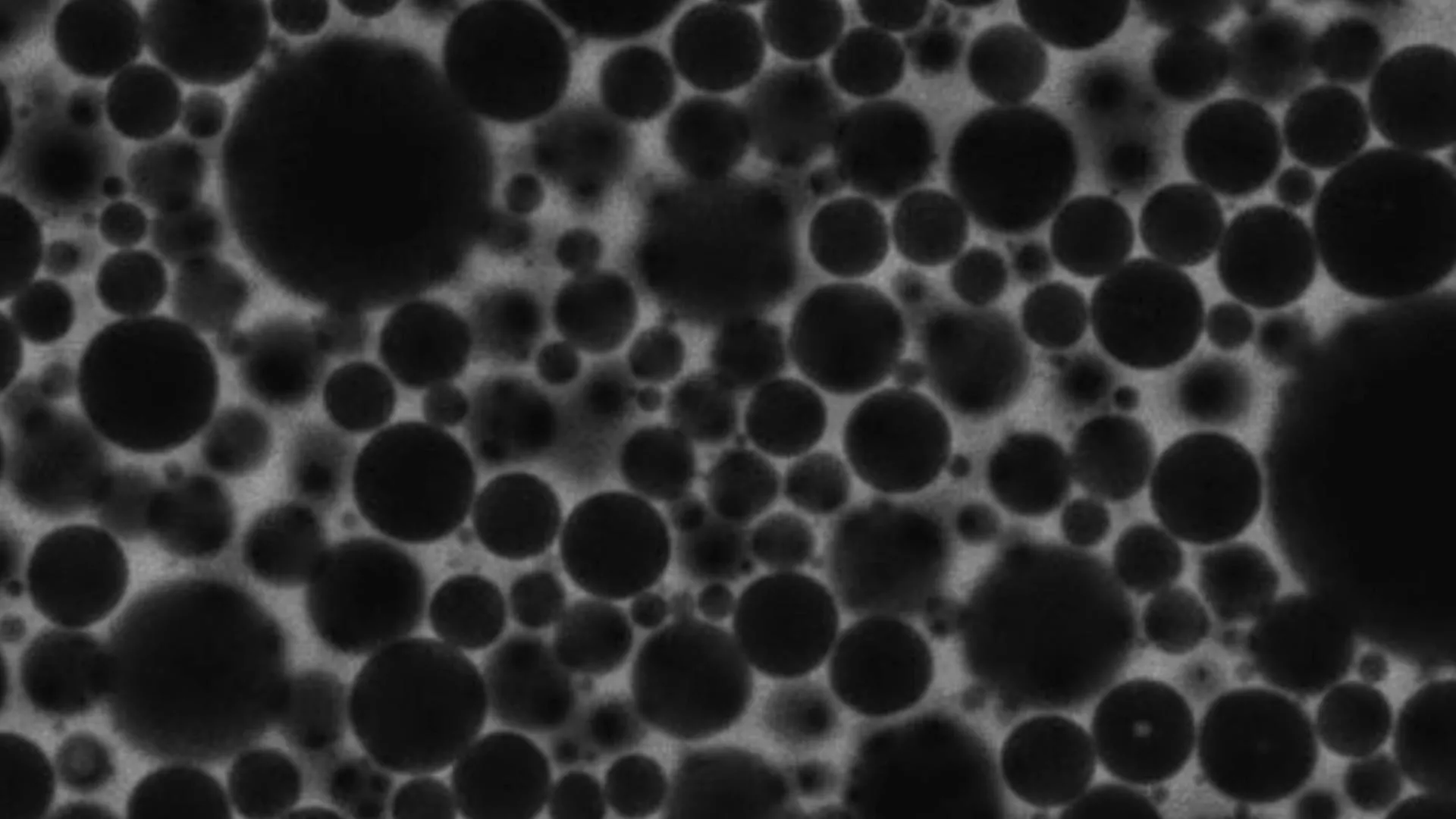
For decades, scientists viewed foams – from the bubbles in your morning latte to the structure of shaving cream – as essentially solid-like materials, their components locked in place despite their disordered arrangement. however, groundbreaking research from the University of Pennsylvania is challenging this long-held belief, revealing a surprising dynamic within these seemingly static structures. Engineers have discovered that the interior of foams is in a state of constant motion, and, remarkably, the mathematical principles governing this movement closely mirror those underpinning deep learning, the technology powering modern artificial intelligence.
This unexpected connection suggests that the basic process of “learning,” in a broad mathematical sense, may be a universal principle governing diverse systems – from the physical world to biological organisms and computational networks. The findings, published in the Proceedings of the National academy of Sciences, could revolutionize the design of adaptive materials and provide new insights into the complex reorganization occurring within living cells.
Foam’s Fluid Interior: A Departure from Traditional Physics
foams are ubiquitous, appearing in everyday products and serving as valuable model systems for studying more complex materials. Their apparent stability and ability to maintain shape, even when compressed, lead scientists to believe their internal structure was relatively static. Traditionally, foam bubbles where conceptualized as behaving like rocks rolling across an energy landscape, settling into the lowest possible energy state and remaining fixed.
However, detailed computer simulations conducted by the Penn team revealed a different reality. Instead of reaching a stationary state, the bubbles within the foam continued to wander and explore numerous possible arrangements. this behavior defied existing theoretical predictions, a discrepancy noted by researchers nearly two decades ago, but lacking a suitable mathematical framework for explanation.
“when we actually looked at the data, the behavior of foams didn’t match what the theory predicted,” explains Professor John C. Crocker, co-senior author of the study from the University of pennsylvania’s Department of Chemical and Biomolecular Engineering. “We started seeing these discrepancies nearly 20 years ago, but we didn’t yet have the mathematical tools to describe what was really happening.”
The AI Connection: Gradient Descent and the Power of Imperfection
The key to unlocking this mystery lay in the field of artificial intelligence. Early AI models aimed to find a single, optimal solution to a problem. However, these models often proved brittle and struggled to generalize to new data. The advent of deep learning introduced a paradigm shift, utilizing optimization methods based on “gradient descent.”
Gradient descent involves iteratively adjusting a system’s parameters to reduce error, akin to rolling a ball downhill. crucially, researchers discovered that pushing models too far towards a single, perfect solution was counterproductive. Systems performed best when operating in “flatter” regions of the landscape, where multiple solutions offered comparable performance.This allows for greater adaptability and resilience.
“The key insight was realizing that you don’t actually want to push the system into the deepest possible valley,” says Professor Robert Riggleman, also a co-senior author from the Department of Chemical and Biomolecular Engineering. “Keeping it in flatter parts of the landscape,where lots of solutions perform similarly well,turns out to be what allows these models to generalize.”
Foams Mirror AI’s Adaptive Strategy
When the Penn team re-analyzed their foam data through this lens, a striking parallel emerged. Foam bubbles, like successful AI models, don’t settle into deeply stable configurations. Rather, they continuously move within broad regions where numerous arrangements are equally viable. The same mathematical principles that govern the learning process in deep neural networks also accurately describe the dynamic behavior of foam.
“It’s striking that foams and modern AI systems appear to follow the same mathematical principles,” Crocker states. “Understanding why that happens is still an open question, but it could reshape how we think about adaptive materials and even living systems.”
Implications for Future Research and Beyond
This research not only challenges existing understanding of foam behavior but also opens up exciting new avenues for exploration. The team is now applying these insights to study the cytoskeleton, the internal scaffolding of cells, which, like foam, requires constant reorganization while maintaining structural integrity.
The finding suggests that the principles governing adaptation and learning may be far more fundamental and widespread than previously imagined. By revealing a shared mathematical language between seemingly disparate systems, this work promises to inspire new approaches to materials science, biology, and artificial intelligence, potentially leading to the advancement of materials that respond dynamically to their surroundings and a deeper understanding of the intricate mechanisms of life itself.
This research was conducted at the University of Pennsylvania School of engineering and Applied Science and supported by the National Science Foundation Division of Materials Research (1609525, 1720530).Additional co-authors include Amruthesh Thirumalaiswamy and Clary Rodríguez-Cruz.
Keywords: artificial intelligence, deep learning, foams, materials science, cytoskeleton, physics, mathematics, adaptive materials, biological systems, University of Pennsylvania, gradient descent, complex systems, scientific research.
Worth a look