
While “brain rot” is a colloquial term used to describe the perceived cognitive decline from excessive digital consumption, neuroscientists clarify that it refers to changes in attention spans and dopamine regulation rather than physical brain decay. Research suggests that high-frequency, short-form content can alter reward pathways and reduce deep concentration capabilities.
The term “brain rot” has moved from niche internet subcultures into mainstream vocabulary, often used by younger generations to describe the feeling of mental fog or decreased productivity following hours of scrolling through short-form video platforms. However, clinical neurology does not recognize “brain rot” as a formal diagnosis. Instead, medical professionals focus on the measurable impacts of digital overuse on neuroplasticity, executive function, and the brain’s reward systems.
Current scientific inquiry suggests that the issue is not the digital content itself, but the delivery mechanism. The rapid-fire nature of modern social media feeds creates a continuous stream of novelty, which triggers specific biochemical responses in the brain. This cycle can lead to what researchers describe as attentional fragmentation, where the ability to maintain focus on a single, complex task becomes increasingly difficult.
What does “brain rot” actually mean to neuroscientists?
In a clinical context, the symptoms described by the “brain rot” phenomenon align closely with cognitive fatigue and diminished attentional control. Neuroscientists study how the brain processes information and how constant interruptions from digital notifications affect the prefrontal cortex, the area of the brain responsible for executive functions such as decision-making, impulse control, and sustained attention.
When an individual engages in “doomscrolling” or consumes endless loops of short-form video, they are subjecting their brain to a high cognitive load. This constant influx of information requires the brain to rapidly switch contexts, a process that consumes significant metabolic energy. According to research into cognitive load theory, this frequent task-switching can deplete the mental resources required for “deep work”—the ability to focus without distraction on a cognitively demanding task.
Furthermore, the term often encompasses a sense of mental lethargy. This is not necessarily a loss of intelligence, but rather a state of overstimulation. When the brain is constantly bombarded with high-intensity stimuli, its threshold for engagement rises. Consequently, slower-paced, real-world activities like reading a book or engaging in a long conversation may feel understimulating or even painful by comparison.
How do short-form videos influence dopamine levels?
The primary driver of digital overconsumption is the brain’s reward system, specifically the neurotransmitter dopamine. Dopamine is often misunderstood as a “pleasure chemical,” but neuroscientists describe it more accurately as a molecule of anticipation and motivation. It drives the “seeking” behavior that compels individuals to check their phones or scroll to the next video.
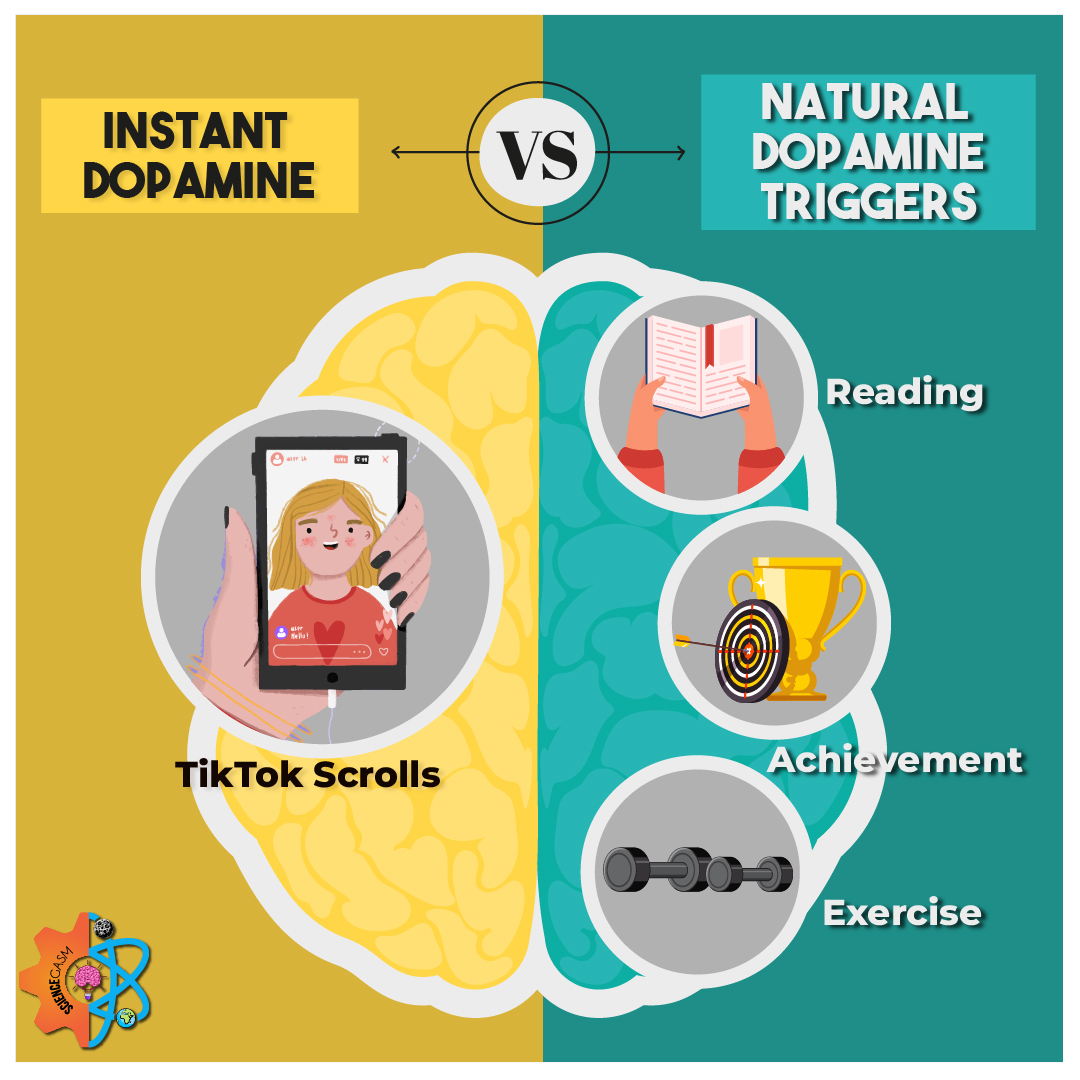
Short-form video platforms utilize what psychologists call a variable reward schedule. This is the same mechanism used in slot machines. Because a user does not know if the next video will be hilarious, shocking, or boring, the brain remains in a state of heightened anticipation. This unpredictability triggers frequent, small bursts of dopamine, creating a powerful feedback loop that makes it difficult to disengage.
Dr. Anna Lembke, a psychiatrist and author of “Dopamine Nation,” has documented how the modern environment provides an unprecedented abundance of easy dopamine. When the brain is exposed to constant, high-level dopamine spikes, it attempts to maintain homeostasis by downregulating its own dopamine receptors. This process, known as neuroadaptation, can lead to a diminished ability to feel pleasure from everyday activities, a state often referred to as anhedonia.
This downregulation explains why users often feel “numb” or “empty” after long periods of digital consumption. The brain has essentially lowered its sensitivity to dopamine to protect itself from the overstimulation, leaving the individual feeling less motivated and more prone to low moods when they are not engaged with their devices.
Can digital habits lead to lasting changes in brain structure?
The concept of neuroplasticity—the brain’s ability to reorganize itself by forming new neural connections—means that repetitive behaviors can indeed influence brain structure over time. While the brain is remarkably resilient, long-term patterns of digital overuse may influence how different regions communicate.

Studies investigating the relationship between screen time and brain development, particularly in adolescents, indicate that the prefrontal cortex is highly sensitive to environmental inputs. Because this region is still developing until the mid-twenties, heavy reliance on instant-gratification loops may affect the maturation of pathways related to impulse control and long-term planning.
Some research suggests that excessive multitasking and rapid digital consumption may lead to a thinning of the gray matter in areas associated with cognitive control. This does not mean the brain is “rotting” in a biological sense, but rather that it is becoming highly specialized for a specific type of environment: one characterized by rapid shifts, high novelty, and low attention requirements. This specialization can come at the cost of the neural architecture required for sustained, linear thinking.
It is important to note that neuroplasticity works both ways. Just as the brain can adapt to the distractions of digital media, it can also be retrained through “cognitive exercises” such as mindfulness, focused reading, and deliberate periods of digital disconnection. The brain’s capacity for change remains a fundamental feature of human biology.
What are the documented mental health implications?
Beyond cognitive shifts, the psychological impact of digital overuse is a significant area of public health concern. Clinical observations link excessive social media consumption to several key mental health challenges, including increased anxiety, depression, and sleep disturbances.
The relationship between digital consumption and anxiety often stems from two factors: social comparison and the “fear of missing out” (FOMO). Digital platforms frequently present curated, idealized versions of reality. Constant exposure to these depictions can lead individuals to perceive their own lives as inadequate, triggering feelings of social inadequacy and heightened anxiety.
Sleep hygiene is another critical area of impact. The blue light emitted by digital screens can suppress the production of melatonin, the hormone responsible for regulating sleep-wake cycles. Furthermore, the cognitive stimulation provided by engaging content makes it difficult for the brain to enter a state of relaxation necessary for sleep. Chronic sleep deprivation is a known contributor to mood disorders and further impairs cognitive function, creating a self-reinforcing cycle of mental fatigue.
Additionally, researchers have noted a correlation between high levels of digital consumption and feelings of loneliness. While digital platforms are designed to connect people, the passive consumption of content often replaces active, high-quality social interactions. This “social snacking”—brief, superficial digital encounters—fails to provide the same neurological and emotional benefits as face-to-face human connection, potentially exacerbating feelings of isolation.
Strategies for digital cognitive hygiene
While total abstinence from digital technology is often impractical, experts suggest implementing “digital hygiene” practices to mitigate the negative effects on attention and dopamine regulation. These strategies aim to restore a balance between high-stimulation digital environments and the slower pace of real-world engagement.
- Implement “No-Phone Zones”: Designating specific times or locations, such as the dining table or the bedroom, as phone-free areas can help reduce constant stimulation and improve sleep quality.
- Practice Monotasking: To combat attentional fragmentation, individuals can practice focusing on a single task—such as reading a physical book or engaging in a hobby—for set increments of time without checking notifications.
- Scheduled Disconnection: Periodically engaging in “digital fasts” or scheduled periods of disconnection can help allow dopamine receptors to reset and reduce the habituation to constant novelty.
- Curate Digital Environments: Actively managing feeds to include more educational or long-form content, rather than purely algorithmic, short-form content, can alter the cognitive load.
Key Takeaways
- “Brain rot” is a colloquialism: It describes cognitive fatigue and attentional issues rather than actual biological brain decay.
- Dopamine Dysregulation: Rapid-fire digital content creates dopamine loops that can lead to neuroadaptation and decreased sensitivity to pleasure.
- Impact on Attention: Constant task-switching can weaken the brain’s ability to engage in deep, sustained concentration.
- Neuroplasticity is key: The brain adapts to its environment; digital habits change neural pathways, but these changes can be mitigated through intentional practice.
- Mental Health Links: Excessive use is correlated with increased anxiety, sleep disruption, and social isolation.
Health organizations and neurological researchers continue to monitor the long-term effects of emerging media formats on human cognition. Future studies are expected to focus specifically on the longitudinal impacts of algorithmic-driven content on adolescent brain development.
How has your digital usage affected your focus or mood? We invite you to share your experiences and thoughts in the comments below. Please share this article with others interested in the intersection of technology and mental health.
Keep reading