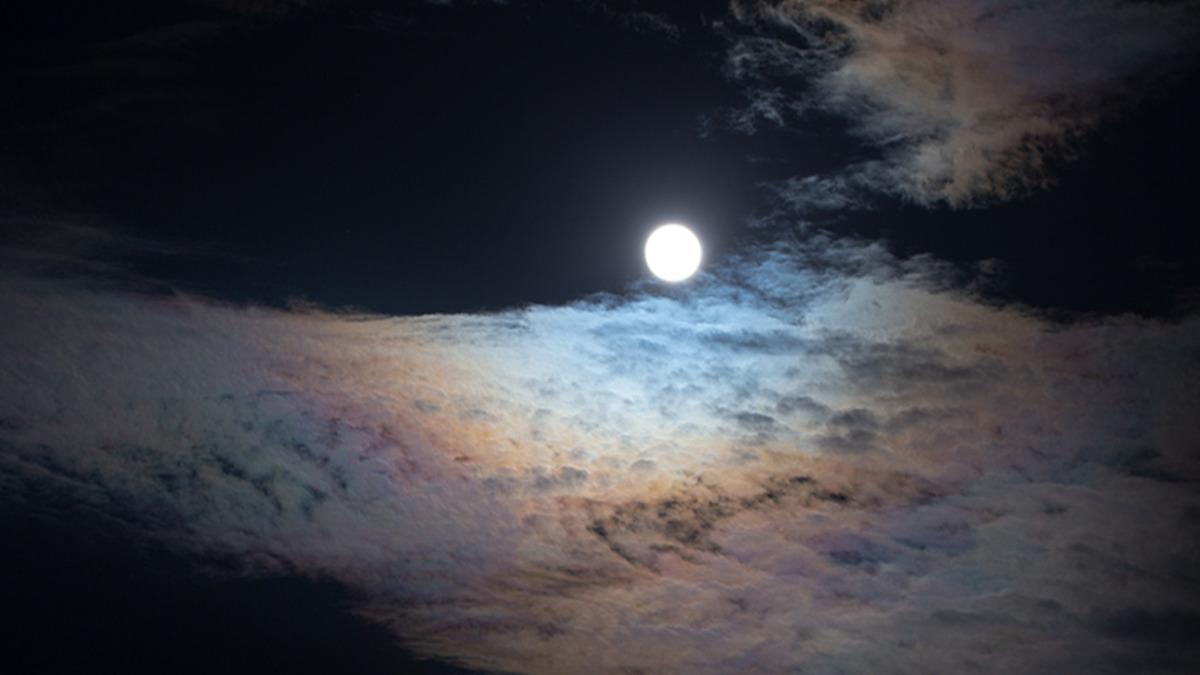
The Moon isn’t gray. At least, not in the way we’ve been taught to see it. For decades, textbooks, pop culture and even NASA’s own visuals have reinforced the idea of a monochromatic lunar surface—yet new scientific data reveals a far more nuanced truth. The Moon’s actual color is a delicate interplay of whites, grays, and even faint hints of blue and orange, depending on lighting and composition. This revelation isn’t just a quirk of astronomy; it has implications for space missions, lunar resource mapping, and how we design future habitats on the Moon.
As NASA’s Artemis program prepares to return humans to the lunar surface, understanding the Moon’s true color profile becomes critical. Misconceptions about its appearance have shaped everything from educational materials to public perception—even influencing how astronauts describe their surroundings. Now, with high-resolution spectral data and advanced imaging, scientists are correcting the record.
The confusion stems from how our eyes and cameras interpret light. Under Earth’s blue-tinted atmosphere, the Moon often appears yellowish or white. But in space, where there’s no atmospheric distortion, its surface reflects a broader spectrum. NASA’s Lunar Reconnaissance Orbiter (LRO) has captured images showing the Moon’s true hues—ranging from bright white highlands to darker, bluish-gray mare regions. Even the Apollo astronauts, who saw the Moon up close, described its color as “charcoal gray” in low light but acknowledged subtle variations.
Why the Moon Looks Gray (And Why It’s Not)
The myth of a “gray Moon” persists due to three key factors:

- Atmospheric scattering: Earth’s atmosphere filters sunlight, casting a blue tint that makes the Moon appear more yellow or white to the naked eye. In space, without this filter, its true colors emerge.
- Photographic processing: Early lunar images were often desaturated for clarity, reinforcing the gray perception. Modern cameras and spectral analysis now show the full range.
- Compositional variations: The Moon’s surface is a patchwork of minerals—plagioclase feldspar (white), pyroxene (greenish), and ilmenite (bluish)—which reflect light differently under sunlight.
Dr. Noah Petro, a planetary geologist at NASA’s Goddard Space Flight Center, explained in a 2023 interview that “the Moon isn’t a single color—it’s a mosaic. The highlands are brighter, almost white, while the maria (dark plains) have a bluish-gray tint due to iron-rich basalt.” This diversity is visible in high-resolution images from the LRO’s Wide Angle Camera (WAC), which captures data across 700 nanometers of the visible spectrum.
The Science Behind the Moon’s True Colors
To understand why the Moon appears gray to us, we need to break down its surface composition and how light interacts with it:
- Albedo (reflectivity): The Moon reflects only about 12% of sunlight—far less than Earth’s 30%. This low albedo makes it appear darker, but not uniformly gray.
- Regolith (lunar soil): The Moon’s surface is covered in a fine, powdery layer of crushed rock and dust, which scatters light in complex ways. Under direct sunlight, this regolith can look white or gray, but shadows reveal deeper hues.
- Mineral spectroscopy: Instruments like the Moon Mineralogy Mapper (M3) on India’s Chandrayaan-1 mission detected water ice in permanently shadowed craters, which appears bluish in infrared imaging.
One of the most striking examples comes from the Artemis II mission, where astronauts reported seeing the Moon’s surface as “more colorful than expected” during their lunar flyby. “It’s not just gray—We find these subtle blues and oranges near the terminator line,” said astronaut Jessica Meir in a post-flight briefing. “It’s almost like looking at a painting.”
How This Affects Space Exploration
The corrected color profile of the Moon isn’t just academic—it has practical implications for future missions:
- Habitat design: Understanding the Moon’s true colors helps engineers select materials that blend with the environment, reducing visual pollution and improving psychological comfort for astronauts.
- Resource mapping: Different minerals reflect light uniquely. Blue-tinted regions, for example, may indicate higher concentrations of titanium, a valuable resource for construction.
- Astronaut training: NASA’s Johnson Space Center is updating its lunar geology simulations to reflect accurate color profiles, helping astronauts better identify rocks and formations.
For example, the Artemis III mission, slated for 2026, will land near the lunar south pole, where blue-hued ice deposits could be critical for life support. “If we’d still been thinking of the Moon as gray, we might have missed these key deposits,” said Dr. Sarah Noble, NASA’s program scientist for lunar exploration.
Debunking Common Misconceptions
Despite the new data, several myths about the Moon’s color persist. Here’s what the science says:
- “The Moon is gray because it’s made of rock.” Reality: While rock is a component, the Moon’s color varies widely due to mineral composition. Some areas are nearly white, while others have a greenish or bluish tint.
- “The Moon looks gray because there’s no atmosphere.” Reality: The lack of atmosphere actually makes colors more visible—without Earth’s atmospheric scattering, the Moon’s true hues stand out.
- “All lunar images are edited to look gray.” Reality: While some historical images were desaturated for clarity, modern raw data (e.g., from LRO) shows the full spectrum. NASA’s true-color Moon images confirm the diversity.
What Happens Next?
As NASA and international partners prepare for sustained lunar missions, the corrected understanding of the Moon’s color will play a role in:

- Designing Artemis Base Camp habitats that harmonize with the lunar landscape.
- Improving in-situ resource utilization (ISRU) by identifying mineral-rich regions.
- Updating educational materials to reflect the Moon’s true appearance, reducing misconceptions for future generations.
The next major checkpoint is the Artemis III landing in late 2026, where astronauts will conduct experiments to further refine our understanding of lunar geology and color science. For real-time updates, follow NASA’s Moon to Mars program.
Key Takeaways
- The Moon’s surface is not uniformly gray but a mix of whites, grays, and subtle blues/oranges, depending on mineral composition.
- Earth’s atmosphere distorts our perception, making the Moon appear yellowish or white to the naked eye.
- NASA’s Lunar Reconnaissance Orbiter and Artemis missions provide high-resolution data confirming the Moon’s true color profile.
- Understanding the Moon’s colors aids habitat design, resource mapping, and astronaut training for future missions.
- The next phase of lunar exploration will further refine our knowledge as humans return to the surface.
What do you think? Have you ever noticed the Moon’s true colors? Share your observations in the comments—or correct us if we’ve missed anything. And for more on space science, explore our Space & Exploration section.