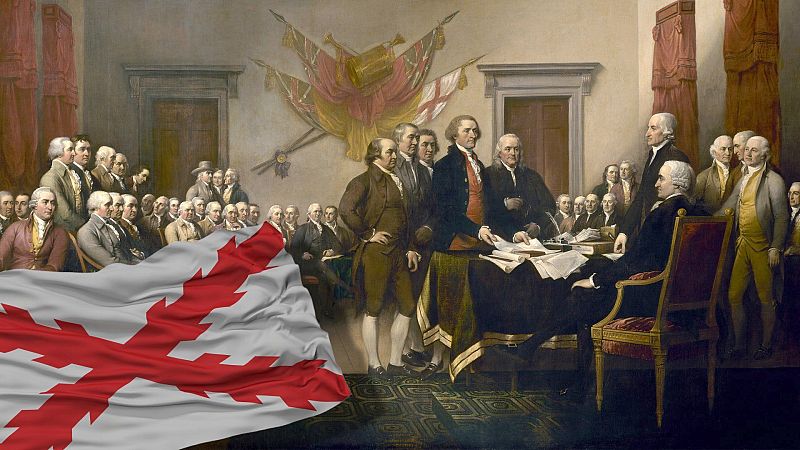
As the United States approaches its 250th anniversary of independence, the historical narrative regarding the nation’s founding is increasingly incorporating the essential role played by Spain and the contributions of the Hispanic population. While the American Revolutionary War is often framed through the lens of Anglo-American struggle, archival evidence confirms that Spanish financial support, military campaigns along the Mississippi River, and strategic pressure on the British Empire were critical factors in the colonial victory.
The upcoming semiquincentennial celebration has prompted a re-examination of the “invisible” alliances that secured American sovereignty. Historical records indicate that Spanish intervention—particularly under the leadership of Bernardo de Gálvez—provided the necessary material and military logistics to strain British resources in North America. This historical reflection coincides with a period where the Hispanic demographic in the U.S. has grown, fundamentally reshaping the nation’s cultural and political landscape.
The Geopolitical Impact of Spain in the American Revolution
The success of the American Revolution depended heavily on a global conflict that diverted British military assets. Spain, seeking to recover territories lost in previous conflicts and weaken its primary rival, entered the war against Great Britain in 1779. Spanish military campaigns in the Mississippi Valley and the Gulf Coast—specifically the capture of Pensacola in 1781—forced the British to divide their forces, preventing them from concentrating their full might against the Continental Army.
Beyond military maneuvers, the financial contributions were substantial. Historical accounts note that Spanish funds, often routed through covert channels like the trading firm Rodriguez Hortalez et Cie, provided gunpowder, blankets, and medicine to the rebelling colonies. This support was not merely altruistic; it was a calculated geopolitical move to destabilize the British hold on the Atlantic. Without the control of the Mississippi River and the logistical support provided by Spanish colonial governors, the supply lines for the American effort would have been significantly more vulnerable, potentially altering the outcome of the war.
Demographic Shifts and the Modern Hispanic Identity
The legacy of Spain’s involvement is now being viewed through the prism of the modern U.S. Hispanic population. This demographic shift is not just a statistical evolution but a cultural integration that highlights the deep, often overlooked roots of Spanish language and culture in regions that are now part of the United States, such as Florida, Texas, and California.
As the U.S. prepares for its 250th anniversary, many historians are advocating for a more inclusive narrative that acknowledges these early connections. The integration of Hispanic history into the mainstream American story is seen as a way to reflect the current reality of the nation. By recognizing the contributions of Spanish forces during the 18th century, the broader American public gains a more accurate understanding of the global coalition that made the independence of the thirteen colonies possible.
Reframing the National Narrative
The dialogue surrounding the 250th anniversary is centered on the concept of a “shared history.” For many scholars, the goal is to move past the traditional, narrow focus on the Thirteen Colonies and embrace a continental perspective. This includes the role of indigenous populations, the French, and the Spanish.
This academic and public effort to reframe the founding story is supported by a growing body of scholarship. Researchers are increasingly turning to colonial archives in Seville and Madrid to piece together the specific details of trade and military intelligence that moved between the Spanish Crown and the American revolutionaries. This work serves to bridge the gap between the historical memory of the 18th century and the demographic reality of the 21st century, ensuring that the celebration of American independence is representative of all its foundational pillars.
What Happens Next
As the nation builds toward the anniversary, official commemorative events, educational initiatives, and national exhibits are expected. These programs will likely feature collaborative efforts between American and international cultural institutions to highlight the global context of the Revolutionary War.
The discourse on this subject continues to evolve as new archival findings emerge. For those interested in the ongoing historical research, academic journals and cultural forums remain the primary venues for the latest analysis. We welcome your thoughts on how the role of Spain and the broader Hispanic influence should be integrated into the upcoming national commemorations; please share your perspective in the comments section below.