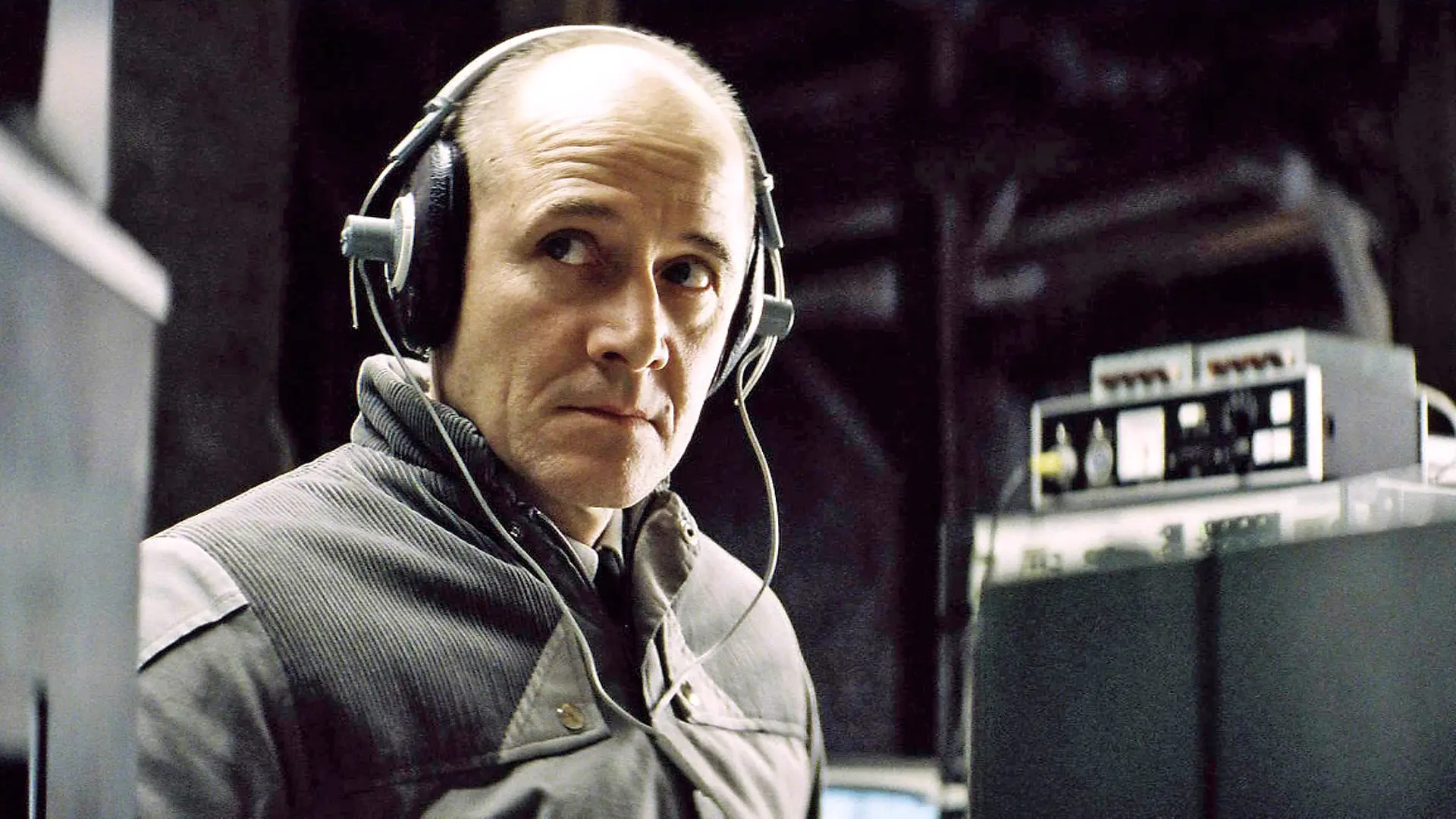
Ulrich Mühe remains one of the most respected figures in German cinema, remembered for his ability to embody complex, often tortured characters with profound psychological depth. Born in 1953 in Grimma, East Germany, Mühe’s career spanned decades of stage and screen work, culminating in international acclaim before his death in 2007 at the age of 54. His legacy is defined by a commitment to authenticity, particularly in roles that explored the moral ambiguities of life in a divided Germany.
Mühe’s most globally recognized performance came in the 2006 film The Lives of Others (Das Leben der Anderen), directed by Florian Henckel von Donnersmarck. In the film, Mühe portrayed Gerd Wiesler, a Stasi captain tasked with surveilling a playwright and his partner in East Berlin. The performance, which earned the film an Academy Award for Best Foreign Language Film, is often cited by critics as a masterclass in understated acting. According to the Academy of Motion Picture Arts and Sciences, the film’s success brought significant international attention to Mühe’s body of work, highlighting his capacity to convey internal transformation through minimal dialogue.
A Legacy of Versatile Performances
Beyond his work as a Stasi officer, Mühe’s filmography showcases a breadth of range that transitioned effortlessly between historical drama and contemporary crime procedural. His portrayal of the poet Friedrich Hölderlin in the 1983 production Hälfte des Lebens demonstrated his early mastery of intellectual, brooding characters. This role helped establish his reputation in the German Democratic Republic (GDR) theater and film scene long before he achieved global fame.
For television audiences, Mühe became a household name through his role as forensic pathologist Robert Kolmaar in the long-running series Der letzte Zeuge (The Last Witness). Running from 1998 to 2007, the show allowed Mühe to bring a humanistic, analytical lens to the crime genre. His portrayal of Kolmaar was lauded for moving away from the typical “action hero” archetype, instead emphasizing the intellectual rigor and quiet empathy required of a medical examiner. This role solidified his status as a pillar of German popular culture, balancing high-brow cinematic roles with consistent, high-quality television work.
The Theatrical Roots of a Character Actor
Mühe’s approach to acting was deeply rooted in his extensive background in theater. Before his transition to film, he was a prominent member of the Berliner Ensemble, where he honed his craft under the influence of the Bertolt Brecht tradition. This background informed his screen performances, which were characterized by a rejection of vanity. He frequently chose roles that required him to disappear into the character, often focusing on the moral stakes faced by individuals living under state surveillance or within rigid institutional structures.
His collaboration with director Michael Haneke further exemplified this approach. In films such as Benny’s Video (1992) and Funny Games (1997), Mühe portrayed characters caught in extreme, often harrowing situations. These roles demonstrated his willingness to confront uncomfortable truths, a hallmark of his career that resonated with both audiences and fellow artists. According to records from the Berlin International Film Festival, his presence in these projects was essential to establishing the unsettling, realistic tone that became a trademark of Haneke’s early work.
Remembering a German Icon
The impact of Mühe’s work persists, with many of his films remaining standard curriculum for students of European cinema. His ability to navigate the history of the GDR—both personally and professionally—provided a unique texture to his performances. Having grown up in East Germany, his insight into the pervasive atmosphere of suspicion was reflected in his portrayal of Gerd Wiesler, a role he famously described as representing the “small, silent resistance” that could exist even within an oppressive system.
The cultural significance of his career is frequently revisited in retrospectives. His transition from the stages of East Berlin to the red carpets of Hollywood remains a rare trajectory, marked by a refusal to compromise the integrity of his craft. As of 2024, his performances continue to be analyzed for their technical precision and emotional resonance, serving as a benchmark for character actors working in international cinema. Fans and scholars alike continue to examine his filmography to understand the evolution of German drama following the reunification of the country.
For those interested in exploring his work, many of his most significant films remain available on major digital platforms and through national film archives. Discussions regarding his influence on modern acting techniques continue to take place in academic journals and film forums worldwide. Readers are invited to share their own perspectives on Mühe’s most memorable performances in the comments below.
Keep reading