
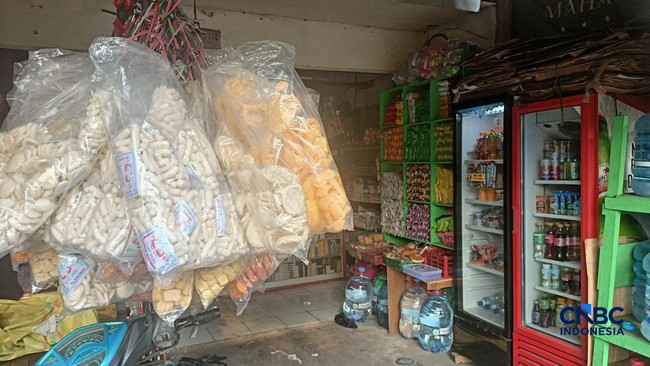
In the narrow residential corridors of Cirendeu, South Tangerang, the daily rhythm of commerce is shifting. For Mukmin, a shopkeeper at a local Warung Madura, the change is not found in a sudden drop in foot traffic, but in the dwindling volume of the bags leaving his store. It is a subtle, granular erosion of spending that suggests a broader trend: a weakening of Indonesia purchasing power among the working class.
While macroeconomic indicators often paint a picture of stability, the “street-level” economy—represented by the ubiquitous small-scale retail shops known as Warung Madura—offers a more immediate reflection of household stress. In these neighborhoods, where daily project workers and low-income families rely on micro-purchases to survive, the ability to buy in bulk is disappearing, replaced by a cautious, day-to-day survival strategy.
This shift in consumer behavior is more than a local anomaly; it is a signal of how inflation and the cost of living are impacting the most vulnerable segments of the Indonesian population. When the scale of a rice purchase drops significantly, it reflects a household budget that can no longer afford to look beyond the next few days.
The “Rice Metric”: Shifting Consumer Habits in South Tangerang
The most telling indicator of economic strain is the reduction in purchase volume for staple goods. Mukmin observes that customers who previously purchased five liters of rice in a single transaction have now scaled back to just two liters. This shift suggests that consumers are no longer buying for the week or the month, but are instead purchasing only what is strictly necessary for immediate consumption.
Despite this contraction in volume, certain essential items remain stable. The demand for basic necessities—specifically instant noodles, eggs, coffee, and cigarettes—continues to move at a normal pace. This indicates that while consumers are cutting back on the quantity of bulk staples, they are clinging to the low-cost calories and small comforts that define the daily diet of the Indonesian working class.
This pattern of “selective austerity” is common in emerging economies during periods of financial pressure. Consumers do not stop buying entirely; instead, they fragment their purchases. This “sachet economy” allows households to manage extremely tight cash flows, but it often increases the long-term cost of goods compared to bulk buying.
The Payday Cycle and Economic Vulnerability
The volatility of spending in Cirendeu is closely tied to the timing of income. There is a stark contrast between the beginning of the month and the period following the 15th. According to local observations, customers are significantly more liberal with their spending immediately after receiving their salaries. However, as the month progresses, the “dry spell” begins.
Mukmin describes a recurring cycle where the latter half of the month is characterized by extreme frugality. This volatility is particularly acute in areas populated by daily project workers, whose income is inconsistent and tied to the availability of manual labor. For these workers, the gap between paychecks is not merely an inconvenience but a period of genuine food insecurity.
The reliance on these small shops is critical because they often provide the only accessible point of sale for those without the means to travel to larger supermarkets or the capital to buy in larger quantities. When these shops report a decline in the nominal value of transactions, it serves as a real-time barometer for the financial health of the urban poor.
Why Warung Madura Serves as an Economic Bellwether
To understand why these shops are such critical indicators, one must understand their role in the Indonesian social fabric. Warung Madura are small, independently owned convenience stores, often run by migrants from the island of Madura, known for their resilience and entrepreneurial spirit. They operate in the gaps left by modern retail chains, providing essential goods to the heart of residential neighborhoods.
Because these shopkeepers interact with dozens of local residents daily, they possess a level of insight into consumer sentiment that official government surveys may miss. They see the exact moment a customer decides they cannot afford a full bag of rice or when a regular buyer switches to a cheaper, lower-quality alternative.
The current trend of increased caution in spending is not entirely new, but the consistency of the decline in purchase volumes suggests a systemic pressure. When the “bottom of the pyramid”—the lowest income earners—begins to tighten their belts, it often precedes a broader slowdown in domestic consumption, which is a primary driver of the Indonesian economy.
Implications for the Broader Economy
The situation in South Tangerang mirrors a growing concern regarding the “squeezed” middle and lower classes in Indonesia. While the national GDP may show growth, the distribution of that wealth often fails to reach the daily wage earners. The pressure is compounded by the rising costs of basic commodities, which eat away at the disposable income of those living paycheck to paycheck.
For the global observer, the “Warung Madura signal” is a reminder that economic health cannot be measured by top-line figures alone. The true state of an economy is often found in the transaction logs of a neighborhood shop. When the volume of rice purchased drops by more than half, it is a clear indication that the cost of living is outstripping wage growth for a significant portion of the population.
As Indonesia continues to navigate global economic headwinds and internal inflationary pressures, the resilience of its traditional retail sector will be tested. The ability of the working class to maintain their purchasing power is not just a matter of retail health, but of social stability.
Economic observers will be closely monitoring the next release of national consumer spending data and inflation reports from the Badan Pusat Statistik (BPS) to see if these localized trends in South Tangerang are reflected in national statistics.
Do you think traditional retail shops are a better indicator of economic health than official government data? Share your thoughts in the comments below.