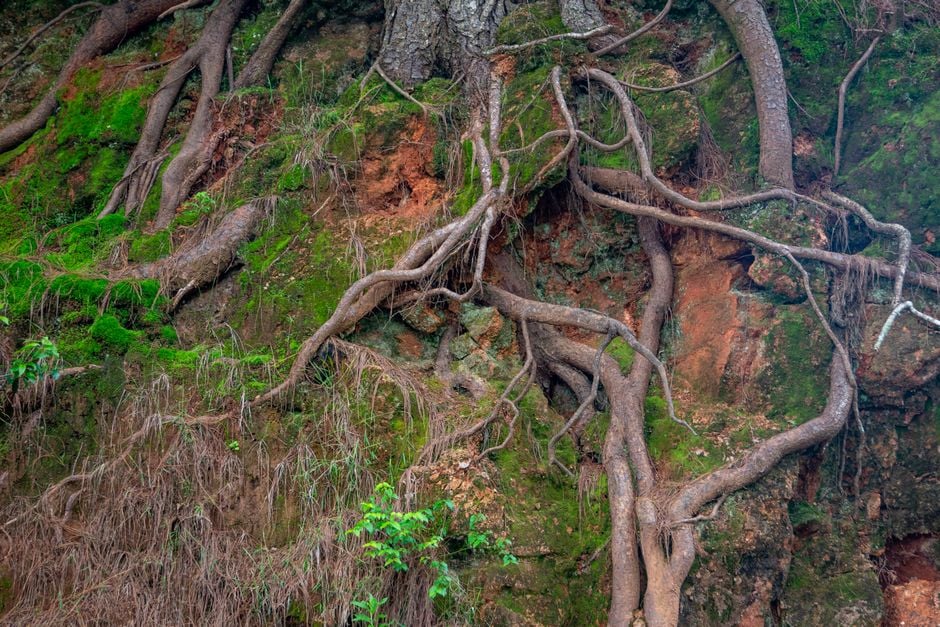
In 1997, ecologist Suzanne Simard conducted a foundational field experiment in British Columbia that demonstrated the transfer of carbon between tree species via underground fungal networks. By isolating paper birch and Douglas fir seedlings in plastic bags and exposing them to carbon-14 and carbon-13 isotopes, Simard observed that carbon moved from the birch to the fir, a process facilitated by ectomycorrhizal fungi in the soil. This study, published in the journal Nature, provided empirical evidence for inter-species resource sharing, challenging traditional views of forest competition.
The Mechanics of Underground Carbon Transfer
Simard’s research focused on the complex symbiotic relationships within forest ecosystems. By using radioactive carbon tracers, she tracked the movement of photosynthetic products from a “donor” tree to a “receiver” tree. The experiment revealed that when paper birch seedlings were shaded, they received more carbon from neighboring Douglas firs; conversely, when Douglas firs were shaded, they received carbon from the birch. According to the initial findings published in Nature, this bidirectional flow occurred through the mycorrhizal mycelium, a network of fungal threads that colonize plant roots.
This discovery shifted the scientific understanding of forest dynamics from a model of purely individualistic survival to one of interconnected systems. The carbon transfer is not a form of communication or “whispering,” but a physiological exchange driven by concentration gradients and the demands of the fungal symbionts. The USDA Forest Service documentation notes that these fungal networks, often referred to as Common Mycelial Networks (CMN), act as conduits for nutrients, water, and carbon, effectively linking the trees within a forest stand.
Experimental Design and Methodology
The 1997 study required precise environmental controls to ensure that carbon isotopes were not simply leaking into the air. Simard enclosed the seedlings in gas-tight plastic bags, injecting carbon-13 and carbon-14 dioxide directly into the enclosures. This allowed for the tracking of the isotopes as they were processed through photosynthesis and subsequently transported through the root systems. After nine days, soil cores were analyzed to verify the presence of the tracers in the roots and the fungal tissue connecting the two species.
The methodology was designed to isolate the role of the fungi. By comparing seedlings with disrupted fungal connections to those with intact networks, Simard was able to quantify the extent of the carbon transfer. The Tree Physiology journal later detailed the limitations and the specific chemical pathways involved in this mycorrhizal-mediated transfer. This empirical approach remains a standard for studying below-ground carbon cycling in temperate forests.
Scientific Context and Modern Interpretations
While the study is often popularized as evidence of sentient forest networks, the scientific community emphasizes the biological, rather than the social, nature of the findings. The transfer of carbon is an ecological process that benefits both the trees and the fungi, which receive sugars from the trees in exchange for minerals like phosphorus and nitrogen. According to a review by the Nature Plants journal, while the existence of these underground networks is well-documented, the degree to which these transfers significantly impact the growth and survival of mature forest trees remains a subject of ongoing debate among forest ecologists.
Recent research has sought to determine if the volume of carbon transferred is sufficient to alter forest productivity on a landscape scale. Studies published in the New Phytologist indicate that while resource sharing occurs, the primary driver of tree health remains light availability and local soil nutrient content. The distinction between the physical movement of molecules and the anthropomorphic interpretation of “whispering” trees is a key point of clarification in modern forestry science.
Future Research Directions
Current investigations are moving beyond the seedling stage to examine how these fungal networks function in old-growth forests. Researchers are now using stable isotope probing and DNA sequencing to map the extent of these subterranean connections in complex environments. The next major milestone for this field is the publication of long-term longitudinal studies on forest resilience, which are expected to be reviewed by the Canadian Forest Service in the coming years.
Understanding these networks is critical for forest management, particularly in the context of climate change and reforestation efforts. As practitioners look for ways to improve seedling survival rates, the role of soil fungal health is increasingly recognized as a vital component of silviculture. Stay tuned for further updates on how soil microbiome research will shape future environmental policy and forest conservation strategies. We invite readers to share their thoughts on the evolution of forest science in the comments section below.