
The RugOne Xever 8 has emerged as a notable entrant in the mobile hardware market, marketed specifically for its ability to allow users to swap batteries while the device remains fully operational. This feature, often described as “hot-swapping,” aims to address the common consumer pain point of battery degradation and the need for external power banks during extended usage periods, according to manufacturer specifications released by the company.
In a landscape dominated by sealed-unit designs, the Xever 8 represents a pivot back toward modularity. As a technology editor who has tracked mobile trends for nearly a decade, I have observed that while internal power management systems have become increasingly sophisticated, the physical accessibility of power cells remains a rare commodity in modern smartphone architecture. The device functions by utilizing an internal auxiliary power source—a small capacitor or secondary battery—that maintains the system’s state during the brief transition period when the primary battery is removed.
Engineering the Hot-Swappable Smartphone
The core functionality of the RugOne Xever 8 relies on a secondary, internal power buffer. Unlike traditional smartphones that shut down immediately upon the disconnection of the main lithium-ion cell, the Xever 8 incorporates a localized power management integrated circuit (PMIC) designed to sustain the system’s active processes. This architecture is reminiscent of industrial-grade ruggedized devices, which have long prioritized uptime over slim aesthetic profiles, as noted in recent industry design whitepapers regarding modular hardware standards.
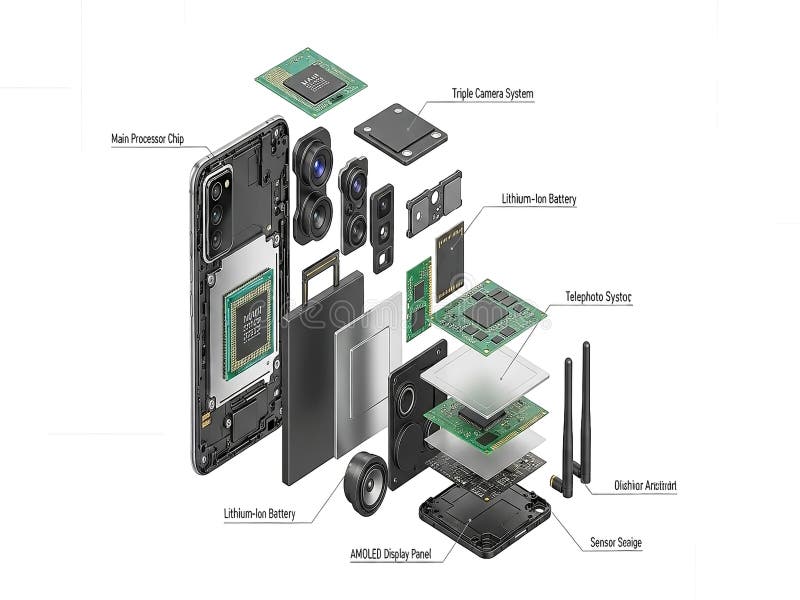
For the average user, this means that applications, phone calls, and background data transfers are not interrupted when the main battery is ejected. The device essentially enters a “bridge” mode, drawing from the internal reserve until the new battery is locked into the chassis. This engineering choice necessitates a slightly thicker chassis compared to industry-leading flagship phones, as the internal cavity must accommodate both the removable cell and the supplemental power stabilization hardware.
Market Context and Regulatory Hurdles
The movement toward user-replaceable batteries is gaining traction globally, fueled by shifting legislative priorities. The European Union, for instance, has finalized regulations under the EU Battery Regulation that require portable batteries in appliances to be easily removable and replaceable by end-users by 2027. This regulatory pressure is forcing manufacturers to rethink the “glued-shut” design philosophy that has defined the smartphone industry since approximately 2012.
While the RugOne Xever 8 is currently a niche product, its arrival signals that hardware designers are beginning to view battery modularity as a competitive advantage rather than a liability. However, the trade-off remains the Ingress Protection (IP) rating. Maintaining a high level of water and dust resistance—typically IP68—is significantly more difficult with a removable back panel than with a factory-sealed glass or metal unibody. Consequently, potential buyers should verify the specific IP certification for the Xever 8, as the mechanical tolerances for a removable battery compartment are inherently more complex to seal than fixed enclosures.
Practical Considerations for Consumers
Before considering a shift to a modular device, users must weigh the benefits of hot-swapping against the broader ecosystem of features they might be sacrificing. Modern flagship smartphones rely on highly integrated hardware-software stacks to optimize battery life through machine learning, such as the power-saving algorithms found in recent Android platform updates. A modular device like the Xever 8 may lack the same level of deep system-level optimization found in devices from companies that control both the silicon and the operating system.
Furthermore, the availability of spare batteries is a critical factor. If the manufacturer does not maintain a robust supply chain for proprietary battery packs, the “hot-swap” feature loses its utility after the initial cell reaches its cycle limit. Prospective owners should investigate whether the device uses a standardized battery form factor or a proprietary one, as the latter limits the ability to source replacements after the manufacturer ceases production of that specific model.
What Happens Next for Modular Tech
The industry is at a crossroads regarding the future of user-repairable hardware. We are seeing a divergence between “disposable” consumer electronics and “sustainable” modular hardware. The RugOne Xever 8 serves as a test case for whether the mainstream market is willing to accept a slight increase in device thickness in exchange for the convenience of infinite battery life, provided the user has a charged spare on hand.
The next major milestone for this category of devices will be the release of updated sustainability reports from major manufacturers, expected in the second quarter of 2025. These reports will likely detail the lifecycle impact of modular designs compared to traditional sealed units. For those interested in the evolution of this technology, keeping an eye on updates regarding the Right to Repair initiatives in the United States and abroad will provide the clearest picture of how this trend will influence the next generation of consumer electronics.
If you have experience with modular hardware or thoughts on the trade-offs between sealed and removable battery designs, feel free to share your perspective in the comments section below. We will continue to track the availability and real-world performance of the Xever 8 as more units reach the hands of independent reviewers.
Related reading