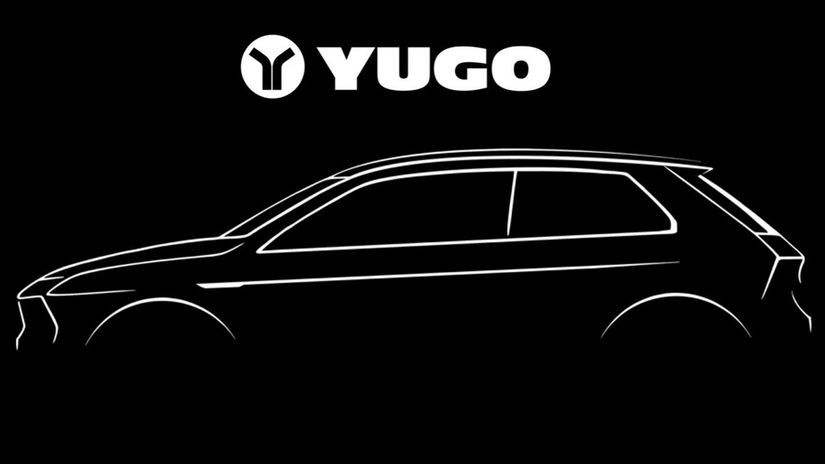
The automotive industry is currently navigating a period of profound transformation, driven by the dual pressures of decarbonization and a shifting global economic landscape. Amidst this turbulence, a peculiar brand of nostalgia has begun to resurface in market discussions: the potential return of the Yugo. Once a symbol of affordable, albeit controversial, mobility from the former Yugoslavia, the Yugo name is once again appearing in headlines, sparking intense debate among industry analysts and consumers alike.
While recent speculative reports have suggested that a new iteration of the Yugo could be imminent—complete with specific projections regarding price points and energy consumption—it is essential to distinguish between market sentiment and official manufacturing announcements. As of this writing, no major automotive conglomerate or successor to the Zastava legacy has released a formal prospectus for a “Yugo 2.0.” However, the persistent rumors are not merely products of sentimentality; they are symptoms of a genuine, widening gap in the global automotive market: the lack of truly affordable electric vehicles (EVs).
From a macroeconomic perspective, the conversation surrounding a Yugo revival highlights a critical tension in the transition to green energy. As governments mandate a shift away from internal combustion engines (ICE), the cost of entry for new vehicle owners is rising. This “affordability gap” is creating a vacuum in the entry-level segment, a space the original Yugo once occupied with ease. For the business community, the question is not whether the Yugo brand will return, but whether the market demand for a low-cost, high-utility vehicle is strong enough to trigger a new wave of micro-mobility innovation.
The Economic Driver: The Growing Affordability Gap in the EV Market
The primary driver behind the renewed interest in a “Yugo-style” vehicle is the escalating cost of modern transportation. For decades, the automotive industry relied on a tiered hierarchy of vehicle classes, with a robust entry-level segment providing mobility to lower-income demographics. As the industry pivots toward electrification, this segment is under threat. The high cost of lithium-ion battery technology continues to keep the MSRP (Manufacturer’s Suggested Retail Price) of most electric vehicles out of reach for a significant portion of the global population.
According to data from the International Energy Agency (IEA), while EV adoption is growing, the price parity between electric and internal combustion vehicles remains a significant hurdle in many regions. This disparity is particularly acute in Europe and emerging markets, where urban density is increasing and the demand for compact, efficient city cars is at an all-time high. The “Yugo” concept—a small, no-frills, highly efficient vehicle—aligns perfectly with the current economic necessity for accessible urban mobility.
If a manufacturer were to successfully launch a low-cost EV, they would be targeting a segment that is currently underserved. The economic potential is vast, but the barriers to entry are formidable. To achieve the low price points often discussed in speculative circles, a manufacturer would need to master several complex variables:
- Battery Chemistry Optimization: Moving away from expensive nickel-manganese-cobalt (NMC) batteries toward more cost-effective lithium iron phosphate (LFP) chemistries.
- Vertical Integration: Controlling the supply chain from raw materials to final assembly to reduce margin leakage.
- Simplified Manufacturing: Utilizing modular platforms that minimize the number of unique parts and assembly time.
The business logic is clear: the first company to successfully bridge the gap between “affordable” and “electrified” will capture a massive, untapped demographic of urban commuters and first-time car buyers.
Decoding the Speculation: Price, Consumption, and Reality
The rumors circulating in various regional media outlets often focus on two key metrics: the purchase price and the energy consumption of a potential new Yugo. These discussions typically suggest a vehicle that is significantly cheaper than current European subcompacts, potentially utilizing a small battery pack designed for short-range urban trips. While these figures remain unverified by any official manufacturer, they reflect the specific parameters that would be required for such a project to be commercially viable.
In the context of modern automotive engineering, “consumption” refers not just to fuel or electricity per kilometer, but to the total cost of ownership (TCO). A successful revival would need to demonstrate ultra-low energy consumption to appeal to the budget-conscious consumer. This would require advanced aerodynamics, lightweight composite materials, and highly efficient electric powertrains. However, there is a significant technical catch: the more “stripped back” a vehicle is to save costs, the harder it becomes to meet modern safety and regulatory standards.
The original Yugo was produced in an era with vastly different regulatory requirements. Today, any vehicle entering the European or global markets must pass rigorous crash tests and comply with stringent safety protocols, including advanced driver-assistance systems (ADAS) and sophisticated airbag configurations. For a manufacturer, integrating these mandatory safety features while maintaining a “Yugo-level” price point is a monumental engineering and financial challenge. The cost of safety, quite literally, threatens the very concept of the ultra-cheap car.
The Micro-Mobility Landscape: Existing Competitors
While the Yugo name remains speculative, the market for small, affordable, urban-centric vehicles is already being contested. We are seeing the rise of a new category: the heavy quadricycle or “micro-EV.” These vehicles are designed specifically for short-range urban travel and occupy the space between a traditional car and a scooter.
One of the most prominent examples is the Citroën Ami, which has found success in various European markets by offering a simplified, highly affordable electric solution. These vehicles do not attempt to compete with traditional hatchbacks on range or power; instead, they focus on ease of use, low cost, and urban maneuverability. This segment serves as a proof of concept for the very market that a Yugo revival would hope to capture.
The competitive landscape for this niche includes:
- Established OEMs: Companies like Stellantis and Renault, which are increasingly looking at micro-mobility as a way to maintain market share in dense urban centers.
- Chinese EV Manufacturers: Companies such as Wuling, which have already demonstrated the ability to produce extremely low-cost electric vehicles at scale in the Chinese market.
- Startups and Niche Players: Smaller entities focusing on specialized urban solutions and “last-mile” transport.
The entrance of Chinese manufacturers into the European market is a critical factor to monitor. As noted by various financial analysts, the ability of Chinese firms to produce high-tech, low-cost EVs poses a significant competitive challenge to traditional European manufacturers. If the “Yugo” concept is to be realized by a European entity, it will likely be in response to this competitive pressure.
Regulatory and Structural Hurdles to a Low-Cost Revival
Beyond the engineering and economic challenges, any attempt to revive a brand like Yugo would face significant structural headwinds. The automotive industry is no longer just about mechanical assembly; it is an ecosystem of software, connectivity, and complex international trade regulations.
First, there is the issue of intellectual property and brand equity. The Yugo brand carries a dual legacy: it is a symbol of nostalgic pride for some and a symbol of industrial failure for others. Rebranding or reviving such a polarizing name requires a sophisticated marketing strategy that can pivot the brand from “cheap and unreliable” to “efficient and smart.”

Second, infrastructure requirements present a barrier to entry-level consumers. An affordable EV is only useful if it can be charged affordably. The disparity in charging infrastructure between urban and rural areas, as well as the varying costs of electricity, directly impacts the value proposition of a low-cost electric vehicle. A “Yugo” would need to be compatible with the simplest, most ubiquitous charging solutions to truly serve its target demographic.
Finally, global supply chain volatility remains a wild card. The cost of raw materials—lithium, cobalt, nickel, and copper—fluctuates significantly based on geopolitical tensions and mining output. For a manufacturer operating on the razor-thin margins required for an entry-level vehicle, even a minor spike in commodity prices can render a business model unsustainable.
Key Takeaways for Investors and Consumers
- Market Demand is Real: There is a documented and growing demand for affordable, entry-level electric vehicles to bridge the “affordability gap.”
- Speculation vs. Reality: While rumors of a Yugo return are fueled by market needs, no official manufacturer has confirmed such a project.
- Safety is the Cost Driver: Modern safety regulations and crash-test standards are the primary obstacles to producing ultra-low-cost vehicles.
- Micro-Mobility is the Current Frontier: The market is currently being shaped by “quadricycles” and micro-EVs rather than traditional small cars.
- Geopolitical Competition: The entry of low-cost Chinese EV manufacturers is the most significant competitive factor in this segment.
The Path Ahead
The conversation surrounding the Yugo is a microcosm of the broader challenges facing the global automotive industry. It is a debate about accessibility, the cost of progress, and the tension between nostalgia and the harsh realities of modern manufacturing. Whether the Yugo name ever returns to the streets or remains a mere footnote in economic discourse, the demand it represents is undeniably real.
As we move into the next phase of the electric transition, the industry’s ability to deliver on the promise of affordable mobility will be the true measure of its success. For now, market participants should look toward official filings from major automotive groups and upcoming industry summits for any concrete evidence of a strategic shift toward the ultra-low-cost segment.
Next Confirmed Checkpoint: Watch for official quarterly earnings reports and strategic roadmaps from major European automotive manufacturers (such as Stellantis or Renault) for any mentions of new entry-level EV platforms or micro-mobility expansions.
What are your thoughts on the return of low-cost, entry-level vehicles? Do you think the “micro-EV” segment is the future of urban transport? Share your insights in the comments below and share this article with your network.
Keep reading