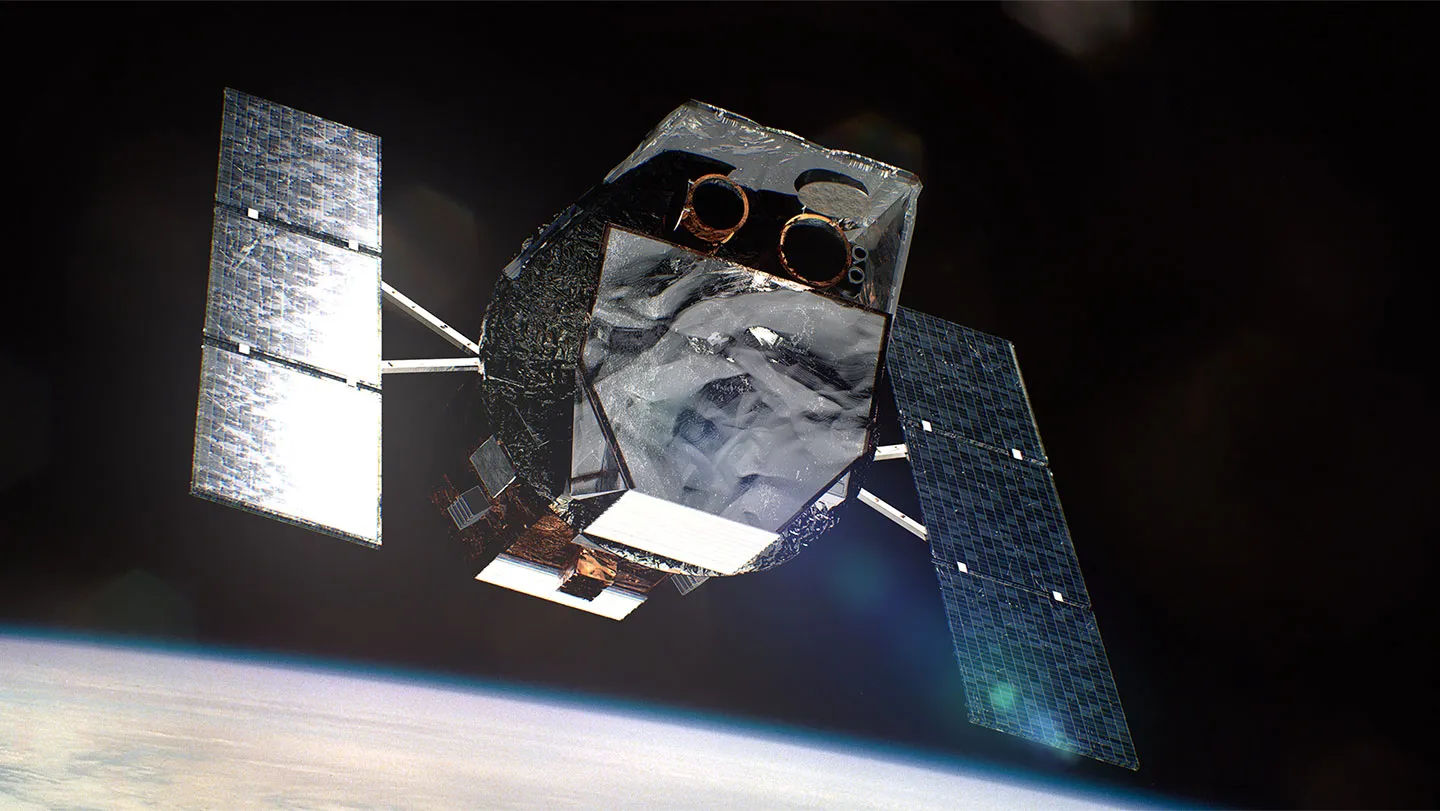
NASA’s Neil Gehrels Swift Observatory, a critical space telescope launched in 2004 to study gamma-ray bursts, is currently experiencing a gradual loss of altitude that threatens its long-term viability. To address this, the agency is exploring a potential commercial mission to provide a propulsion boost, a move that would extend the life of the aging satellite and maintain its ability to monitor high-energy events in the universe.
According to NASA, the Swift observatory operates in a low-Earth orbit, which is subject to atmospheric drag. Over the last two decades, this friction has slowly pulled the spacecraft toward the atmosphere. While the telescope remains fully functional, the mission team is investigating options to extend its operational life by re-boosting its orbit, potentially utilizing a private, robotic spacecraft. This collaborative approach reflects a broader shift in space policy, where NASA increasingly relies on commercial partnerships to maintain aging scientific assets.
The Scientific Importance of the Swift Observatory
The Swift telescope was designed to solve the mystery of gamma-ray bursts—the most powerful explosions in the universe. Since its launch on November 20, 2004, the observatory has provided real-time data on these flashes, which occur when massive stars collapse or neutron stars collide, according to official NASA mission records. Because these events are transient and unpredictable, Swift’s ability to autonomously detect and point its instruments at a burst within seconds has made it an indispensable tool for astrophysicists.
The telescope carries three primary instruments: the Burst Alert Telescope (BAT), the X-ray Telescope (XRT), and the Ultraviolet/Optical Telescope (UVOT). By observing these bursts across multiple wavelengths, researchers can determine the distance, intensity, and composition of the explosions. Maintaining the observatory allows for the continued study of cosmic phenomena, including the gravitational wave events that have become a major focus of modern multi-messenger astronomy.
Addressing Orbital Decay
Orbital decay is a natural consequence of operating in low-Earth orbit. As the atmosphere thins at higher altitudes, small amounts of gas still interact with satellites, creating drag that slows them down. As the velocity decreases, the satellite loses altitude. For the Swift observatory, this process has been managed for years through careful fuel consumption and mission planning.

However, the propellant reserves required for station-keeping are finite. Once a satellite exhausts its fuel, it can no longer maintain its orbit or orient itself toward targets, eventually re-entering the atmosphere and burning up. NASA’s interest in a commercial service mission is driven by the desire to avoid this outcome for a still-productive scientific platform. By docking a robotic “tug” or propulsion module to the telescope, the agency could theoretically provide the necessary kinetic energy to raise the satellite’s orbit, effectively resetting the clock on its atmospheric descent.
The Role of Commercial Space Services
The concept of “in-space servicing, assembly, and manufacturing” (ISAM) has gained significant traction within the aerospace industry. Companies such as Northrop Grumman have previously demonstrated the ability to dock with aging satellites to provide station-keeping services, such as the Mission Extension Vehicle (MEV). While no contract has been finalized for the Swift observatory specifically, NASA’s exploration of this path signals a willingness to treat space infrastructure as an asset that can be maintained rather than replaced.
This approach offers several potential benefits:
- Cost-effectiveness compared to launching a new, multi-billion dollar replacement mission.
- Reduction of space debris by preventing uncontrolled re-entries.
- Advancement of robotic docking and refueling technologies that could be applied to future deep-space missions.
What Happens Next
NASA has not yet announced a specific timeline or a selected commercial partner for a potential Swift servicing mission. The agency continues to monitor the health of the observatory and its orbital parameters. As the mission enters its third decade of operation, the focus remains on maximizing scientific return while navigating the technical challenges of an aging platform.

Readers interested in the latest updates regarding the Swift observatory can monitor the official NASA Science mission portal for upcoming status reports and agency announcements. We invite you to share your thoughts on the future of robotic satellite servicing in the comments section below.