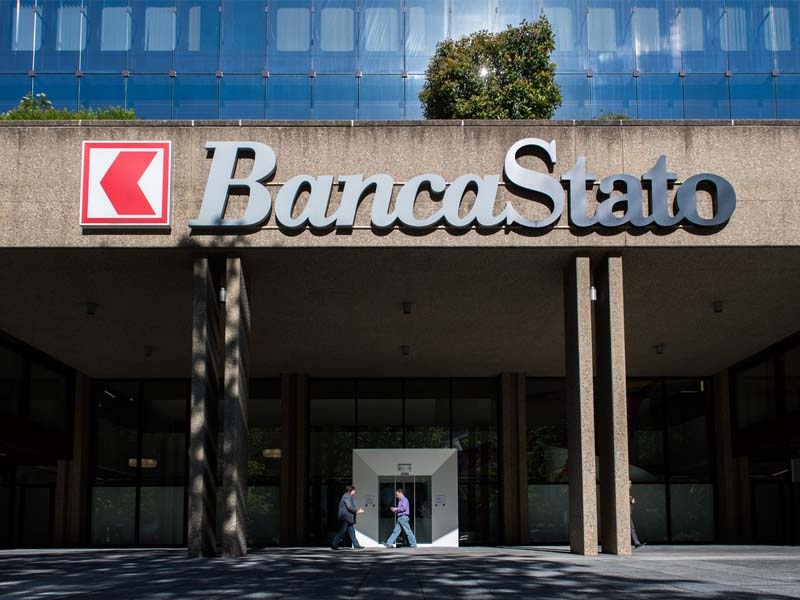
Bellinzone, Switzerland – BancaStato, the cantonal bank of Ticino, is facing significant headwinds as a result of the prolonged period of zero interest rates. The bank reported a substantial 27.7% decline in net profit for 2025, falling to 60.1 million Swiss francs, despite an increase in lending volume. This downturn underscores the challenges faced by financial institutions operating in a low-interest-rate environment, where traditional revenue streams are squeezed.
The impact of these policies is felt acutely across BancaStato’s operations, though the bank continues to demonstrate resilience in key areas. While net profit took a considerable hit, the bank has maintained a strong balance sheet and continues to contribute significantly to the economic well-being of the Canton of Ticino. Fabrizio Cieslakiewicz, BancaStato’s CEO, highlighted the bank’s decade-long commitment to the region, noting that over 464.8 million Swiss francs have been allocated to benefit Ticino and its residents over the past ten years.
The challenging economic climate has prompted a reassessment of strategies within BancaStato, as the bank navigates a landscape where traditional interest-based income is diminished. The bank’s operating result also experienced a decline, dropping 24.4% to 110.7 million Swiss francs, largely due to an 8.7% decrease in operating income to 321.1 million Swiss francs, coupled with a 2.9% rise in expenses to 197.0 million Swiss francs. This complex interplay of factors highlights the delicate balance BancaStato must strike to maintain profitability in the current environment.
Impact of Zero Interest Rates on BancaStato’s Core Business
The core of BancaStato’s business, interest-bearing operations, saw a net result decrease of 12.7% year-on-year, reaching 228.9 million Swiss francs. As reported by Agefi, this decline is directly attributed to the prevailing zero-interest-rate policy. Despite this challenge, BancaStato demonstrated growth in its mortgage volumes, increasing by 3.6% to 12.83 billion Swiss francs, and saw a 3.4% rise in customer loans, reaching 15.65 billion Swiss francs. This indicates continued demand for credit despite the broader economic pressures.
Yet, the bank’s ability to generate revenue from these lending activities is constrained by the low-interest-rate environment. The pressure on net interest income is a common theme across the banking sector, as institutions struggle to maintain margins in a world of near-zero rates. This situation necessitates a focus on diversification and efficiency improvements to offset the impact of reduced interest income.
Growth in Wealth Management and Trading Activities
While interest-bearing operations faced headwinds, BancaStato’s other core businesses – wealth management and trading – showed positive momentum. Wealth management generated revenues of 65.0 million Swiss francs, a 2.6% increase, while trading activities saw a more substantial rise of 9.5% to 23.8 million Swiss francs. Zonebourse reports that these gains demonstrate the bank’s ability to capitalize on opportunities in these areas, even amidst broader economic challenges.
The growth in wealth management is particularly noteworthy, as it reflects a broader trend of increasing demand for financial advisory services. As individuals and families seek to navigate complex financial landscapes, they are increasingly turning to professional wealth managers for guidance. BancaStato’s success in this area suggests a strong client base and a reputation for providing high-quality financial advice.
Balance Sheet Strength and Future Outlook
BancaStato’s balance sheet remains robust, with total assets increasing by 2.8% to 19.79 billion Swiss francs, including 12.28 billion Swiss francs in customer deposits, a 1.5% increase. Off-balance sheet assets under management reached 24.1 billion Swiss francs, representing a 3.0% increase compared to the finish of December 2024. This demonstrates the bank’s ability to attract and retain client assets, even in a challenging environment.
Despite the positive trends in asset growth, BancaStato has not provided any specific financial forecasts for the current year. This cautious approach reflects the uncertainty surrounding the future economic outlook and the potential for further changes in interest rate policies. The bank is likely to prioritize risk management and capital preservation in the near term, while continuing to explore opportunities for growth in its core businesses.
The bank also announced the departure of Marco Tini, the CEO of its subsidiary Axion Swiss Bank, which specializes in wealth management. Tini will be stepping down in the second half of 2026 to pursue personal projects, after a decade of service. The bank has initiated a succession process to ensure a smooth transition.
Ticino’s Economic Dependence on BancaStato
BancaStato plays a crucial role in the economy of the Canton of Ticino. The bank’s financial performance directly impacts the canton’s revenues, with 57.4 million Swiss francs earmarked for the canton from the 2025 net profit. This contribution underscores the bank’s importance as a source of funding for public services and infrastructure projects in the region. The bank’s broader economic impact extends beyond direct financial contributions, as it provides employment opportunities and supports local businesses.
The bank’s long-term commitment to Ticino is evident in its track record of allocating resources to the region. Over the past decade, BancaStato has allocated a total of 464.8 million Swiss francs to benefit Ticino and its residents, demonstrating its dedication to the economic well-being of the canton. This sustained investment has helped to foster economic growth and improve the quality of life for residents of Ticino.
The challenges faced by BancaStato, have broader implications for the entire canton. The bank’s ability to navigate the low-interest-rate environment and maintain profitability is essential for ensuring the continued economic prosperity of Ticino. The canton will be closely monitoring the bank’s performance and working with its management to address the challenges it faces.
The Swiss banking sector as a whole is grappling with the consequences of negative and near-zero interest rates, a policy implemented by the Swiss National Bank (SNB) to manage the value of the Swiss franc. While intended to prevent excessive appreciation of the currency, these policies have significantly impacted the profitability of banks, particularly those reliant on traditional lending activities. BancaStato’s experience is a microcosm of the broader challenges facing the Swiss banking industry.
Looking ahead, BancaStato will need to focus on diversifying its revenue streams, improving efficiency, and adapting to the changing financial landscape. The bank’s success will depend on its ability to innovate and provide value-added services to its clients, while maintaining a strong balance sheet and a commitment to the economic well-being of the Canton of Ticino. The next key update from BancaStato is expected during its annual general meeting in the spring of 2027, where it will likely provide further insights into its strategic direction and financial performance.
What are your thoughts on BancaStato’s performance? Share your comments below and let us know how you consider the bank can navigate these challenging times. Don’t forget to share this article with your network!