
As tick populations continue to expand across Europe, public health officials are intensifying efforts to educate residents and outdoor enthusiasts on the risks of tick-borne illnesses. Lyme disease, caused by the bacterium Borrelia burgdorferi and transmitted through the bite of infected Ixodes ricinus ticks, remains the most prevalent vector-borne disease in the region. Recent data from public health agencies suggest that shifting environmental conditions and increased human interaction with wooded areas have contributed to a higher incidence of tick encounters, necessitating proactive prevention strategies.
According to the European Centre for Disease Prevention and Control (ECDC), the geographical distribution of ticks is widening, with the insects now appearing at higher altitudes and latitudes than previously recorded. This expansion is frequently linked to milder winters and longer growing seasons, which allow tick populations to survive and reproduce in environments that were once too harsh. For those living in or visiting rural areas, understanding the lifecycle of the tick and implementing consistent protective measures is the most effective way to mitigate the risk of infection.
Understanding Tick-Borne Risks and Transmission
Ticks thrive in tall grass, leaf litter, and wooded undergrowth, where they wait for a host to brush against them. Contrary to popular belief, ticks do not jump or fly; they wait for a host to pass by before latching on. Once attached, a tick requires a period of attachment—typically 24 to 48 hours—to successfully transmit the bacteria responsible for Lyme disease, as noted by the Centers for Disease Control and Prevention. This window of time is crucial, as prompt removal significantly reduces the risk of pathogen transmission.
Public health experts emphasize that not every tick bite results in illness, but the prevalence of infected ticks varies significantly by region. In some endemic areas, infection rates in adult ticks can be substantial. Surveillance studies conducted across various European territories have identified that domestic animals, particularly hunting dogs, are often the first to encounter ticks in high-density areas. Consequently, these animals can act as sentinels for tick activity in a given environment, bringing ticks into closer proximity with human populations.
Effective Prevention and Daily Habits
Mitigating the risk of tick bites requires a combination of environmental awareness and personal protective measures. When spending time in high-risk areas, the most effective defense involves wearing long-sleeved clothing and trousers tucked into socks to minimize exposed skin. Light-colored clothing is recommended, as it allows for easier detection of crawling ticks before they reach the skin. Additionally, the use of insect repellents containing DEET or Icaridin, applied according to manufacturer instructions, provides a chemical barrier that can deter tick attachment.
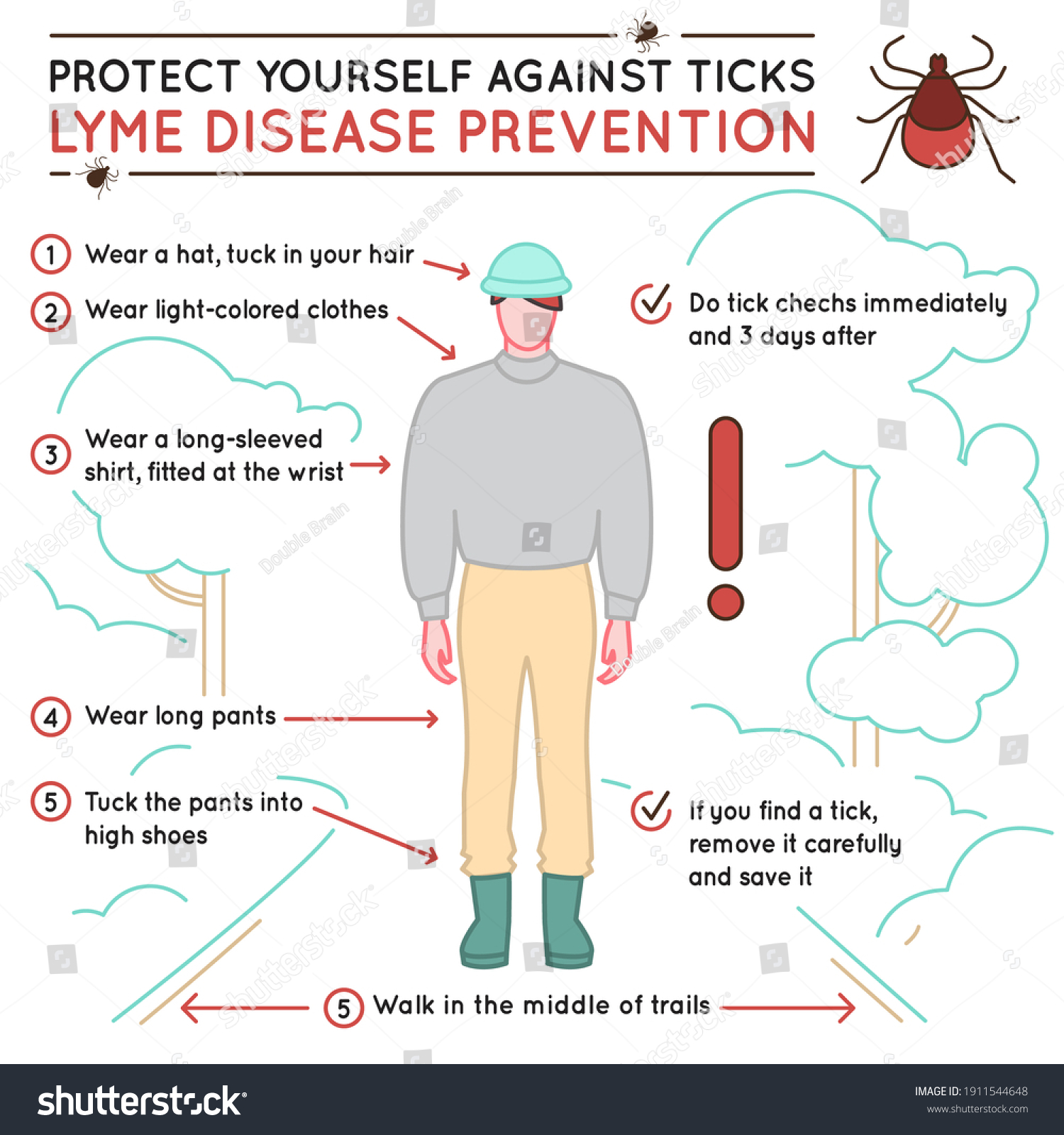
Performing a thorough “tick check” immediately after returning from outdoor activities is an essential, if often overlooked, habit. A tick can be as small as a poppy seed during its nymph stage, making them difficult to spot without careful inspection. Key areas to check include behind the knees, the groin, the armpits, and the hairline, as ticks prefer warm, moist, and protected areas of the body. If a tick is found attached, it should be removed promptly using fine-tipped tweezers by grasping the tick as close to the skin as possible and pulling upward with steady, even pressure.
Medical Surveillance and Early Detection
Early detection of Lyme disease is vital for successful treatment. The most recognized early symptom is erythema migrans, a characteristic circular rash that often expands outward from the site of the bite, sometimes resembling a bullseye. However, not all patients develop this rash. Other early indicators may include flu-like symptoms, such as fever, fatigue, joint pain, and muscle aches. If these symptoms appear within weeks of a tick bite, medical consultation is strongly advised.
The World Health Organization maintains that while Lyme disease can cause long-term complications if left untreated, it is highly responsive to standard antibiotic therapies when caught in the early stages. The focus of current public health policy is to shift from reactive treatment to community-based prevention. This involves hosting local informational sessions and distributing guidance on landscape management, such as clearing brush around residential properties to reduce tick habitats.
What Happens Next
As the summer season progresses, regional health authorities are expected to release updated surveillance reports regarding tick activity levels. Residents are encouraged to monitor official communications from local health departments for specific regional advisories. Ongoing research into vaccine development and improved diagnostic testing remains a priority for the scientific community, though no widespread vaccination program for humans is currently implemented in most European countries. For further information on local tick density or to report a sighting in your area, please consult the resources provided by your national public health institute or local municipal office.

We welcome your questions and experiences regarding tick safety. Please feel free to share this information with your community to help raise awareness about preventive health practices.
Worth a look