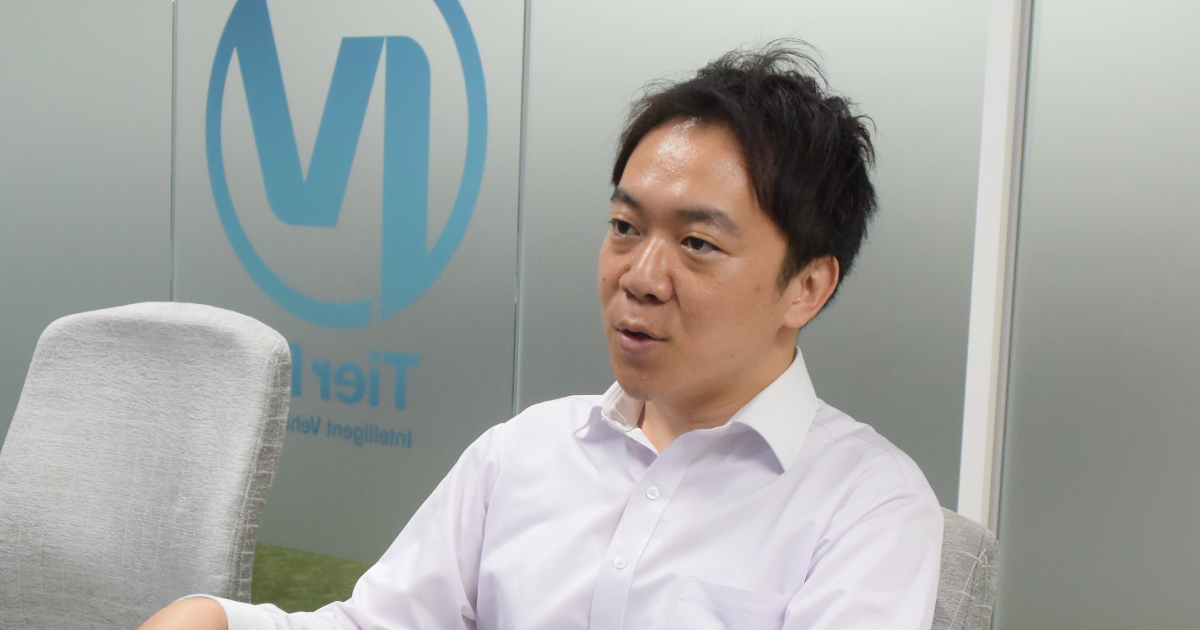
TiertFour Ltd. listed on the Tokyo Stock Exchange on July 22, 2024, marking the first initial public offering (IPO) for a company specializing exclusively in autonomous driving software in Japan. Despite reporting a net loss of approximately 4 billion yen, the company maintains a high average annual salary of 10.98 million yen for its employees, according to financial data and company filings.
The company, identified by ticker 593A, positions itself as a provider of the “Autoware” open-source software ecosystem. This strategic focus on open-source architecture allows TiertFour to collaborate with various automotive manufacturers and municipalities to deploy autonomous vehicle (AV) services without the restrictive silos of proprietary software.
Investors and industry analysts are weighing the company’s aggressive talent acquisition costs—evidenced by the high salary average—against its current lack of profitability. This financial structure is common among “deep tech” startups where high-cost engineering talent is prioritized to secure intellectual property and market share before reaching a commercial break-even point.
How does TiertFour justify high salaries despite a 4 billion yen loss?
The discrepancy between TiertFour’s net losses and its high compensation packages reflects a strategy to attract world-class engineers in a hyper-competitive global market for autonomous driving talent. According to data from Yahoo Finance Japan and company disclosure documents, the average annual salary of 10.98 million yen is designed to compete with global tech giants and specialized AI firms.
The 4 billion yen loss is primarily attributed to heavy research and development (R&D) expenditures. In the autonomous driving sector, the cost of mapping, sensor integration, and safety validation requires significant upfront capital. TiertFour’s business model relies on the scaling of its Autoware platform, which aims to reduce development costs for other companies by providing a standardized software foundation.
This approach contrasts with traditional automotive OEMs (Original Equipment Manufacturers) that develop closed systems. By utilizing an open-source model, TiertFour seeks to create a global standard for AV software, effectively turning its R&D spend into a platform that others pay to implement and customize.
What is the impact of TiertFour’s IPO on the Japanese AV market?
The listing of TiertFour on July 22, 2024, signals a shift in the Japanese venture capital and public market appetite for specialized AI companies. As the first “pure-play” autonomous driving IPO in Japan, TiertFour provides a valuation benchmark for other startups in the mobility-as-a-service (MaaS) sector.

According to reports from Shikiho Online, TiertFour is among a group of approximately 19 autonomous driving-related stocks gaining attention in the Japanese market. The company’s ability to secure a public listing despite substantial losses suggests that investors are prioritizing the potential for long-term platform dominance over immediate quarterly profits.
The company’s focus on “Level 4” autonomy—where the vehicle can operate without human intervention within a specific area—is a key driver of this interest. By partnering with local governments for shuttle services and logistics, TiertFour is attempting to create “smart city” hubs that prove the commercial viability of AVs in controlled environments.
Who are the primary stakeholders affected by this financial model?
The current financial trajectory of TiertFour affects three primary groups: the public shareholders, the engineering workforce, and the Japanese automotive industry.
For shareholders, the risk lies in the “burn rate”—the speed at which the company spends its capital. With a net loss of 4 billion yen, the company must either achieve rapid revenue growth from its software licenses and consulting services or seek further funding rounds to sustain operations. The IPO provided a significant influx of capital to extend this runway.
For the workforce, the high average salary of 10.98 million yen creates a high-performance culture but also increases the company’s fixed costs. If the company fails to transition from R&D to a profitable product phase, these labor costs could become unsustainable.
For the Japanese automotive industry, TiertFour represents a shift toward software-defined vehicles (SDVs). Traditional manufacturers are increasingly looking toward software partners to accelerate their transition to autonomy, making TiertFour a critical infrastructure provider rather than just a vehicle manufacturer.
Comparison of TiertFour’s Financial Positioning
To understand TiertFour’s position, it is useful to compare its “open-source” approach with the “closed-system” approach used by competitors like Waymo or Cruise.

| Feature | TiertFour (Open-Source Focus) | Proprietary AV Firms |
|---|---|---|
| Software Access | Open-source (Autoware) | Closed/Proprietary |
| Primary Cost | High Engineering Salaries | Massive Fleet Hardware/Testing |
| Revenue Path | Licensing, Consulting, Ecosystem | Direct Ride-Hailing Services |
| Market Strategy | Platform Standardization | Vertical Integration |
What happens next for TiertFour?
TiertFour’s immediate focus remains the commercial deployment of its autonomous driving software across various urban and industrial settings. The company must now demonstrate that its high investment in human capital can translate into scalable revenue streams.
The next critical checkpoint for investors will be the company’s quarterly earnings reports following the July IPO, which will reveal how the newly raised capital is being allocated and whether the net loss is narrowing. Market participants will be looking for signed contracts with major automotive OEMs or expanded municipal partnerships that indicate a shift from the “testing” phase to the “deployment” phase.
For those tracking the company’s progress, official filings can be monitored via the Japan Exchange Group (JPX) and the company’s investor relations portal.
Do you believe high salaries are a necessary risk for deep-tech IPOs, or a red flag for sustainability? Share your thoughts in the comments below.