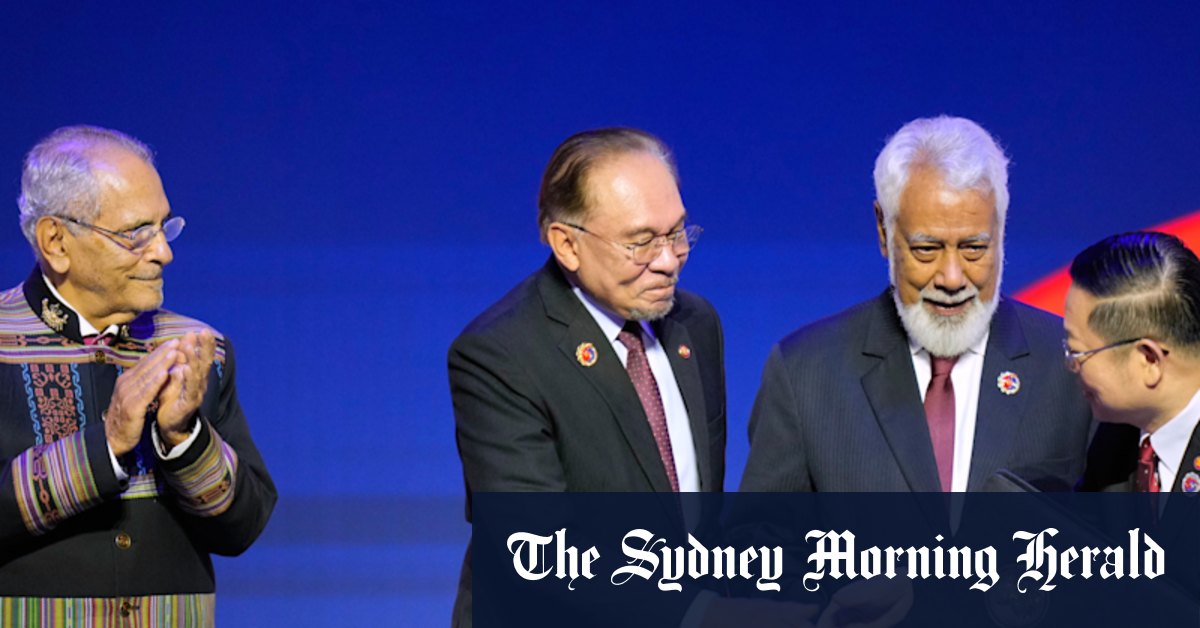
Timor-lestes ASEAN Accession: A New Dynamic in a Turbulent region
Timor-Leste is poised to become the 11th member of the Association of Southeast Asian Nations (ASEAN), marking a pivotal moment for the young nation and a potential shift in the regional landscape. This accession, years in the making, reflects Timor-Leste’s dedication to strengthening its governance and infrastructure while navigating the complexities of Southeast Asian diplomacy. But what does this meen for Timor-Leste, ASEAN, and the broader geopolitical balance?
A Long Road to Membership
timor-Leste’s path to ASEAN membership hasn’t been straightforward. It required significant effort to align its systems with ASEAN’s demanding standards.This involved bolstering fledgling governance structures and demonstrating a clear path toward meeting the organization’s requirements.
Furthermore, the process demanded compromise. Timor-Leste’s strong commitment to human rights, free speech, and democracy – forged through a history of resistance – sometimes clashed with ASEAN’s emphasis on consensus, even when that consensus includes regimes with questionable human rights records. The Timorese leadership skillfully navigated this challenge, understanding the need for tacit support from all members, including myanmar’s military junta, while upholding the principle of non-interference.
balancing Principles and pragmatism
Acknowledging the delicate balance, Timor-Leste’s President José Ramos-Horta emphasizes a nuanced approach. “being a good member of ASEAN does not require us to be indifferent when there are gross, systematic human rights violations in a particular country,” he states.
Though, he clarifies that Timor-Leste won’t position itself as an enforcer of international human rights standards. Instead, the nation intends to collaborate with ASEAN partners, the United Nations, and other stakeholders to seek peaceful resolutions to conflicts, notably in Myanmar, prioritizing the well-being of its people.
A New Voice in ASEAN
Timor-Leste’s accession introduces a fresh dynamic to ASEAN, which is largely comprised of autocratic and nominally democratic governments. Analysts believe this could inject a stronger emphasis on democratic values and human rights into the organization’s discourse.
However, Timor-Leste also faces developmental challenges, which have been a concern for existing member states. Despite these concerns, many see the strategic benefits of inclusion as outweighing the risks.
Geopolitical Implications
Excluding Timor-Leste would have created a vacuum, potentially inviting increased competition from major global powers in a strategically sensitive region. This area lies south-east of southeast Asia and just north of Australia,making Timor-Leste’s stability and alignment crucial.
By welcoming Timor-Leste, ASEAN reinforces regional cohesion and reduces the potential for external interference. This move is particularly significant given the current turbulent geopolitical climate.
Timor-Leste’s journey into ASEAN is a testament to its resilience and diplomatic skill. It represents not just a milestone for the nation, but a potential catalyst for positive change within the organization and a strengthening of regional stability.As Timor-leste takes its place at the table, you can expect a new voice advocating for a more inclusive and principled approach to Southeast Asian affairs.
Keep reading