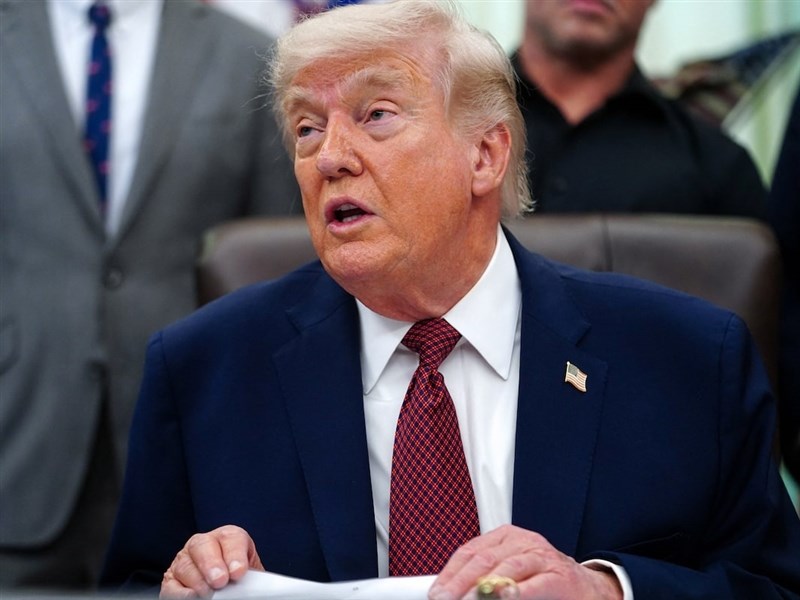
United States President Donald Trump announced on Tuesday that he is extending the temporary ceasefire agreement with Iran, citing the need for Tehran to present a unified proposal to end hostilities. The decision follows requests from Pakistani leadership, including Prime Minister Shehbaz Sharif and Army Chief General Asim Munir, who urged Washington to pause military action while Iranian officials work toward internal consensus.
Trump made the announcement via his Truth Social platform, stating that the U.S. Military would continue its naval blockade of Iran and remain “ready and able” to act if necessary. He emphasized that the extension would last until Iranian leaders submit a cohesive plan for a permanent resolution to the conflict, regardless of whether negotiations succeed or fail.
The original ceasefire was set to expire on Wednesday, April 22, 2026, but Trump declared it would be prolonged indefinitely pending Tehran’s proposal. He described the Iranian government as “seriously fractured,” noting internal disagreements over how to conclude its confrontations with the United States and Israel.
According to Trump, the pause in military operations was specifically requested by Pakistani officials seeking to facilitate dialogue. He said he had directed U.S. Forces to maintain the blockade and remain prepared for any developments during the extended period.
Iran has not publicly responded to the extension, but senior figures within the country have warned that any attack on Iran during ongoing negotiations would establish a dangerous global precedent. Ayatollah Alireza Arafi, a member of Iran’s interim leadership council, told state broadcaster IRIB that allowing a nation to be struck while engaged in talks would undermine confidence in diplomatic processes worldwide.
The situation remains fluid, with no fixed deadline for the ceasefire’s conclusion. Trump affirmed that the continuation would depend entirely on whether Iran presents and discusses a unified offer, stating the pause would last “one way or the other” — whether leading to agreement or not.
Earlier developments had created uncertainty, including the cancellation of a planned trip by U.S. Vice President JD Vance to Islamabad for a second round of peace talks. Vance remained in Washington instead, while Iranian officials accused the U.S. Of violating the ceasefire and refused to engage under pressure.
Despite the extension, Tehran has denied making any formal requests for the delay. In a separate statement reported by Iranian media, officials said they had not asked for the postponement and reiterated their position that talks cannot proceed while under threat.
The U.S. Naval blockade continues as part of the broader strategy of pressure and deterrence. Trump said American forces remain positioned to respond rapidly should the situation escalate, even as diplomatic channels remain open under Pakistani mediation.
Observers note that the lack of internal cohesion within Iran’s leadership complicates efforts to reach a binding agreement. Competing factions within the government have struggled to align on concessions related to nuclear activities, regional influence and relations with Western powers.
While no specific terms of a potential deal have been disclosed, the focus remains on whether Iran can produce a unified stance acceptable to both domestic stakeholders and international negotiators. The outcome will likely influence not only U.S.-Iran relations but also broader stability in the Middle East.
As of now, there is no announced date for a formal review of the ceasefire status. Any update will depend on progress in negotiations or a change in military posture by either side.
For ongoing coverage of this developing story, readers are encouraged to follow official statements from the White House, the U.S. Department of Defense, and Iran’s Ministry of Foreign Affairs. Share your thoughts on the prospects for diplomacy in the comments below, and help spread awareness by sharing this article with others interested in global peace and security.
Worth a look