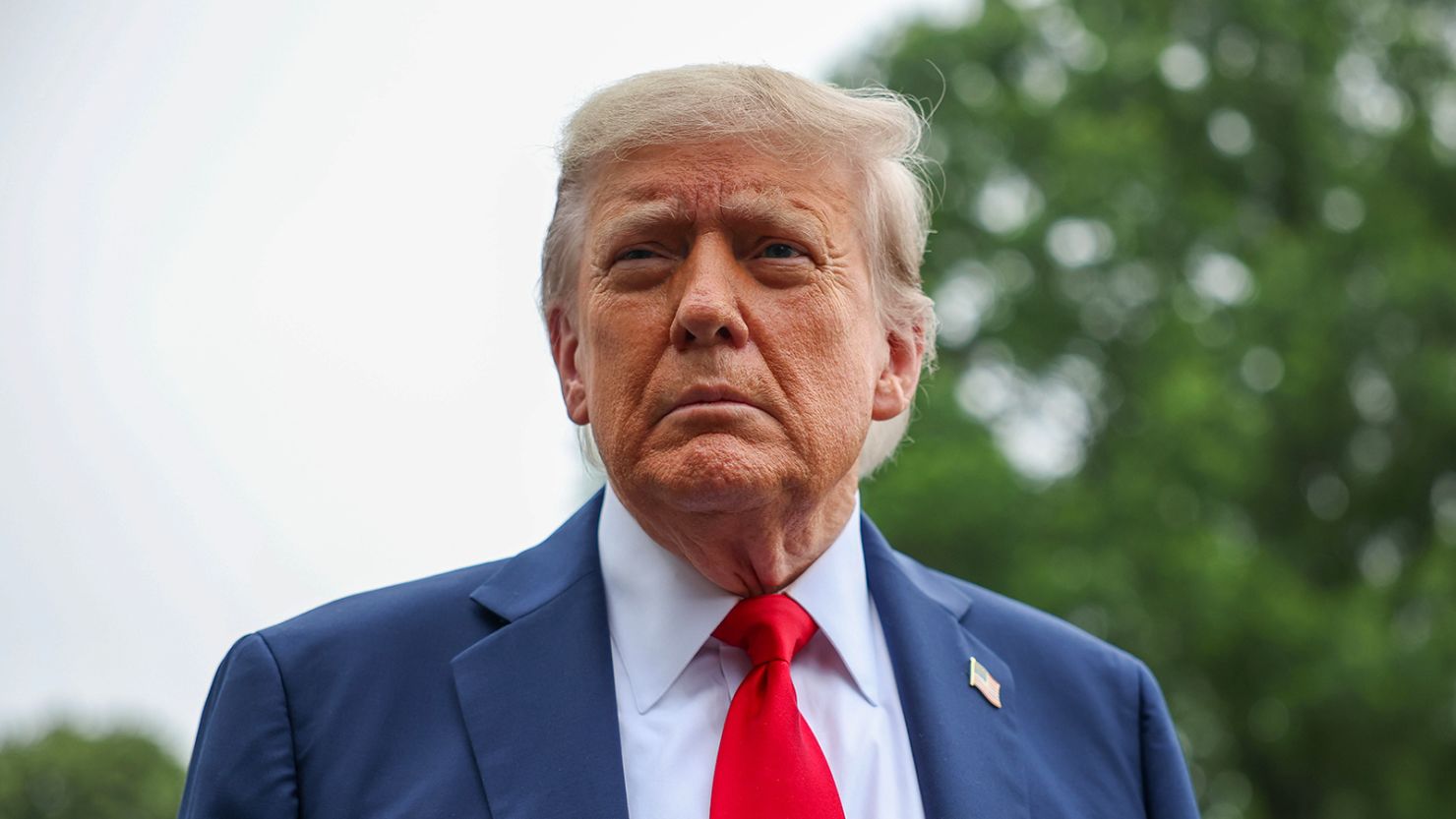
President Donald Trump has refused to extend the U.S.-Iran ceasefire, declaring that American military forces are ready to “enter into action” if needed, amid ongoing tensions over the Strait of Hormuz and stalled diplomatic efforts.
The announcement came during a CNBC interview on April 17, 2026, where Trump stated that while he hopes for a “big deal” with Iran, he will not prolong the current ceasefire agreement beyond its original terms. He emphasized that the U.S. Military remains fully prepared to respond to any escalation, particularly in light of Iran’s recent actions in the strategic waterway.
Trump’s remarks follow a series of conflicting signals from both Washington and Tehran regarding the status of the ceasefire and maritime traffic through the Strait of Hormuz, a critical chokepoint for global oil shipments. Despite earlier claims by both sides that the strait was “completely open” for commercial traffic, Iranian forces reversed course just days later, re-imposing restrictions and reportedly firing on two Indian-flagged tankers transiting the area.
The U.S. Has maintained a naval blockade on Iranian ports throughout the conflict, which began in late February 2026 after escalating hostilities between the U.S., Iran, and Israel. While Trump announced a 10-day ceasefire involving Israel and Lebanon in mid-April, Iran conditioned the full reopening of the Strait of Hormuz on the lifting of U.S. Restrictions on its maritime access — a condition Washington has so far refused to meet.
On April 18, Iran’s Islamic Revolutionary Guard Corps (IRGC) announced it had re-closed the Strait of Hormuz, citing the continued U.S. Blockade as justification. State media reported that IRGC naval forces fired warning shots at two Indian petroleum tankers attempting to transit the waterway, though no casualties were confirmed. Iranian officials reiterated that any declaration of openness by foreign leaders, including Trump, holds no validity unless U.S. Sanctions on Iranian shipping are lifted.
Despite the re-closure, both the U.S. And Iran signaled on April 18 that backchannel talks remain active. Trump told CNBC that “remarkably good conversations are happening” with Iranian representatives, though he provided no details on location, timing, or participants. Iran’s Foreign Ministry echoed this sentiment, stating it was reviewing new U.S. Proposals but had not yet dispatched a delegation to Pakistan for proposed negotiations, as previously speculated.
The Strait of Hormuz normally carries about one-fifth of the world’s liquefied natural gas and a significant portion of global oil exports. Since the conflict began in February, commercial traffic through the waterway has dropped to near zero, triggering volatility in energy markets. Following Iran’s initial announcement of reopening on April 17, U.S. Crude prices fell approximately 9%, reaching levels not seen since the war’s early days — a move analysts attributed to short-lived optimism over restored flows.
However, the subsequent reversal by Tehran quickly erased those gains, with oil prices rebounding as markets priced in the likelihood of prolonged disruption. Analysts note that even if diplomatic talks resume, the mutual distrust between Washington and Tehran — particularly over sanctions enforcement and maritime access — presents a significant obstacle to any lasting agreement.
Trump’s refusal to extend the ceasefire underscores a broader strategy of maintaining pressure on Iran while leaving the door open for negotiations under U.S. Terms. His repeated emphasis on military readiness serves as both a deterrent and a signal to allies that the U.S. Will not tolerate perceived violations of regional stability, even as it avoids direct confrontation unless provoked.
As of April 21, 2026, the ceasefire between the U.S. And Iran remains technically in place but is increasingly fragile, with no public indication of a formal extension or new framework for talks. The next key development to watch is whether either side will initiate a verifiable de-escalation measure — such as a limited prisoner exchange or temporary sanctions relief — to test the sincerity of ongoing backchannel communications.
For real-time updates on the U.S.-Iran ceasefire, maritime security in the Strait of Hormuz, and official statements from the White House or Iran’s Ministry of Foreign Affairs, readers are encouraged to consult verified government sources and reputable international news outlets.
What are your thoughts on the future of U.S.-Iran diplomacy and the stability of global energy corridors? Share your perspective in the comments below and help inform the conversation.
Keep reading