
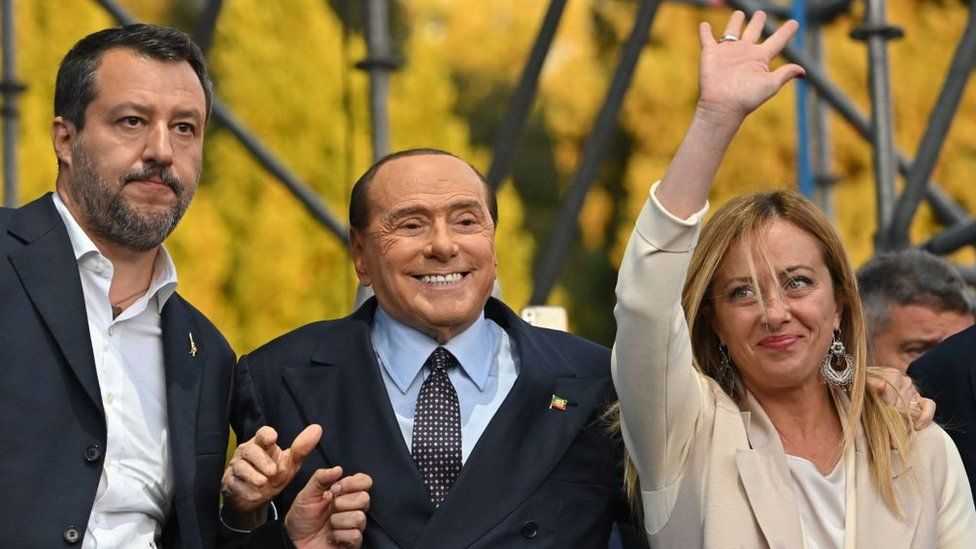
The political landscape in Italy continues to be shaped by the enduring legacy of Silvio Berlusconi, even as the nation navigates the leadership of Prime Minister Giorgia Meloni. Recent discussions among political commentators have highlighted a recurring pattern in Italian politics, often referred to as the “Berlusconi treatment,” which describes the specific brand of opposition and media scrutiny that faced the late former Prime Minister and is now being observed in the challenges facing the current administration.
This phenomenon is not merely about political disagreement but relates to a systemic approach to opposition that characterized the bipolarism of the Italian political system for decades. As Giorgia Meloni leads her government, observers are noting parallels in how the opposition and certain media sectors engage with her leadership, mirroring the intense, often personalized campaigns that once targeted Berlusconi.
The discourse surrounding this “treatment” often surfaces in media appearances and social platforms, where the intersection of legacy politics and current governance is debated. For instance, Tiziana Maiolo has recently addressed these dynamics, discussing how the current political climate reflects historical patterns of opposition in Italy.
Understanding the “Berlusconi Treatment” and Political Bipolarism
To understand what is meant by the “Berlusconi treatment,” one must look at the era of Italian politics defined by the late Silvio Berlusconi. His tenure was marked by a sharp divide in the electorate and the creation of a political environment where “anti-Berlusconism” became a primary driver for center-left coalitions. This era established a precedent where opposition was not just about policy, but about a fundamental ideological and personal clash with the leader of the right.
According to accounts of that era, the bipolarism fostered by Berlusconi’s presence in politics forced opponents into specific alliances. This historical context is essential for understanding why current commentators see a similar pattern emerging against Giorgia Meloni. The “treatment” involves a combination of persistent media pressure, the framing of the leader as an existential threat to democratic norms, and the consolidation of opposition forces around a single figurehead.
The influence of this period remains potent. Even years later, the dynamics of how the center-left organizes itself to counter the right often mirror the strategies used during the Berlusconi years. This includes a focus on ensuring that the parliamentary majority remains contested, particularly when it comes to the role and support of the President of the Republic.
Current Political Dynamics and Giorgia Meloni
Prime Minister Giorgia Meloni has stepped into a role that carries both the expectations of her coalition and the scrutiny of a global audience. The application of the “Berlusconi treatment” to her leadership suggests that the opposition is employing a familiar playbook: focusing on the perceived risks of her ideology to galvanize a fragmented left.

In recent commentary, Tiziana Maiolo has noted that while the left may not be solely preoccupied with the prospect of Meloni winning, there is a strategic effort to ensure a left-wing majority in Parliament specifically regarding the support of the President of the Republic via 4disera. This indicates a shift from simply opposing a leader to strategically managing the institutional balance of power.
The narrative that Meloni is experiencing a similar “treatment” to Berlusconi too touches upon the behavior of the administration itself. Observations have been made regarding how the Prime Minister conducts herself in the face of this opposition, with some commentators suggesting her behavior reflects the pressures of this political environment via 4disera Instagram.
The Role of Media and Public Perception
The “Berlusconi treatment” is as much about media perception as It’s about legislative strategy. During Berlusconi’s time, the media was often split between those who championed his vision and those who viewed him as a disruptor of the state. Today, Meloni faces a similar dichotomy. Her policies and public statements are scrutinized through a lens that often compares her to her predecessors on the right, while her opponents use the media to frame her as a continuation of the disruptive forces Berlusconi once represented.
This cycle of perception creates a feedback loop where the leader’s response to the “treatment” further fuels the narrative of the opposition. By navigating these waters, Meloni is not just managing a government, but managing a legacy of political conflict that predates her time as Prime Minister.
Historical Context: From Berlusconi to the Present
The transition from the era of Silvio Berlusconi to the leadership of Giorgia Meloni represents a significant evolution in the Italian right. While Berlusconi’s approach was often rooted in the power of media ownership and a populist appeal to the “center,” Meloni represents a more rooted, ideological conservatism.
Despite these differences, the mechanisms of opposition remain remarkably similar. The “anti-Berlusconism” of the past has evolved into a modern form of opposition that seeks to isolate the current administration by appealing to institutional safeguards. The focus on the presidency and parliamentary majorities is a direct descendant of the tactical battles fought during the 2000s.
For those observing from a global perspective, this suggests that Italian politics is characterized by a high degree of continuity in its conflict patterns. The “treatment” is a systemic response to a strong leader of the right, regardless of whether that leader is a media mogul or a career politician.
Key Institutional Stakes
The current tension centers on several key institutional areas:
- Parliamentary Majorities: The strategic effort by the left to maintain influence over the support of the President of the Republic.
- Media Narratives: The use of historical parallels to frame the current administration’s actions.
- Coalition Stability: How the “treatment” affects the internal cohesion of the governing coalition.
These factors combine to create a political environment where the Prime Minister must constantly balance the need for decisive governance with the need to deflect accusations that she is following a disruptive path similar to that of her predecessors.
What This Means for the Future of Italian Governance
As the administration of Giorgia Meloni continues, the effectiveness of the “Berlusconi treatment” will likely depend on the ability of the opposition to move beyond personal attacks and offer a cohesive alternative vision for the country. If the opposition remains focused solely on the “treatment” of the leader, they risk repeating the mistakes of the past, where anti-Berlusconism failed to provide a stable governing alternative.
For Meloni, the challenge lies in breaking the cycle. By establishing a governance style that is distinct from the perceived excesses of the Berlusconi era, she may be able to neutralize the “treatment” and shift the political conversation toward policy and results rather than historical parallels.
The broader implication for European politics is that the Italian model of high-intensity political conflict continues to influence how right-wing governments are perceived and opposed across the continent. The tension between institutional stability and populist leadership remains a central theme in the current political era.
The next critical checkpoints for the administration will be the upcoming parliamentary sessions and the ongoing interactions between the government and the presidency, which will test the resilience of the current majority and the strategies of the opposition.
We invite our readers to share their perspectives on the evolution of Italian political leadership in the comments below.