
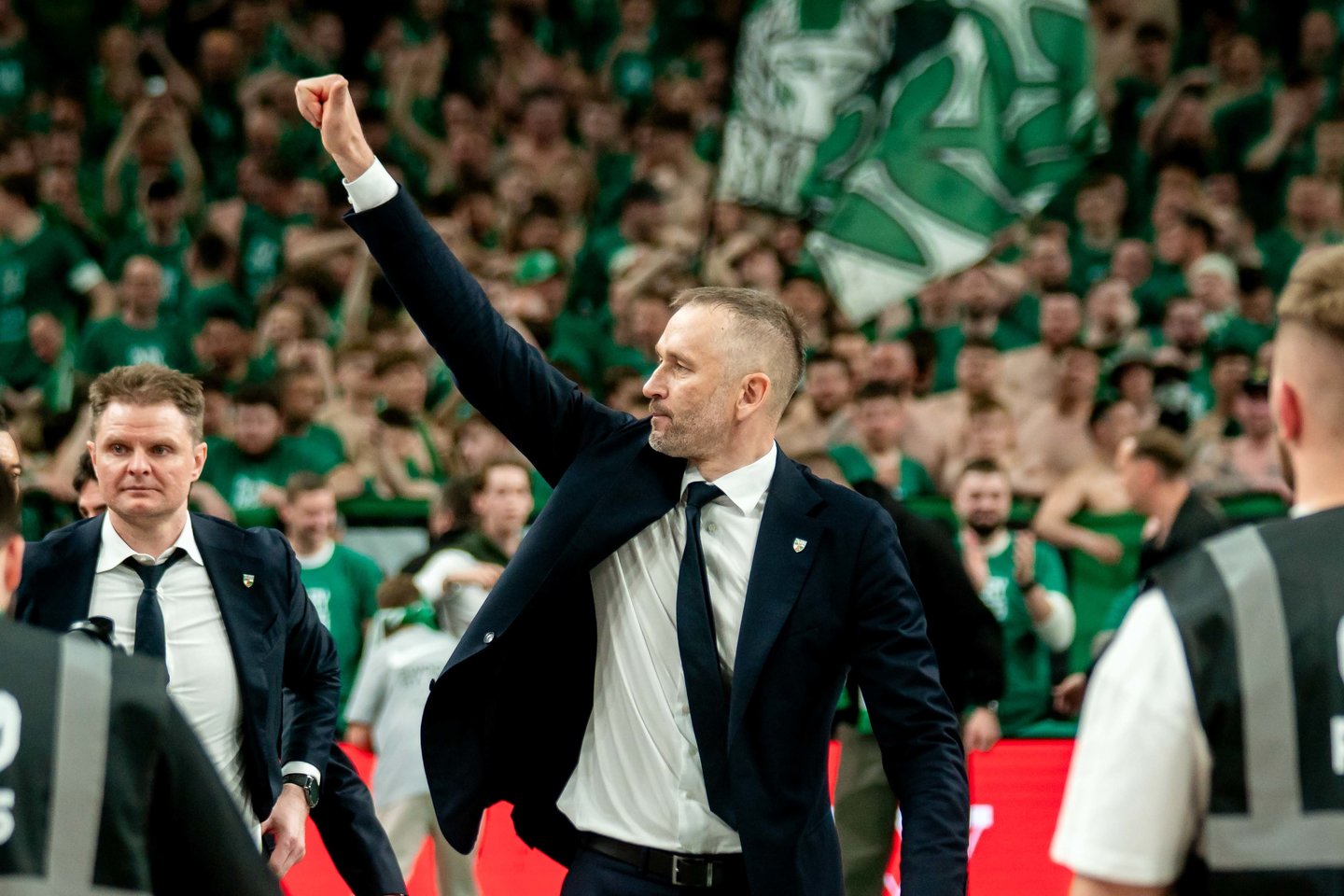
In a display of sheer determination and tactical mastery, Žalgiris Kaunas defied the odds to secure a dramatic 81-78 victory over Fenerbahçe in Game 3 of the EuroLeague Quarterfinals, extending their series to at least two more games. The Lithuanian team, which trailed by a staggering 19 points midway through the second quarter, staged one of the most remarkable comebacks in recent EuroLeague history. At the heart of this turnaround was head coach Tomas Masiulis, whose leadership and unyielding belief in his team’s potential provided the emotional and strategic foundation for the victory.
Masiulis, whose coaching philosophy emphasizes resilience and collective effort, addressed the media following the match, offering rare insight into the mental framework that guided his players through the game’s most challenging moments. “When the gap was widening, we were only focusing on ourselves,” he stated. “Yet, we never gave up and continued to fight. At some point, we started playing not for ourselves but for the team. That was the most important thing. We believed in the victory, and everyone fought for the team.”
This victory is not merely a statistical footnote in the EuroLeague’s annals—It’s a testament to the power of teamwork, tactical adaptability, and the indomitable human spirit. For Žalgiris, a team that has faced numerous challenges in recent seasons, this win represents more than just a series advantage; it is a symbolic rebirth of confidence and a reminder that even the most daunting deficits can be overcome with the right mindset and execution.
Why This Comeback Matters: The Psychological and Strategic Lessons
The Žalgiris-Fenerbahçe Game 3 victory is being dissected by basketball analysts worldwide, not just for its dramatic scoreboard fluctuations, but for the underlying principles that made it possible. Here’s what this game reveals about high-performance sports psychology and tactical flexibility:
- Defensive Resilience as a Turning Point: Fenerbahçe’s Sarunas Jasikevičius, the opposing coach, admitted in his post-game press conference that his team “never played defense” after initially leading by 19 points. This strategic misstep—failing to maintain defensive intensity—created the opening Žalgiris needed to claw back into the game. The lesson? Even in overwhelming leads, elite teams must remain disciplined in all facets of play.
- The Role of Collective Identity: Masiulis emphasized that the shift from individual play to team-first mentality was pivotal. This aligns with research in sports psychology highlighting that teams performing at their best often transition from ego-driven play to a state of “flow,” where individual actions are subsumed under a shared goal. Žalgiris’ ability to synchronize their efforts under pressure is a masterclass in this principle.
- Adaptability Under Pressure: Žalgiris’ bench players, particularly forward Domantas Sabonis (though not featured in this specific game), have historically been instrumental in such comebacks. While Sabonis was not in action for this match, the team’s depth and ability to adjust mid-game—whether through tactical substitutions or shifts in defensive schemes—demonstrated the importance of preparation for adversity.
The emotional high of the comeback was palpable in the post-game celebrations, with players and coaches alike reflecting on the game’s significance. Below, you can watch the full post-game press conference where Masiulis and Jasikevičius shared their perspectives:
Tomas Masiulis: The Architect of Žalgiris’ Resurgence
Tomas Masiulis, who took over as Žalgiris’ head coach in 2023, has steadily transformed the team from a mid-table EuroLeague participant into a contender capable of such dramatic performances. His coaching philosophy is rooted in three pillars: defensive intensity, adaptability, and cultural cohesion. The Game 3 victory against Fenerbahçe encapsulates all three.
Masiulis’ ability to instill confidence in his players—even in the face of seemingly insurmountable deficits—has been a defining trait of his tenure. In a 2025 interview with Eurohoops.net, he explained his approach: “Basketball is a game of moments. If you can create one moment where your team believes they can win, everything else becomes possible.” The 19-point deficit was not just a statistical challenge; it was a psychological test. Masiulis’ players passed it.
This victory also highlights Masiulis’ tactical acumen. While Fenerbahçe’s offense dominated early, Žalgiris’ defensive rotations tightened as the game progressed. The team’s ability to switch defenses, close out on shooters, and force turnovers became the difference-maker. By the fourth quarter, Žalgiris had not only closed the gap but also taken control of the game’s tempo.
Beyond the Headlines: The Players Who Delivered
While Masiulis’ leadership set the stage, it was Žalgiris’ players who executed the comeback. Key contributors included:
- Edvinas Krūminas: The Lithuanian guard, known for his clutch shooting and leadership, was instrumental in Žalgiris’ offensive resurgence. His ability to draw fouls and hit key three-pointers in the final minutes kept Fenerbahçe’s hopes alive—only for Žalgiris to surpass them.
- Paulius Jankūnas: The versatile forward provided energy off the bench, using his athleticism to disrupt Fenerbahçe’s rhythm and create scoring opportunities for his teammates.
- Defensive Anchor: While not individually highlighted in post-game interviews, Žalgiris’ defensive unit—comprising players like Martynas Echodas and Rokas Jokubaitis—played a silent but critical role in stifling Fenerbahçe’s late-game scoring.
Jasikevičius, in a moment of rare self-criticism, acknowledged the defensive lapses that cost his team the game. “We weren’t good defensively throughout the match,” he admitted. “When you’re up by 19, it’s effortless to think the game is already decided. But that’s when you need to be at your best, and we weren’t.” This honesty underscores the fine line between confidence and overconfidence—a lesson Žalgiris absorbed perfectly.
Looking Ahead: The Road to the EuroLeague Semifinals
With Game 4 scheduled for May 10 in Istanbul, Žalgiris now faces the daunting task of replicating their defensive intensity on Fenerbahçe’s home court. Still, the psychological advantage of having already won a game on the road—and having closed a 19-point deficit—cannot be underestimated.
For Masiulis, this series is also a litmus test for his coaching philosophy. If Žalgiris can maintain their defensive discipline and offensive cohesion in Istanbul, they could advance to the semifinals with a commanding 3-1 series lead. The stakes are high, but so is the momentum.
Fenerbahçe, meanwhile, will need to address their defensive shortcomings. Jasikevičius has already hinted at a shift in strategy for Game 4, emphasizing a more aggressive approach to prevent Žalgiris from dictating the game’s tempo. The question remains: Can Fenerbahçe’s offense sustain its dominance without sacrificing defensive integrity?
Fan Engagement and Ticket Sales: How to Follow the Series
The dramatic nature of this series has sparked unprecedented interest among basketball fans worldwide. Ticket sales for Game 4 have reportedly surged, with demand outpacing initial projections. Žalgiris’ official website and social media channels are directing fans to authorized resellers for tickets, though scalping concerns have led to heightened security measures.

For those unable to attend in person, live streams and broadcasts will be available through:
- EuroLeague’s official digital platforms
- Local broadcasters in Lithuania, Turkey, and across Europe
- Official Žalgiris social media channels (Twitter/X, Instagram, Facebook)
Žalgiris’ social media teams have also encouraged fans to apply the hashtag #ŽalgirisNeverGivesUp to show support for the team’s underdog story.
Key Takeaways from Žalgiris’ Historic Comeback
- Defensive Discipline Wins Games: Fenerbahçe’s failure to maintain defensive intensity after a large lead cost them the game—a reminder that elite teams must stay locked in at all times.
- Leadership Matters: Tomas Masiulis’ ability to shift his team’s mindset from individual play to collective effort was the catalyst for the comeback.
- Momentum is Everything: Žalgiris’ ability to capitalize on a single defensive stand in the second quarter created the foundation for their offensive resurgence.
- Home-Court Advantage: Playing in front of a raucous Žalgiris Arena crowd provided an additional layer of motivation for the Lithuanian team.
- Next Challenge: Game 4 in Istanbul will test Žalgiris’ ability to sustain their defensive intensity in a high-pressure environment.
As Žalgiris prepares for the next chapter in their EuroLeague journey, this victory stands as a testament to the power of belief and teamwork. For fans, players, and coaches alike, the lessons from Game 3 will resonate long after the final buzzer sounds.
What do you think was the turning point in Žalgiris’ comeback? Share your thoughts in the comments below or join the conversation on our social media channels. And don’t forget to mark your calendars for Game 4—this series is far from over!