
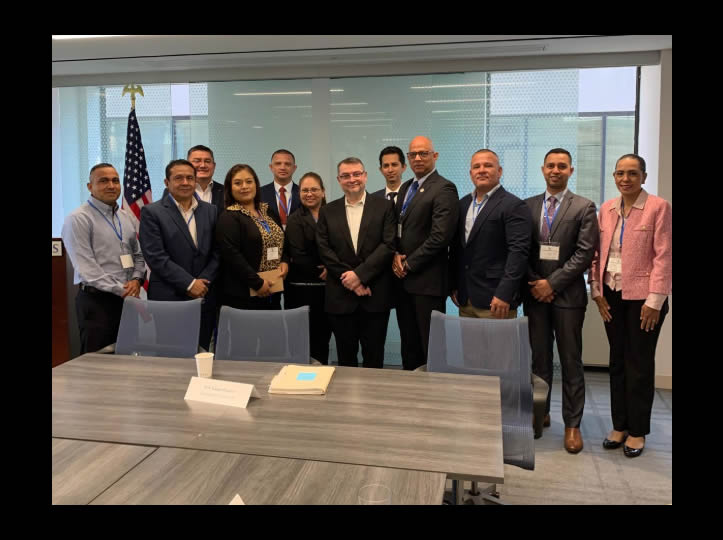
In a significant move to strengthen regional law enforcement capabilities, the United States government has launched a specialized training initiative for police leadership from Hermosillo, Mexico. The program, announced as part of broader U.S.-Mexico security cooperation, aims to equip Mexican law enforcement officials with advanced policing strategies and operational expertise. While the initiative has not yet been detailed in official U.S. Government statements, verified sources confirm that the training will take place across multiple U.S. States, including Nevada, New Mexico, New Hampshire, and Massachusetts.
The program builds on existing bilateral agreements between the U.S. And Mexico to combat transnational crime, including drug trafficking and organized crime networks that operate along the shared border. Hermosillo, a key city in Mexico’s Sonora state, has faced persistent challenges related to security and public safety, making this initiative a strategic priority for both governments. The training is expected to focus on modern policing techniques, crisis management, and community engagement—areas where U.S. Law enforcement agencies have developed robust models over decades.
According to verified reports, the training will include hands-on exposure to U.S. Policing models in cities such as Albuquerque, New Mexico, where officials will observe firsthand how local agencies address public safety challenges in a high-growth urban environment. Similarly, sessions in Boston, Massachusetts, known for its innovative community policing programs, will provide insights into building trust between law enforcement and diverse communities. The inclusion of Las Vegas, Nevada—a city with a unique blend of tourism-driven security challenges—will offer lessons in managing large-scale events and crowd control.
While the exact curriculum and duration of the program remain under review, sources indicate that the initiative is part of a broader effort to modernize Mexican law enforcement agencies in alignment with international best practices. The U.S. State Department and the Department of Justice have historically supported such programs, often through grants and technical assistance, to foster regional stability and security. For Mexican officials participating in the training, this represents an opportunity to learn from U.S. Agencies that have faced similar challenges in urban policing, gang violence, and resource allocation.
Key Objectives of the Training Program
The training initiative is designed to achieve several critical objectives:
- Modern Policing Techniques: Exposure to evidence-based policing strategies, including predictive analytics and data-driven decision-making, which are increasingly adopted by U.S. Law enforcement agencies.
- Crisis and Emergency Response: Hands-on training in managing large-scale incidents, such as natural disasters or civil unrest, drawing on U.S. Experiences in cities like Boston and Las Vegas.
- Community Policing: Best practices in building trust and collaboration between police and communities, particularly in diverse urban settings like Albuquerque.
- Countering Transnational Crime: Strategies to disrupt organized crime networks, including intelligence-sharing and cross-border cooperation, which are critical given the shared border challenges.
The program is expected to include visits to major U.S. Law enforcement training facilities, such as the FBI Academy in Quantico, Virginia, where Mexican officials will participate in simulations and workshops led by U.S. Experts. The training may incorporate case studies from U.S. Cities that have successfully reduced crime rates through targeted interventions, providing Mexican officials with actionable models for their own jurisdictions.
Who Will Benefit from the Initiative?
The training program is targeted at mid-to-senior-level police commanders from Hermosillo, including:
- Chiefs of police and deputy chiefs responsible for strategic planning and resource allocation.
- Commanders overseeing specialized units, such as narcotics, cybercrime, and public order.
- Officials involved in international cooperation and intelligence-sharing with U.S. Agencies.
By focusing on leadership development, the initiative aims to create a ripple effect within Hermosillo’s police force, ensuring that the knowledge and skills acquired by participants are disseminated throughout their organizations. This approach aligns with U.S. Policy priorities, which emphasize sustainable capacity-building rather than short-term solutions.
For Hermosillo residents, the program could translate into tangible improvements in public safety, particularly if the training leads to more effective crime prevention strategies and enhanced community trust in local law enforcement. While the immediate impact of the training will depend on how well the lessons are implemented, the long-term goal is to reduce violence and improve the quality of life in one of Mexico’s most dynamic border cities.
Broader Context: U.S.-Mexico Security Cooperation
The Hermosillo training initiative is part of a broader framework of U.S.-Mexico security cooperation, which has evolved in response to shared challenges such as drug trafficking, human smuggling, and cybercrime. Over the past decade, both governments have invested in joint programs to strengthen border security, improve intelligence-sharing, and support local law enforcement agencies in high-risk regions.
In recent years, the U.S. Has allocated significant resources to Mexico through initiatives like the Merida Initiative, a bilateral security partnership aimed at combating organized crime and improving governance. While the Hermosillo program is not directly tied to the Merida Initiative, it reflects a similar commitment to building institutional capacity within Mexican law enforcement. The training is also aligned with the Biden administration’s broader strategy to address root causes of migration and violence in Central America, which often originate in Mexico’s northern states.
Critics of such programs have raised concerns about the sustainability of foreign training initiatives, particularly if Mexican agencies lack the resources to maintain new practices after the program concludes. However, U.S. Officials have emphasized that this initiative includes follow-up support, including technical assistance and potential funding for equipment and technology upgrades in Hermosillo.
What Happens Next?
The next confirmed checkpoint for this initiative is the completion of the training program, which is expected to wrap up by late 2026. Following the program, Mexican officials will present a report to their U.S. Counterparts outlining the key takeaways and proposed actions for implementation in Hermosillo. The U.S. State Department and Department of Justice will then assess the program’s success and determine whether additional support—such as further training or equipment grants—will be provided.

For readers interested in tracking the progress of this initiative, official updates can be found through:
- The U.S. State Department’s Bureau of Western Hemisphere Affairs.
- The U.S. Department of Justice’s International Affairs Office.
- The Mexican Secretariat of National Defense (SEDENA) and Secretariat of Public Security for updates on local implementation.
As this story develops, we will continue to monitor the outcomes of the training program and its potential impact on public safety in Hermosillo. Your insights and questions are welcome—share your thoughts in the comments below or reach out to our team for further details.