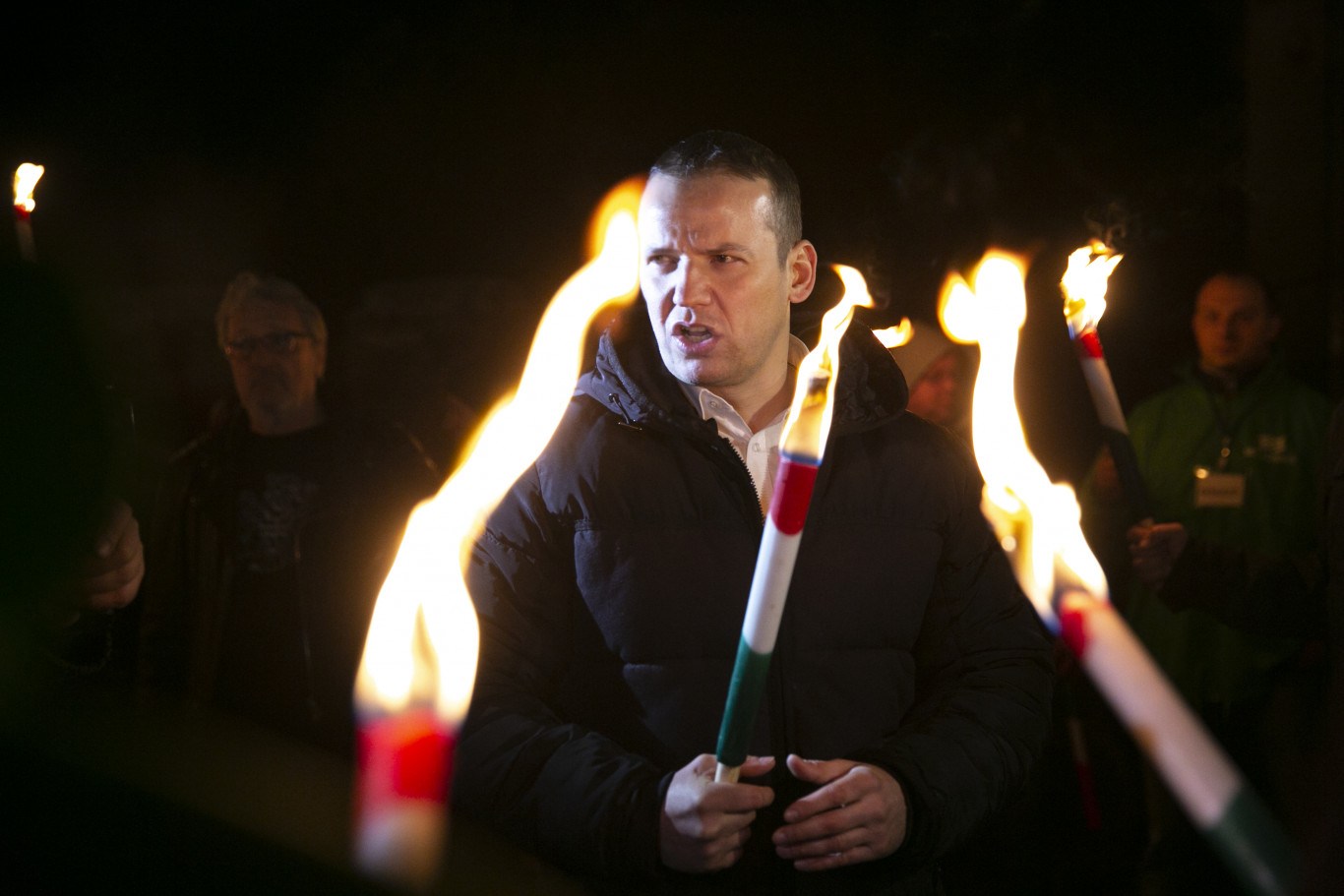
Hungary Faces Potential Coalition Talks as Mi Hazánk Leader Signals Willingness to Negotiate
Budapest – As Hungary prepares for parliamentary elections on April 12th, the possibility of a fragmented result is growing, potentially leading to complex coalition negotiations. László Toroczkai, leader of the Mi Hazánk (Our Homeland) party, has indicated his willingness to engage in talks with both incumbent Prime Minister Viktor Orbán of Fidesz and Péter Magyar, leader of the Tisza Party, should no single party secure a governing majority. This development introduces a new dynamic into Hungarian politics, with Mi Hazánk potentially playing a kingmaker role. Toroczkai’s statements, made in a recent interview with Partizán, suggest a pragmatic approach focused on achieving key policy objectives for his party, rather than ideological alignment.
The prospect of a three-party parliament is increasingly realistic, according to Toroczkai. He anticipates that Fidesz, Tisza, and Mi Hazánk will be the only parties to cross the threshold into the National Assembly. Should this scenario unfold, and Mi Hazánk find itself in a position to influence government formation, Toroczkai stated, “It means that three people have to sit down and start negotiating about the National Assembly, or even the person of the prime minister, on the day after the election or in the following days. These are Viktor Orbán, Péter Magyar, and I.” This signals a willingness to engage in potentially difficult discussions to shape the future direction of Hungary.
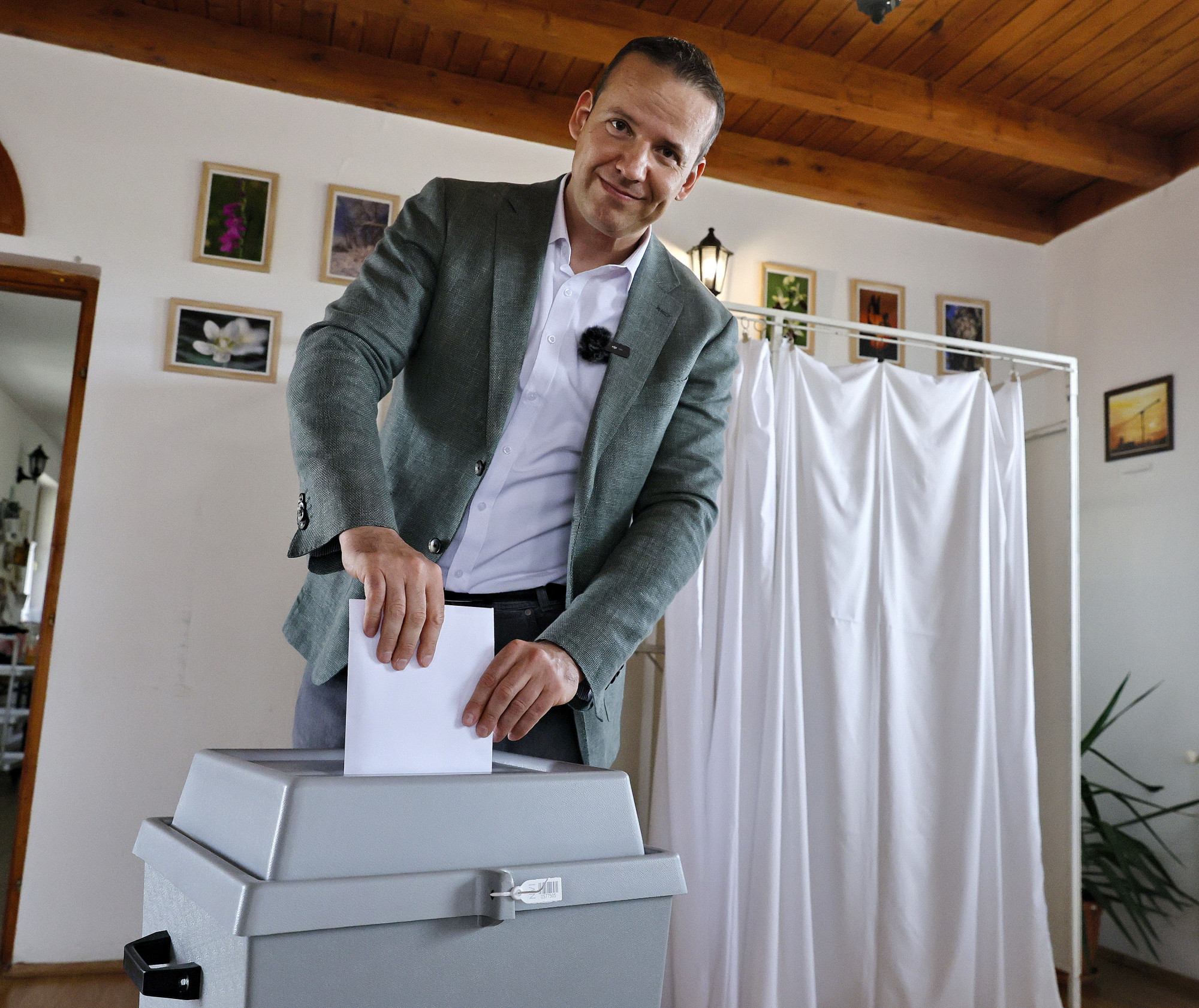
Fotó: Lehoczky Péter/MTI/MTVA
Priorities for Negotiation: A Focus on Domestic Issues
Toroczkai outlined several key priorities that would form the basis of any negotiations. These include strengthening child protection measures, establishing an independent anti-corruption prosecutor’s office, joining the European Public Prosecutor’s Office (EPPO), combating the “execution mafia” – referring to issues within the bailiff system – reducing the tax burden, streamlining bureaucracy, and addressing Hungary’s relationship with Ukraine. He indicated that Mi Hazánk’s positions align more closely with the Tisza Party on certain issues, such as tackling the bailiff system and establishing a non-profit bailiff system, while finding common ground with Fidesz on others, particularly regarding the war in Ukraine. The potential for a stalemate, and the possibility of new elections, is also on Toroczkai’s radar, though he believes this would primarily benefit the larger parties.
According to reporting from 24.hu, Toroczkai also floated the possibility of a technocratic government, a scenario where experts rather than traditional politicians would fill key ministerial positions. This suggests a willingness to explore unconventional solutions to break the political deadlock. Still, he firmly ruled out supporting either Orbán or Magyar for the position of prime minister, citing a lack of trust in both individuals. He did leave the door open to potential agreements contingent on specific guarantees.
A Hard Line on Coalition Terms
Toroczkai adopted a combative tone regarding the conditions under which Mi Hazánk would support a minority government led by either Fidesz or Tisza. He stated that he would “make life hell” for both Orbán and Magyar, requiring daily negotiations and refusing to offer unconditional support. “We will not give our votes to anyone blankly,” he emphasized. This suggests a determination to exert maximum influence and prevent either of the larger parties from consolidating power. He made it clear that Mi Hazánk would not accept a situation where Fidesz or Tisza held absolute authority.
The willingness of Mi Hazánk to play this role is rooted in a broader sentiment of dissatisfaction among its voters, who Toroczkai described as seeking “change” and believing that “this cannot continue.” This suggests a desire for a departure from the established political order and a willingness to disrupt the status quo. The party’s potential influence stems from the possibility of becoming the decisive vote in a closely divided parliament, a position that would grant it significant leverage in shaping government policy.
Navigating a Complex Political Landscape
The Hungarian political landscape has become increasingly complex in recent years. The emergence of the Tisza Party, led by Péter Magyar, has disrupted the traditional two-party dominance of Fidesz and the left-wing opposition. Magyar, a former communications official within the Orbán government, has gained traction with a populist message focused on anti-corruption and economic grievances. The April 12th elections are therefore poised to be a pivotal moment, potentially ushering in a new era of coalition politics in Hungary.
The outcome of the elections will depend on a number of factors, including voter turnout, the performance of smaller parties, and the ability of the major contenders to mobilize their supporters. The possibility of a hung parliament raises the stakes, as it could lead to prolonged negotiations and political instability. Toroczkai’s willingness to engage in talks with both Orbán and Magyar demonstrates a pragmatic approach, but also signals a determination to secure favorable terms for his party and its voters. The coming weeks will be crucial in determining the future direction of Hungarian politics.
The potential for a coalition government also raises questions about the future of Hungary’s relationship with the European Union. Mi Hazánk has traditionally taken a more Eurosceptic stance than both Fidesz and Tisza, advocating for greater national sovereignty and a more critical approach to EU policies. The extent to which these differences can be bridged in coalition negotiations remains to be seen. The outcome will have implications for Hungary’s position within the EU and its ability to access funding and support from Brussels.
Key Takeaways
- László Toroczkai, leader of Mi Hazánk, is prepared to negotiate with both Viktor Orbán and Péter Magyar if his party becomes a kingmaker after the April 12th elections.
- Mi Hazánk’s key priorities for negotiation include child protection, anti-corruption measures, and tax reduction.
- Toroczkai has ruled out supporting either Orbán or Magyar for prime minister, citing a lack of trust.
- The possibility of a technocratic government is also being considered as a potential solution to a political stalemate.
- The outcome of the elections and subsequent coalition negotiations will significantly shape the future of Hungarian politics and its relationship with the European Union.
The National Election Office of Hungary is expected to release preliminary election results on April 13th. Further developments regarding coalition negotiations are anticipated in the days and weeks following the election. Readers are encouraged to follow updates from reputable news sources and official government channels for the latest information. Share your thoughts on the potential political shifts in Hungary in the comments below.
Worth a look