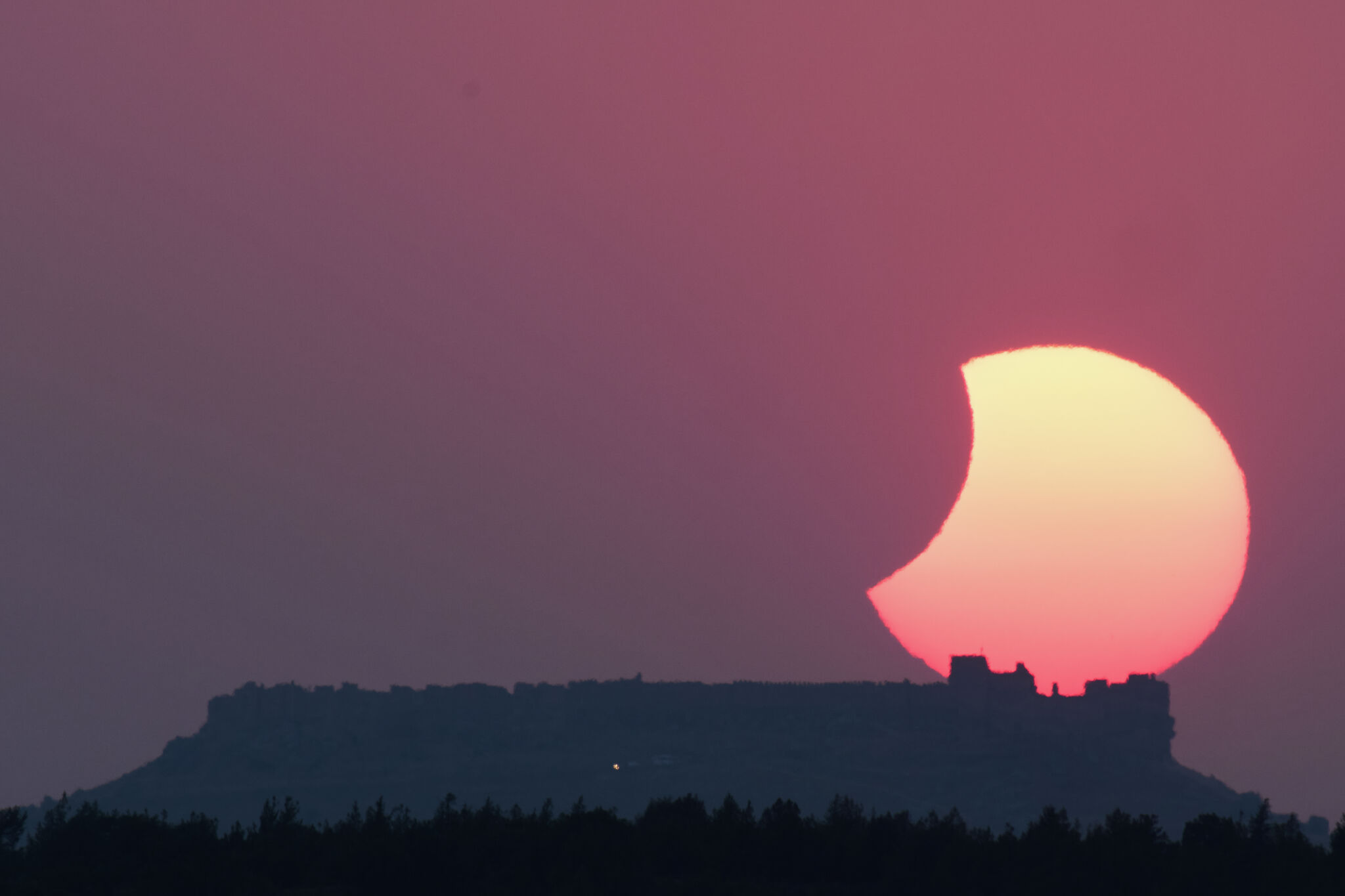
Millions of people across Spain experienced a rare astronomical spectacle on Wednesday, August 12, 2026, as a total solar eclipse plunged parts of the country into brief darkness. The celestial alignment marked the first total solar eclipse visible from Spain in over a century, drawing large crowds to cloud-free cities, rural hilltops, and designated viewing zones.
Observers gathered across a broad strip of northern and central Spain, carrying lawn chairs, hats, and protective eyewear to watch the moon completely block the face of the sun. The phenomenon also swept across parts of Greenland, Iceland, and neighboring Portugal, though visibility in some northern regions depended heavily on cloud cover.
Authorities deployed massive security operations alongside the path of totality to manage the influx of travelers. According to the Spanish Ministry of Interior, more than 33,500 law enforcement officers were assigned to monitor observation areas and access routes as warm summer weather and dry vegetation elevated local risks.
Rural Viewing Points and Strict Safety Measures
To accommodate the surge of domestic and international visitors, the interior ministry established 350 official observation points across sparsely populated rural areas known locally as the “España vaciada.” At the same time, officials restricted access to 123 other locations due to environmental sensitivities and potential bottlenecks that could complicate emergency evacuations.
Weeks prior to the celestial event, Spain experienced severe wildfires in regions like Ávila. Those blazes prompted intense precautionary measures from national leadership. Interior Minister Fernando Grande-Marlaska urged extreme caution during the gatherings.
“Las altas temperaturas, la sequedad acumulada de la vegetación y la elevada presión sobre espacios naturales por los desplazamientos previstos obligan a extremar las medidas de prevención,” afirmó el ministro del Interior, Fernando Grande-Marlaska, emphasizing the need to prevent sparks in dry brush.
Temperatures exceeded 35 degrees Celsius (95 degrees Fahrenheit) across many viewing sectors, keeping emergency services on high alert. Officials prohibited open flames, warned visitors against littering, and restricted parking near dry vegetation.
Tourism spiked sharply along the path of totality, boosting local economies in historic towns like Medinaceli—where visitors packed local restaurants and grassy hillsides hours before the midday alignment. Major northern hubs including La Coruña, Bilbao, and Santiago de Compostela also reported heavy hotel bookings, with national officials estimating an influx of at least half a million visitors.
Safety equipment became one of the most sought-after commodities in the weeks leading up to the eclipse. Supermarkets, department stores, museums, and planetariums distributed protective eyewear, while retail pharmacies across Madrid and other major cities exhausted their supplies days ahead of the event.
“Para mirar al sol, siempre hay que usar la protección adecuada, y la más apropiada son las gafas para eclipses,” explained Telmo Fernández Castro, director of the Planetario de Madrid, highlighting the necessity of certified filters to prevent retinal damage during partial phases.
International Observations From Iceland to Arctic Waters
Beyond the Iberian Peninsula, observers in Iceland prepared for their first total solar eclipse since 1954, and the first visible from Reykjavík since 1433. Lighthouse Intelligence reported that average hotel rates in the Icelandic capital surpassed $1,000 for Wednesday night, doubling prices from the previous year. Despite the high costs and thick cloud cover forecast for parts of the island, hotels like the 70-room Hotel Keflavík reached full capacity.
Steinþór Jónsson, owner and manager of the property, noted the historic scale of the tourism surge, comparing the atmosphere to the landmark 1986 summit between U.S. President Ronald Reagan and Soviet leader Mikhail Gorbachev. “Cuando abrí el hotel, tuvimos la reunión de Reagan y Gorbachov. Fue una época muy ajetreada aquí,” Jónsson remarked.
At sea, maritime crews worked to position passengers for optimal viewing. Captain Sverre Rud navigated the MS Spitsbergen through the icy waters of Rypefjord in eastern Greenland, aiming to give 126 cruise passengers a clear window of totality amidst 24-hour Arctic daylight.
“Todo el mundo está muy entusiasmado,” Rud said. “Cuando bajamos a desayunar antes, había una sensación como de víspera de Navidad aquí.”
As the shadow swept across the Mediterranean by late afternoon, national meteorological agencies and municipal governments prepared to release post-event safety assessments and tourism impact data. Readers seeking further updates on regional tourism figures or astronomical archives can consult official statements from the Spanish Ministry of Interior and local astronomical societies.
Related reading
- Old School RuneScape Player Reaches Level 99 Fishing Catching Only Shrimp and Anchovies
- Aaron Kwok Sparks Viral Debate: 60-Year-Old Star Looks Younger Than His Father-in-Law
- Perseids Meteor Shower & Solar Eclipse: A Rare Celestial Double Feature (archyworldys.com)
- New Blood Pressure Guidelines Expand Medication Eligibility for Millions (time.news)