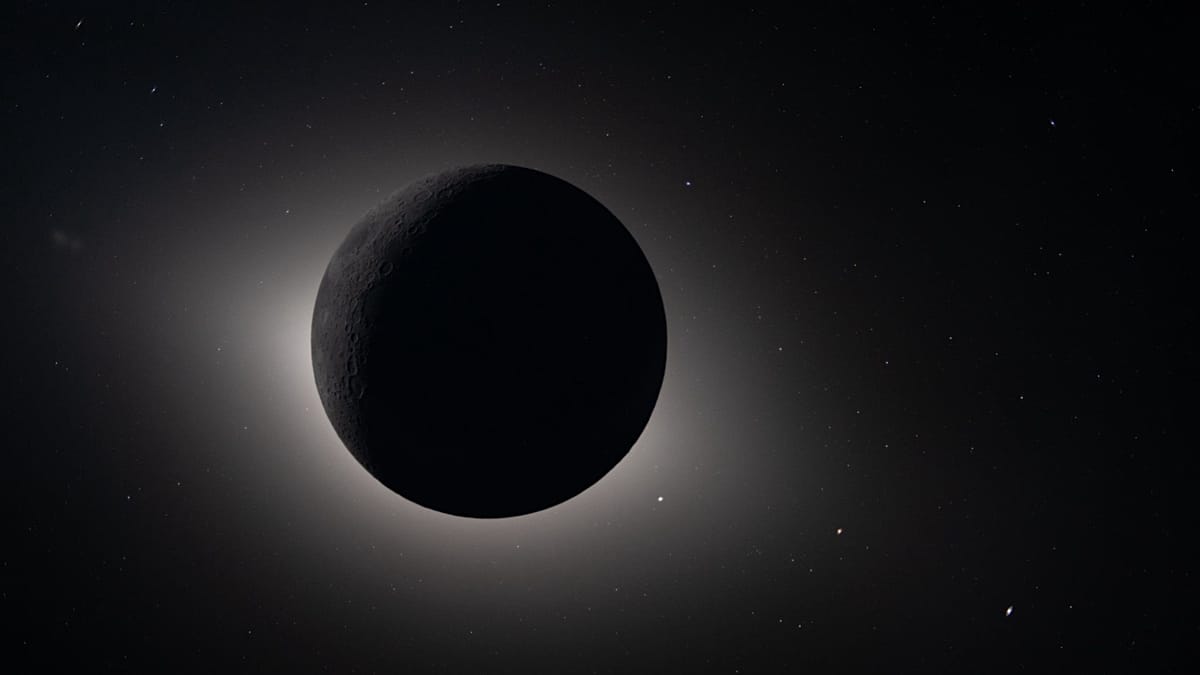
Portugal is preparing for a rare astronomical alignment as a total solar eclipse sweeps across the northern region of the country, followed closely by the peak of the annual Perseid meteor shower. According to observational data and regional authorities, the daylight hours will temporarily fade into deep shadow on a Wednesday evening, creating a celestial event not witnessed on the Portuguese mainland since 1912.
The convergence of these two distinct cosmic phenomena has mobilized local municipalities, science centers, and astronomy associations from Bragança to the Algarve. With the moon crossing directly into the path of the sun, spectators across the country are organizing gatherings in designated dark-sky reserves, public plazas, and coastal beaches to witness the spectacle safely.
As communities finalize their viewing plans, scientists, safety officials, and optical experts have issued strict guidelines regarding viewing safety, equipment certification, and optimal observation times for both the late afternoon eclipse and the subsequent nighttime meteor activity.
Understanding the Solar Eclipse: Timing and Regional Visibility
The solar eclipse will unfold over a span of approximately two hours on Wednesday evening, with the general progression beginning at roughly 18:33 and concluding around 20:23 local time, according to regional astronomical timelines. The peak of the occultation is expected to occur near 19:30.
Visibility conditions will vary significantly depending on geography. The 100 percent total eclipse will be observable exclusively within the Montesinho Natural Park in the Bragança region. Across the rest of the Portuguese mainland, observers will experience a deep partial eclipse, with solar occultation estimates ranging between 92 and 99 percent. Residents in the autonomous island regions of the Azores and Madeira will experience a comparatively lower partial eclipse percentage, spanning from 74 to 77 percent.
During the peak moments in the total eclipse zone, daytime light levels will drop dramatically, causing ambient noise to recede and localized temperature shifts to register. While partial phases will be widely visible across urban and rural sectors, scientists recommend seeking open areas with clear, unobstructed horizons away from dense architectural blockades.
Public Viewing Events and Municipal Initiatives
Numerous municipalities and science outreach centers have established public viewing areas equipped with educational programming and safety measures. In Oeiras, the local council has organized a public gathering at Santo Amaro de Oeiras beach starting at 16:00, featuring a live transmission on a giant screen alongside musical accompaniment.
In the Algarve, the Algarve Ciência Viva Center has scheduled public sessions in Faro at the Parque Ribeirinho starting at 18:30, alongside an event at the Paderne Castle in Albufeira that transitions directly into overnight Perseid meteor observations. Additional public sessions are organized by the Tavira Ciência Viva Center at the Praça da República, as well as along the local beaches of Arraial and Barril.
In northern Portugal, the Time Out Market Porto is hosting a dedicated gathering on its outdoor square overlooking the Clérigos Tower, while the Vila do Conde Ciência Viva Center has arranged group observation activities along the Marginal near the Farol restaurant. Educational briefings are also scheduled by the Horizonte Estelar astronomical association on local church grounds.
The Perseid Meteor Shower and Nighttime Observation
Approximately one hour after the conclusion of the solar eclipse, the nighttime sky will play host to the annual Perseid meteor shower. Because the moon will be in a near-new phase, ambient lunar illumination will be minimal, offering exceptionally dark skies favorable for meteor detection.
Astronomical specialists note that while Perseid activity builds throughout late July and August, the primary peak traditionally occurs around August 12 and 13. Meteors are expected to leave visible streaks of light across the atmosphere, with activity intensifying past midnight. The most productive viewing window is projected to occur between 02:00 and 05:00 on the night of August 13, as the constellation Perseus rises higher in the sky.
Optimal viewing locations extend across certified dark-sky territories and elevated rural terrains. Experts highlight the Dark Sky Alqueva in Alentejo, the Montesinho and Bragança regions in Trás-os-Montes, the Serra da Estrela, and the Peneda-Gerês as prime areas free from intense urban light pollution. Observers are advised to avoid digital screens for 20 to 30 minutes prior to viewing to allow human eyes to fully adapt to total darkness.
Safety Protocols and Certified Equipment
Health and safety authorities have reiterated that direct observation of a solar eclipse without specialized eye protection carries severe risks. Staring at the sun during an eclipse can cause permanent retinal damage and vision loss, as direct solar radiation does not immediately trigger pain receptors in the eye.
Standard sunglasses, uncertified filters, homemade filters, and unfiltered camera lenses or mobile phones are insufficient for safe viewing and can result in equipment damage or optical injury. Safe observation requires dedicated solar viewing glasses meeting specific regulatory standards.
The optical community emphasizes that appropriate eclipse glasses must feature an explicit certification under the ISO 12312-2 or ISO 12312-2:2015 standards for solar observation, alongside the visible CE conformity mark printed on the frame. Certified eyewear must be pre-manufactured, ready for immediate use, and capable of blocking intense visible light alongside ultraviolet and infrared radiation. While commercial distribution campaigns, such as initiatives by ZEISS through regional networks, have exhausted initial complimentary stock, certified glasses remain available across select pharmacies, supermarkets, and specialized online retailers.
- Authentic Honduran Arroz con Pollo Recipe: El Progreso Style
- Nimrods Review: Green Day Inspires a Rowdy Teenage Punk Road Trip Movie
- Perseids Meteor Shower & Solar Eclipse: A Rare Celestial Double Feature (archyworldys.com)
- Partial Solar Eclipse Aug 12: Where and How to Watch in the U.S. and Canada (archynewsy.com)