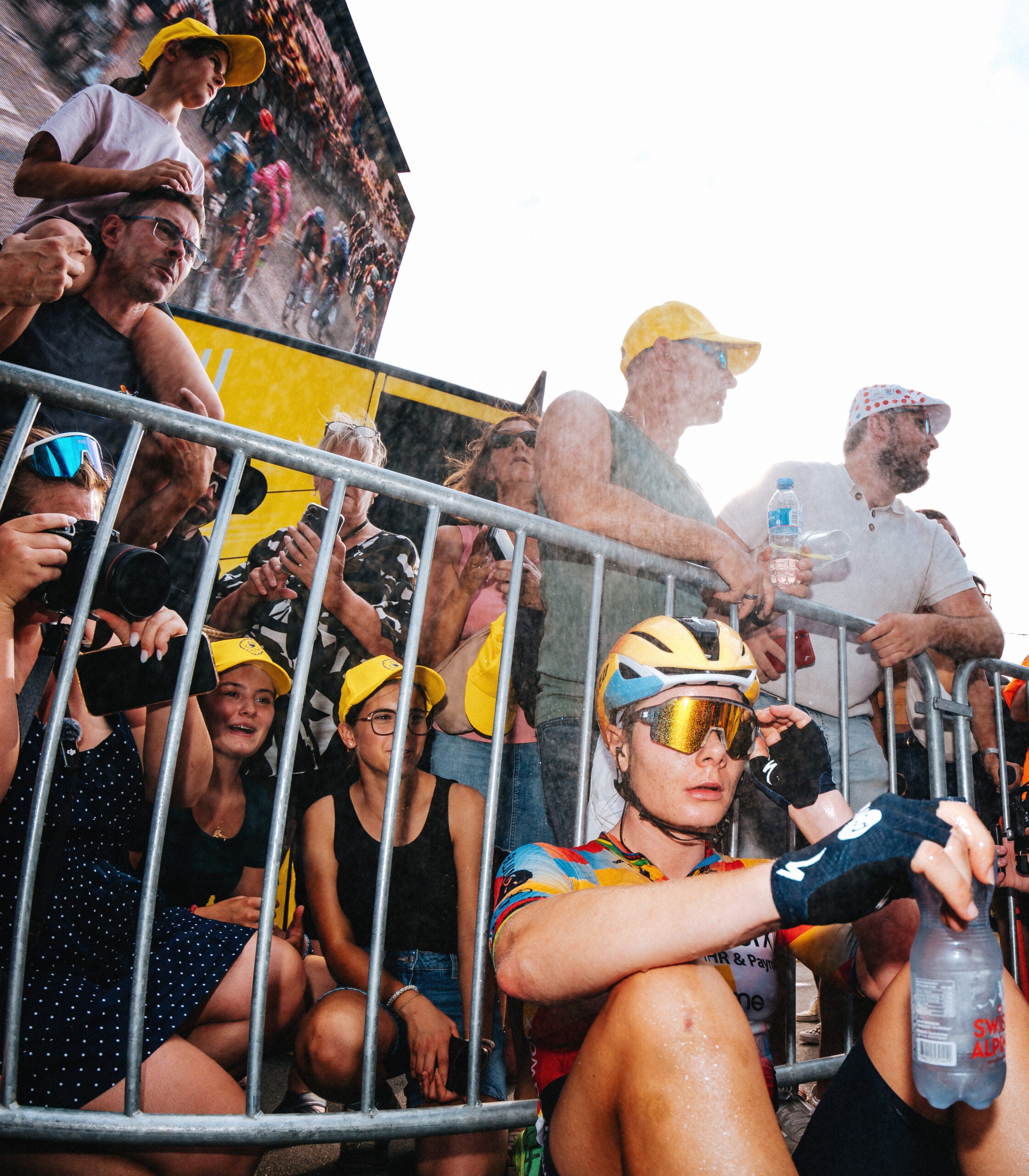
Extreme heat and physical distress defined a brutal day of racing at the Tour de France Femmes, as temperatures reached 102 degrees Fahrenheit, causing widespread cramping, dehydration, and unexpected medical mishaps among the peloton. While the conditions decimated the pace of several top contenders, Sigrid Haugset managed to secure the stage victory by utilizing a specific hydration and cooling strategy to withstand the peak thermal stress.
The heatwave transformed the stage into a battle of attrition where the primary opponent was the climate rather than the competition. According to reports from the race, riders described feeling dizzy and “blowing up” as their bodies struggled to regulate temperature, leading to a fragmented field where many athletes were forced to fight simply to finish within the time limit.
The severity of the weather created a chaotic environment where riders faced more than just physiological collapse. In one notable incident, a rider was stung by a bee mid-race, adding a layer of acute pain and potential allergic reaction to the existing struggle against heat exhaustion and dehydration.
Sigrid Haugset’s Strategy for the Heat
Sigrid Haugset emerged victorious on the hottest day of the Tour de France Femmes by implementing a rigorous approach to fluid intake and temperature management. While other riders struggled with cramping and dizziness, Haugset maintained her power output by focusing on a “secret weapon” of aggressive hydration and cooling protocols tailored for triple-digit temperatures.
The ability to maintain core temperature is critical in professional cycling, especially when ambient temperatures exceed 100 degrees.
Physiological Impact of 102-Degree Temperatures
The 102-degree heat triggered a cascade of physical failures across the peloton.
The psychological toll was equally evident. Riders described a sense of disorientation and dizziness, which increases the risk of crashes in a high-speed peloton.
Managing Hazards and Mid-Race Mishaps
Beyond the thermal stress, the environment introduced unpredictable hazards. The report of a rider being stung by a bee highlights the vulnerability of athletes when their focus is entirely consumed by physical survival.
The struggle for water became a primary theme of the day.
For those following the Tour de France Femmes, the event serves as a case study in the necessity of heat acclimatization.
The race continues with riders recovering from the thermal shock of this stage.
Share your thoughts on how extreme weather should be managed in professional cycling in the comments below.
Related reading