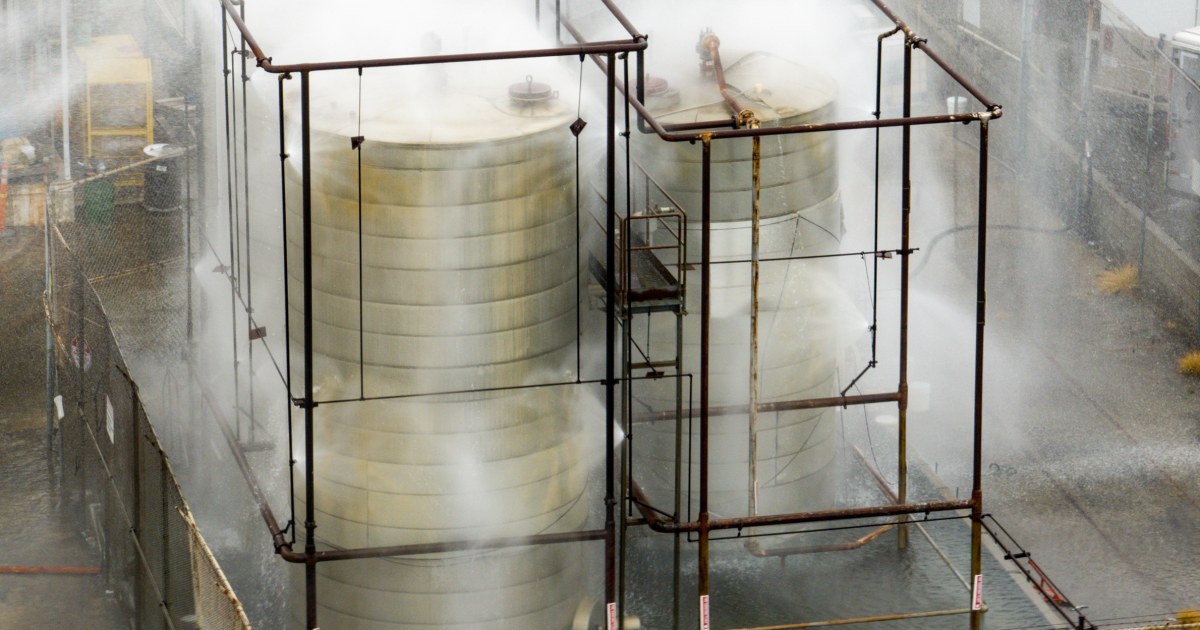
Emergency responders in Southern California are currently managing a high-stakes situation in Garden Grove, where a chemical storage vessel has shown signs of structural instability. As of Sunday, authorities have been working to stabilize a chemical tank that is showing signs of potential cracking, a development that officials hope may facilitate the release of internal pressure and prevent a catastrophic vapor explosion.
The incident remains fluid as specialized crews work to mitigate the risks associated with the vessel. Continuous cooling efforts are underway to maintain the integrity of the tank while experts monitor the situation for any further degradation. According to updates provided by local emergency management, the priority remains the safety of the surrounding community and the prevention of a large-scale hazardous material release.
Firefighters have been dousing the unstable chemical tank with water …
Understanding the Risks of Pressure Buildup
In industrial safety protocols, the buildup of pressure within a chemical storage tank is a critical concern that can lead to a BLEVE—a Boiling Liquid Expanding Vapor Explosion—if not managed correctly. When a tank is subjected to excessive heat or chemical reactions, the internal pressure can exceed the structural limits of the container. In this instance, responders are employing a technique often referred to as “cooling the tank,” which involves the continuous application of water to the exterior shell.
By keeping the surface temperature of the tank low, responders hope to prevent the metal from reaching its yield point, where it would become brittle and susceptible to a catastrophic rupture. The presence of a potential crack, while alarming, is being monitored by engineers as a possible, albeit uncontrolled, relief point. If the pressure releases gradually through such a breach, it may prevent the sudden, violent release of energy associated with a full vessel failure.
Emergency Response and Public Safety Measures
The Garden Grove emergency response team is coordinating with hazardous materials specialists to evaluate the chemical composition within the tank and determine the most effective path toward final stabilization. While the area immediately surrounding the site has been secured, officials have urged residents to remain vigilant and follow any evacuation or shelter-in-place orders issued by local authorities. Such mandates are typically issued under the authority of the local fire department or city emergency services to ensure that personnel can operate without civilian interference and to minimize potential exposure to harmful vapors.

Public health experts note that in situations involving chemical leaks, the primary hazards to the public include inhalation of toxic fumes and the potential for secondary fires. Emergency responders are utilizing atmospheric monitoring equipment to track the plume of any released gases, allowing them to adjust the containment zone in real-time as wind conditions and pressure levels fluctuate.
What Happens Next: Monitoring and Stabilization
The path forward involves a delicate balance of observation and intervention. Because the tank is currently classified as unstable, there is no immediate timeline for when the situation will be fully resolved. Crews are expected to continue their cooling operations around the clock, rotating shifts to ensure that the water application remains constant. This “active cooling” phase is essential until the internal temperature and pressure drop to a level that no longer poses an imminent threat of explosion.
Once the pressure has been adequately relieved and the tank is deemed structurally sound, the next phase will involve the safe offloading or neutralizing of the chemical contents. This process is highly technical and often requires coordination between the facility owners, environmental protection agencies, and specialized remediation contractors. The timeline for this phase will likely depend on the results of ongoing structural integrity tests.
For residents and those following the situation, official updates are typically disseminated through the Garden Grove city government’s emergency portal and local law enforcement social media channels. We will continue to provide updates as more information is confirmed by official sources. Please stay tuned to local emergency alerts for any changes to safety protocols in your area.
We invite our readers to share their thoughts and experiences regarding local emergency preparedness in the comments section below. Your insights help foster a more informed and resilient community.
Keep reading