
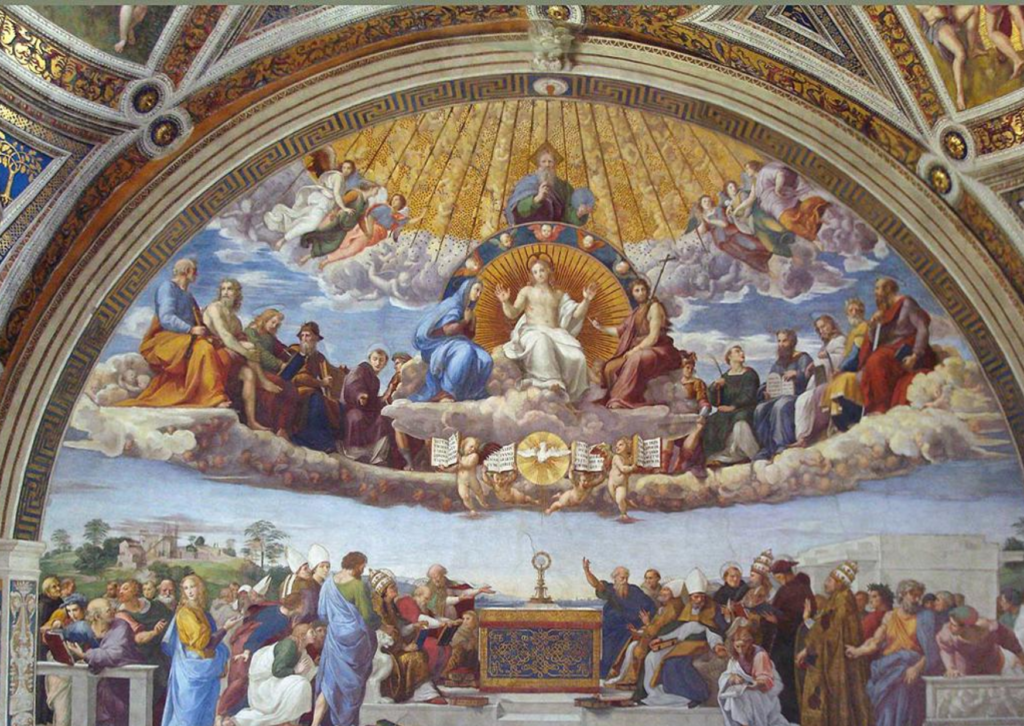
The Solemnity of the Most Holy Body and Blood of Christ, often referred to as Corpus Christi, is a significant observance within Catholic liturgical life. At its core, the celebration centers on the doctrine of transubstantiation, the teaching that during the consecration of the Eucharist, the substance of the bread and wine is changed into the Body and Blood of Christ, while their outward characteristics—or “eucharistic species”—remain unaltered.
For those interested in the theological foundations of this observance, understanding the distinction between substance and accidents is essential. According to the teaching of the Catholic Church, this change is brought about in the eucharistic prayer through the efficacy of the word of Christ and by the action of the Holy Spirit. This doctrine does not rely on a specific metaphysical theory, but rather serves as a statement of the Church’s belief regarding the Real Presence in the Eucharist.
The Historical Context of Eucharistic Theology
The roots of Eucharistic practice reach back to the earliest accounts of the Christian Church. Scholars point to 1 Corinthians, written by the Apostle Paul, as one of the earliest texts concerning the Real Presence, with composition dates estimated around A.D. 57. This document records the narrative of the Last Supper, where Jesus is described as taking bread and wine, identifying them as his body and blood, and instructing his followers to continue the practice as a memorial.
The theological evolution of how these elements are understood has been a subject of study for centuries. While the term “transubstantiation” (Latin: transsubstantiatio) provides a specific framework for Catholic doctrine, other traditions have explored different interpretations, such as consubstantiation, memorialism, or sacramental union. The Catholic Church maintains that this change is not merely symbolic but represents the actual presence of Christ in the sacrament.
Defining Transubstantiation
In the context of Christian theology, transubstantiation is defined as the change by which the substance of the bread and wine in the Eucharist becomes Christ’s real presence. This concept is distinct from the physical appearance of the elements; the “accidents”—such as color, taste, and texture—do not change, even though the fundamental reality, or “substance,” is considered to be transformed.

This teaching is central to the celebration of the Mass, as it underscores the belief that the Eucharist is not merely a commemorative meal but a participation in the sacrifice of Christ. As noted in the historical record, the apostles were instructed by the events of Christ’s risen life and the guidance of the Spirit, a tradition that the Church has maintained through its liturgical practices and dogmatic teachings over the centuries.
Practical Significance in Liturgical Life
The Solemnity of the Most Holy Body and Blood of Christ serves as an opportunity for the faithful to reflect on this doctrine. Beyond the theological definitions, the day involves various liturgical customs, including Eucharistic adoration and processions. These practices are designed to emphasize the reverence the Church holds for the Eucharist.
For observers and those seeking to understand the Catholic perspective, the doctrine of transubstantiation remains the definitive explanation for the belief in the Real Presence. By separating the outward signs from the inward reality, the Church provides a framework for how the bread and wine, while remaining bread and wine to the senses, are believed to be transformed into the Body and Blood of Christ.

As the Church continues to observe these liturgical events, the focus remains on the continuity of the apostolic tradition. Whether through the study of early epistles or the participation in contemporary Masses, the goal for the faithful is to engage with what they understand to be the “real presence” of Christ. For further information regarding specific local liturgical schedules or upcoming diocesan observances, members of the public are encouraged to consult their local parish bulletins or official diocesan websites for the most current updates.