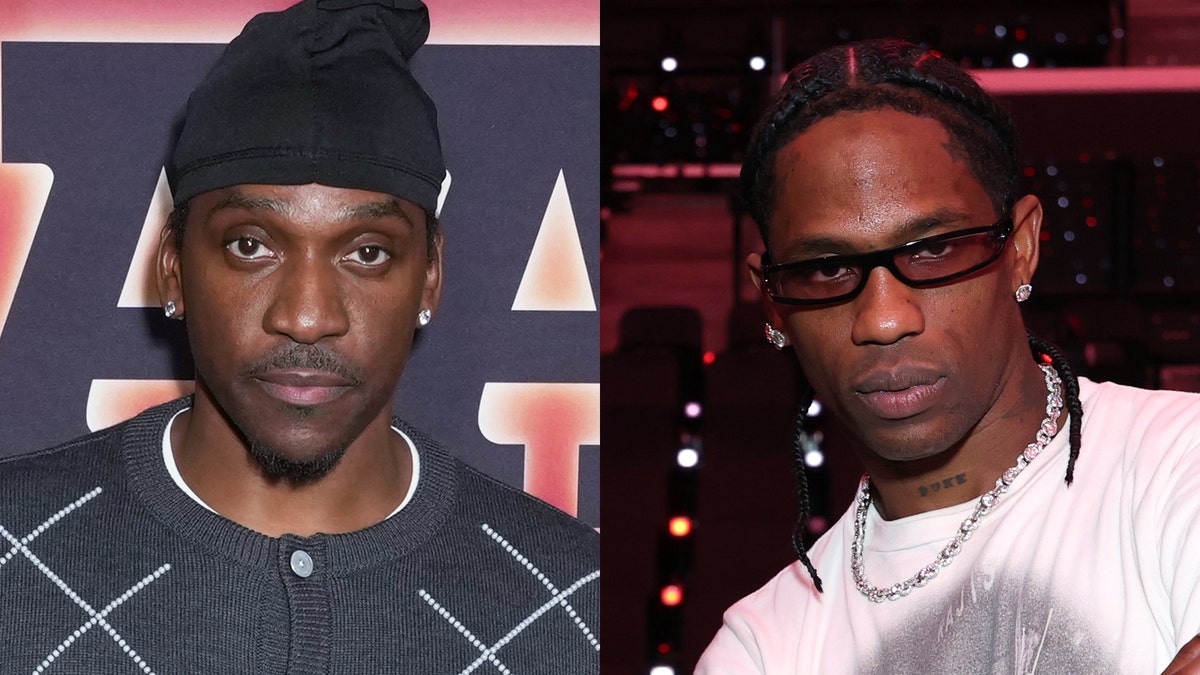
In the high-stakes economy of modern hip-hop, where attention is the primary currency and strategic conflict often drives streaming numbers, few disputes have garnered as much scrutiny as the recent friction between Travis Scott and Pusha T. The tension reached a boiling point with the release of the Clipse single “So Be It,” a track that served as more than just a musical offering; it was a calculated strike containing specific allegations against Scott regarding his professional conduct and his relationships with other industry titans.
For months, the narrative surrounding the track was dominated by Pusha T’s version of events, which painted Scott as an interloper in the studio. However, in a comprehensive new interview, the Travis Scott response to Pusha T “So Be It” diss has finally provided a counter-narrative, challenging the claims of “crashing” sessions and manipulating the release of high-profile verses. Speaking with Rolling Stone, Scott dismantled the accusations, framing the conflict not as a personal betrayal, but as a misunderstanding of studio dynamics and a potential play for “rollout clout.”
The dispute centers on a specific interaction involving legendary producer Pharrell Williams. According to the claims made in “So Be It” and subsequent commentary by Pusha T, Scott allegedly disrupted a session between Pusha and Pharrell to showcase his 2023 album, Utopia. The more damaging allegation suggested that Scott selectively withheld a verse from the song “Meltdown”—a track featuring Drake—as the lyrics contained shots aimed at Pharrell, thereby attempting to manage the social optics of the room.
From a business perspective, these allegations touch on the “gatekeeping” and “curation” roles that superstar artists play when bridging different musical circles. In an industry where access to producers like Pharrell is a prized asset, the accusation of “crashing” a session is not merely a social slight but a critique of professional etiquette and respect for the creative process.
The Studio Session: Invitation vs. Intrusion
The central pillar of Pusha T’s grievance was the suggestion that Travis Scott entered a private creative space uninvited. Scott, however, rejected this framing entirely. During his interview, Scott clarified that he did not interrupt any proceedings because he had been specifically asked to attend the session by Pharrell Williams himself.
“First of all, I can’t interrupt something that somebody asked me to come pull up on,” Scott stated, effectively shifting the responsibility of the “intrusion” back to the host of the session. By establishing that his presence was sanctioned, Scott aimed to neutralize the “interloper” narrative that Pusha T had utilized to build the lyrical tension of “So Be It.”
Further complicating the narrative was the claim that Scott arrived with a full film crew to document the encounter, a move often viewed in the industry as a performance of power or an attempt to create “content” at the expense of others’ privacy. Scott described this detail as an absurdity, recalling that when he arrived, it was the other party who had the equipment ready. He joked that the sight of cameras and microphones made him feel as though he had accidentally walked into a documentary, rather than being the one filming it.
The “Meltdown” Controversy and the Drake Variable
Perhaps the most contentious point of the feud involves the “Meltdown” verse. In the volatile landscape of the Drake-Pusha T feud, any piece of music that connects the two—even indirectly through a third party like Travis Scott—becomes a tactical weapon. Pusha T suggested that Scott’s failure to play Drake’s verse during the session was a disingenuous move designed to protect Pharrell from hearing the criticisms leveled against him in the lyrics.
Scott’s rebuttal was based on a simple matter of production timelines. He asserted that the verse in question simply was not finished at the time of the session. “I can’t play something somebody didn’t even have at the time,” Scott explained, arguing that the allegation of “withholding” the track was logically impossible given the state of the recording process. To Scott, the claims made in the diss track lacked a basis in reality, stating that much of what Pusha T described “just didn’t produce sense” to him.
This specific disagreement highlights the complexity of collaborative recording in the digital age. Verses are often recorded in isolation and sent via cloud services, meaning the “final” version of a song often exists only in the mind of the lead artist or the engineer for weeks before it is shared with other collaborators. By citing the unfinished nature of the track, Scott pointed to the technical realities of music production to debunk a narrative of social manipulation.
The Attention Economy: Diss Tracks as Marketing Tools
As a financial analyst and journalist, I discover the most compelling aspect of this feud to be the underlying economic incentive. In the modern streaming era, “beef” is often a symbiotic relationship. A diss track like “So Be It” does not just serve as an emotional release; it functions as a promotional vehicle. By mentioning a name as globally recognized as Travis Scott, an artist can trigger algorithmic spikes, generate social media discourse, and draw in listeners who may not have otherwise engaged with the project.
Scott seemed acutely aware of this dynamic. Rather than engaging in a lyrical war—which would have further validated the “rollout” strategy—he opted for a measured response in a high-authority publication. By framing the mention of his name as a tool to “fuel a rollout,” Scott repositioned himself from a target of a diss to a victim of a marketing tactic. His concluding sentiment—that if his name had to be used to generate hype, then “so be it”—is a subtle play on the title of the song itself, turning the weapon back on the attacker.
This approach reflects a broader shift in how A-list celebrities manage their brands. In previous decades, a public diss required an immediate, aggressive musical response to maintain “street credibility.” Today, the “brand” is often more valuable than the “battle.” By remaining composed and utilizing a cover story to set the record straight, Scott protected his corporate partnerships and global image while still addressing the allegations.
Key Takeaways from the Dispute
- The Invitation: Travis Scott denies “crashing” the session, stating he was invited by Pharrell Williams.
- The Film Crew: Scott disputes the claim that he brought a camera crew, asserting that the equipment belonged to the other attendees.
- The Verse: Scott claims Drake’s “Meltdown” verse was unfinished at the time of the session, making it impossible to “withhold” it.
- The Strategy: Scott views the lyrical attacks as a strategic move to generate attention for the Clipse rollout.
What This Means for the Industry
The resolution—or lack thereof—of this conflict underscores the precarious nature of “cross-world” collaborations. Scott noted that he has always attempted to bring “the best worlds all together,” believing that the intersection of different styles and personalities produces superior music. However, as this feud demonstrates, when these worlds collide, the proximity can invite suspicion and professional jealousy.

For the global audience, this story is a reminder that the music we consume is often the result of complex social negotiations. The “Meltdown” verse and the “So Be It” track are not just songs; they are artifacts of a power struggle involving some of the most influential figures in contemporary culture. When artists of this magnitude clash, the fallout is rarely just about lyrics—it is about legacy, access, and the control of the narrative.
As of now, there are no scheduled official collaborations or joint appearances between the parties involved. The industry will be watching for any further lyrical responses or, more likely, a return to professional silence as the current release cycles conclude. The next significant checkpoint will be the performance data and chart trajectory of the Clipse project, which will reveal whether the “rollout clout” Scott alluded to actually translated into commercial success.
Do you believe strategic conflict is a necessary part of modern music marketing, or does it distract from the art? Share your thoughts in the comments below.
Worth a look