
Between 1954 and 1961, approximately 20,000 residents of Trieste migrated to Australia, seeking economic stability and a new future in the wake of the post-World War II territorial disputes that left the city’s political status in flux. This mass movement of people is the subject of the historical study Trieste Goes To Australia, authored by researcher Gianfranco Cresciani, which documents the profound transformation of the lives of these migrants and their subsequent impact on Australian society.
The post-war era in Trieste was defined by the Free Territory of Trieste, a neutral territory established in 1947 under the Treaty of Peace with Italy. According to official records from the National Archives of Australia, the instability surrounding the city’s transition back to Italian administration in 1954 served as a significant “push factor” for emigration. Many of those who departed were skilled laborers, technicians, and families displaced by the shifting borders between Italy and Yugoslavia, looking for the security of a stable democracy.
The Context of the Trieste Diaspora
The migration from Trieste was not merely a random demographic shift; it was a response to the geopolitical uncertainty that plagued the Julian March. As noted by the Immigration Museum of Victoria, many Triestines arrived in Australia during a period of massive post-war infrastructure development. The Australian government’s “populate or perish” policy, which actively sought European migrants to bolster the workforce and national defense, aligned with the exodus of Triestines fleeing the economic stagnation of a city divided by Cold War tensions.
Gianfranco Cresciani, a historian specializing in the Italian-Australian experience, has extensively documented this period. His research highlights that while many Italian migrants faced challenges regarding language and social integration, the Triestine community often arrived with a distinct cultural identity that blended Central European and Mediterranean influences. This identity was shaped by the city’s history as a former major port of the Austro-Hungarian Empire, a legacy that set them apart from migrants arriving from Southern Italy.
Integration and Social Impact in Australia
Once in Australia, the Triestine community established social clubs and networks that served as vital support systems. These organizations, such as the Trieste Social Club in various Australian cities, provided a bridge for newcomers as they navigated the complexities of their new environment. According to the Australian Institute of Aboriginal and Torres Strait Islander Studies, while migration patterns were often studied through a national lens, the specific regional experiences of groups like the Triestines reveal how local history informs the way migrants interact with their new host country.

The contribution of these migrants was particularly visible in urban centers like Melbourne and Sydney. Many Triestines found work in the manufacturing, construction, and engineering sectors, utilizing technical skills acquired in their home city. Unlike some migration cohorts that remained insular, the Triestines were noted for their high rates of naturalization and their rapid integration into the Australian professional middle class within two decades of their arrival.
Preserving the Memory of Migration
Cresciani’s work serves as a primary reference for those seeking to understand the specific motivations and outcomes of the 1950s migration wave. By analyzing personal diaries, passenger manifests, and oral histories, his book provides a granular look at the sacrifices made by families who left behind homes in the Adriatic to settle in a country where they often lacked basic knowledge of the English language.
The academic consensus, supported by data from the Australian Bureau of Statistics, indicates that the Italian-born population in Australia peaked in the early 1970s, with the 1950s arrivals forming the foundation of this community. The story of the Triestines remains a significant chapter in the broader narrative of 20th-century European migration, illustrating how political instability in a small port city in Northern Italy redirected the life paths of thousands of individuals toward the Southern Hemisphere.
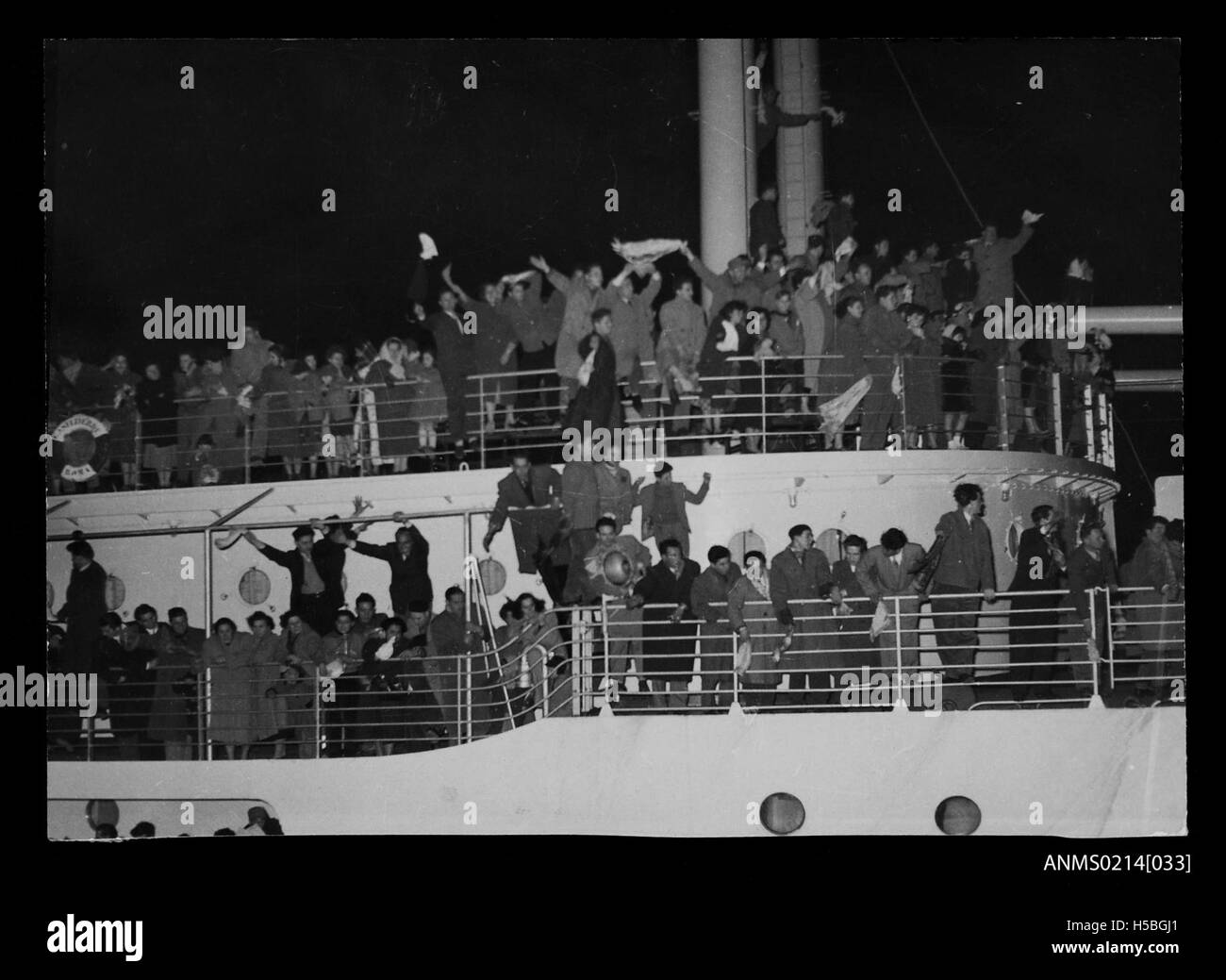
As of late 2024, the history of this migration continues to be studied by academic institutions interested in the long-term socio-economic effects of post-war European displacement. Researchers interested in specific passenger records or historical documentation regarding this migration wave are encouraged to consult the National Archives of Australia’s RecordSearch database, which remains the primary repository for arrival manifests and immigration files from that era.
The legacy of the 20,000 Triestines who made the journey to Australia persists through the descendants of that generation, many of whom remain active in cultural associations that honor their dual heritage. For those interested in the ongoing preservation of these personal histories, local historical societies and the Italian Cultural Institutes in Australia offer regular forums and exhibitions. We welcome your thoughts on how regional histories like this shape our broader understanding of global migration—please share your insights in the comments section below.
Worth a look