Lost Play Reveals New Details About the Trojan War, stunning Mosaic shows
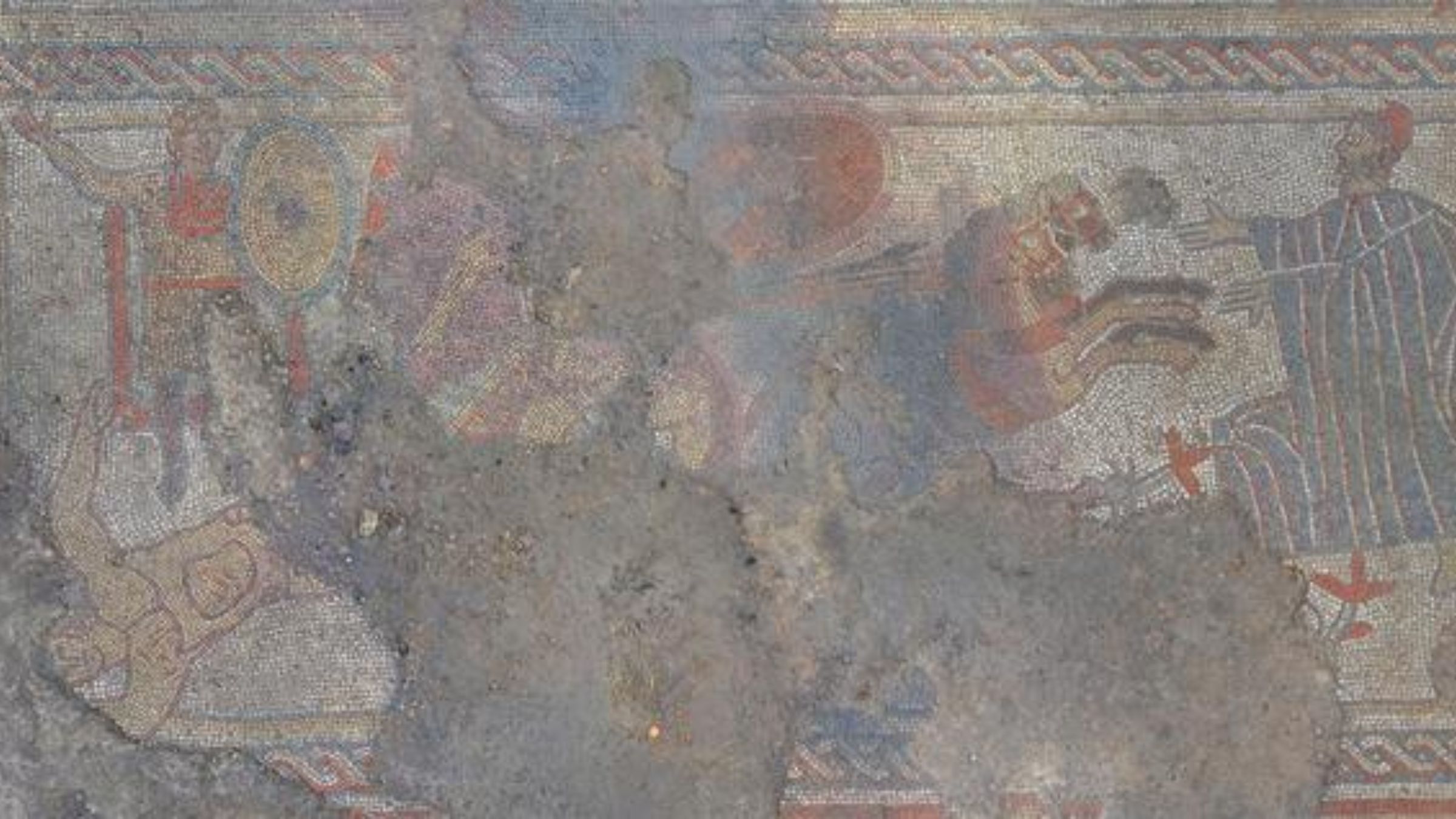
A remarkably detailed Roman mosaic discovered in Ketton, England, is rewriting our understanding of how the Trojan War was perceived in antiquity. Recent research reveals the mosaic doesn’t just depict the well-known story from Homer’s “Iliad,” but also draws from a lost play by the ancient Greek tragedian Aeschylus, titled “Phrygians.” This finding offers a captivating glimpse into option interpretations of the legendary conflict and the vibrant cultural exchange within the Roman Empire.
A Mosaic Telling Two Tales
The Ketton Mosaic, unearthed years ago, has long captivated archaeologists with its intricate scenes. It portrays episodes from the Trojan War, but subtle details initially puzzled researchers. Now, a closer examination has revealed a narrative aligning with “Phrygians,” a play only known through fragments and scholarly analysis.
For instance,the mosaic depicts King Priam offering gold equal in weight to his son,Hector,as ransom. This scene directly contradicts Homer’s ”Iliad,” were Achilles refuses any payment for Hector’s body. Furthermore,the mosaic shows Achilles dragging Hector’s body around Patroclus‘ tomb,a detail also found in “Phrygians” but differing from the “Iliad’s” account of dragging the body around troy’s walls.
These discrepancies suggest the mosaic’s creator intentionally referenced Aeschylus’ version of the story, offering a unique perspective on a familiar myth. “Phrygians” appears to be the sole surviving retelling of the Trojan War that includes these specific events.
Echoes of the Past in Artistic Style
The mosaic’s connection to Aeschylus isn’t limited to the narrative. Analysis of the artwork itself reveals another layer of ancient significance. the top panel of the mosaic mirrors designs found on Greek pottery dating back to Aeschylus’ time - roughly 800 years before the mosaic was created.
This isn’t an isolated instance. Researchers found other elements within the mosaic drawing inspiration from ancient silverware, coins, and pottery originating from Greece, turkey, and Gaul.This demonstrates a intentional effort to connect with and honor artistic traditions of the past.
A Connected Classical world
These findings underscore the interconnectedness of the Roman world and its classical predecessors. It challenges the notion of Romano-British craftspeople working in isolation. Rather, it suggests a thriving network of trade and artistic influence.
The mosaic demonstrates that Roman Britain wasn’t merely a provincial outpost,but an active participant in a broader Mediterranean cultural landscape. Skilled artisans in Britain were not only proficient in their craft but also deeply informed about, and appreciative of, classical design traditions. They seamlessly integrated these influences into their work, creating a unique blend of local skill and mediterranean heritage.
This discovery highlights the enduring legacy of classical art and literature,and the remarkable ways in which it continued to inspire creativity across the Roman Empire. It reminds us that even in the furthest reaches of the empire, the echoes of ancient Greece and Rome resonated strongly.
Test Your Knowledge:
Want to learn more about Roman Britain? Take our quiz to see how well you know the Empire’s conquest of the British Isles: https://www.livescience.com/archaeology/romans/roman-britain-quiz-what-do-you-know-about-the-empires-conquest-of-the-british-isles
Related reading