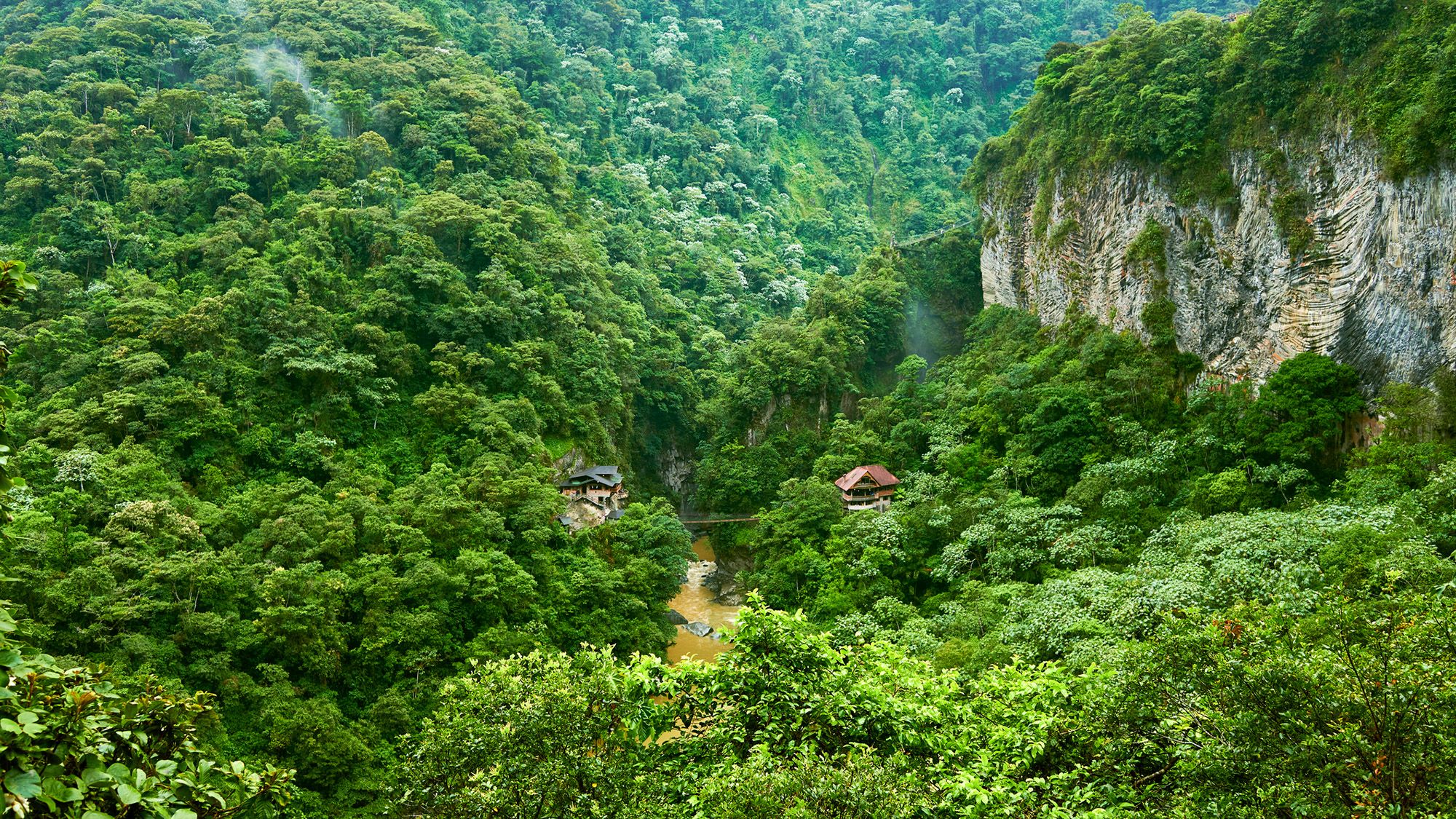
Tropical forests, which serve as vital carbon sinks for the planet, are increasingly losing their ability to absorb carbon dioxide during intense El Niño events. Research indicates that rising temperatures and drought conditions associated with these climate fluctuations can cause forests to shift from absorbing carbon to releasing it, exacerbating global climate change. Experts warn that the compounding effects of record-high ocean temperatures and multi-year climate stress may lead to unprecedented tree mortality and carbon loss in the Amazon basin.
The Amazon rainforest, the world's largest terrestrial carbon store, holds approximately 123 billion tonnes of carbon. However, the delicate balance of photosynthesis—the process by which trees absorb CO₂—is being disrupted by shifting climate patterns. As these events increase in frequency and intensity, the impact on tropical ecosystems becomes more severe.
A map of the Amazon River drainage basin in the middle of the Amazon rainforest. (Image credit: By Kmusser from Wikimedia Commons with elements from this file, CC-BY-SA-3.0)
The Mechanics of Carbon Starvation and Hydraulic Failure
Tropical forests function by pulling carbon dioxide from the atmosphere to build biomass. This process relies on temperature stability and consistent water availability. During an El Niño event, high temperature anomalies and reduced rainfall place trees under extreme physiological stress. In response to dry conditions, plants close the stomata—small pores on their leaves—to prevent water loss. While this protects the tree from immediate dehydration, it also halts the intake of CO₂, effectively starving the tree of the fuel required for growth and survival.
Beyond simple starvation, researchers have identified a more acute threat: hydraulic failure. When atmospheric moisture demand is excessively high, the tension within a tree’s internal water column can snap, causing the tree to die rapidly. Data collected from over 500,000 trees across six South American countries over a 30-year period reveals that larger trees and those with less dense wood are particularly susceptible to this process. During the 2015-2016 El Niño, tree mortality rates in South American tropical forests climbed from a baseline of 1.8% to 3% annually, with mortality rates for larger, medium-diameter trees doubling compared to smaller counterparts.
Vulnerability at the Forest Edge
Not all areas of the rainforest react to climate stress in the same way. The vulnerability of a forest is often linked to its baseline climate. While rainforests are generally associated with wet, biodiverse conditions, many tropical regions experience seasonal drought as a standard part of their lifecycle. However, the edges of the Amazon basin are currently experiencing some of the most rapid warming recorded in the tropics.
Forests at these edges, which are already accustomed to periods of limited water, are proving less resilient than previously assumed. Research findings suggest that an average temperature increase of just 0.5°C in these regions can lead to a 0.5% loss of aboveground carbon biomass. This suggests that the capacity for adaptation to seasonal drought is being outpaced by the speed of current climate extremes. When a forest is hit by a major climate anomaly before it has recovered from previous years of stress, its structural integrity is significantly compromised.
Global Climate Stakes
The current climate outlook is concerning to researchers monitoring the Amazon. The combination of an active El Niño event and record-breaking global ocean temperatures creates an environment where tropical forests may fail to act as a carbon sink.
The scientific community continues to monitor these trends closely. While NOAA provides ongoing updates regarding the strength and duration of El Niño, the long-term health of the Amazon depends on global efforts to limit temperature rise. The preservation of these forests is not merely an issue of local biodiversity, but a critical component of the global strategy to manage atmospheric carbon levels.
As the climate system continues to shift, the focus remains on tracking tree growth and mortality metrics. Readers interested in the latest updates on global climate conditions can find official data through the National Oceanic and Atmospheric Administration or follow ongoing monitoring projects conducted by forest research networks in South America.