
Japanese aviation authorities and major carriers have grounded over 120 domestic flights as two tropical storm systems track toward the archipelago, threatening to disrupt travel across southern and western regions. According to the Japan Meteorological Agency (JMA), the approaching weather patterns are bringing high-velocity winds and torrential rainfall, prompting emergency safety protocols at several regional airports.
The disruption primarily impacts flights arriving at and departing from airports in the Kyushu and Shikoku regions. Airlines including All Nippon Airways (ANA) and Japan Airlines (JAL) have issued advisories to passengers, citing safety concerns regarding visibility and severe turbulence. As of early Tuesday, the JMA confirmed that the systems are intensifying, with localized warnings issued for landslides and flooding in coastal areas.
Impact on Regional Aviation and Infrastructure
The decision to cancel flights serves as a preventative measure to ensure passenger safety, according to statements from major domestic carriers. Travelers are advised to check real-time updates via the Japan Meteorological Agency’s official portal, which provides the most accurate tracking for severe weather events. While the 120 canceled flights represent a significant portion of daily regional traffic, international hubs in Tokyo and Osaka remain largely operational, though they are subject to ongoing monitoring.
Meteorologists indicate that the wind speeds associated with these systems are causing hazardous conditions for ground crews and aircraft maneuvering on runways. The combination of high-pressure shifts and moisture influx from the Pacific has created a volatile environment. Local authorities in affected prefectures have activated emergency response centers to monitor infrastructure, including rail lines and ferry services that often face similar disruptions during typhoon season.
Safety Protocols and Traveler Guidance
For those currently in Japan, the standard operating procedure involves monitoring local municipal alerts, often broadcast via the J-Alert system. The Ministry of Land, Infrastructure, Transport and Tourism (MLIT) has advised the public to avoid unnecessary travel in areas under active storm warnings. Travelers whose flights have been affected are encouraged to contact their respective airlines directly to rebook or secure refunds, as policies vary significantly depending on the ticket class and the nature of the delay.
According to the Ministry of Land, Infrastructure, Transport and Tourism, the primary focus remains the prevention of accidents during takeoff and landing, which are the phases of flight most vulnerable to rapid wind shear. With the situation evolving, the number of cancellations may fluctuate as the storm systems move across the southern islands. Public transportation operators are coordinating with weather services to provide staggered updates, ensuring that commuters are not stranded at transit hubs.
Understanding the Meteorological Context
Japan’s location in the western North Pacific makes it particularly susceptible to tropical cyclones and storms during the late summer and early autumn. The current situation highlights the challenge of managing dense air traffic in a country where geography limits alternative routes. These storms, while not always reaching the intensity of major typhoons, can cause widespread logistical bottlenecks that persist long after the weather clears.
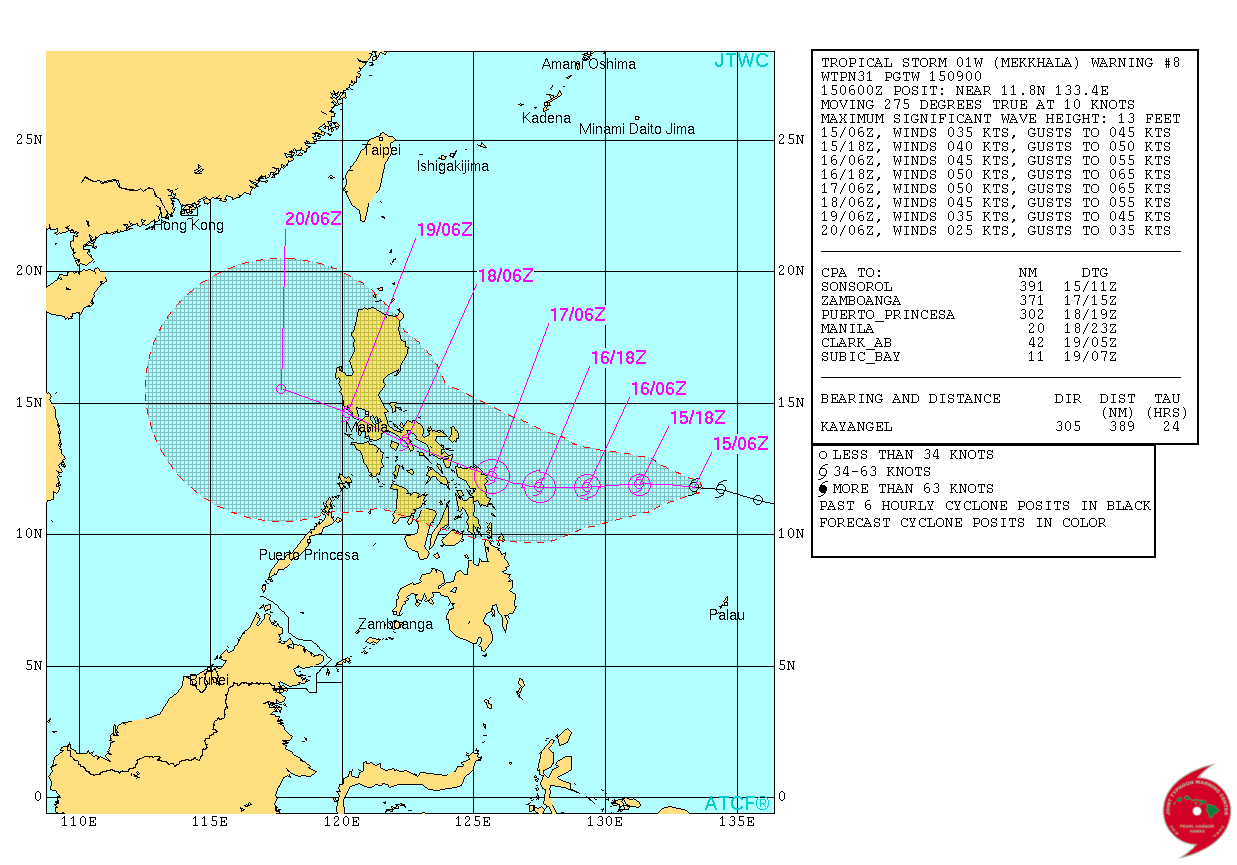
Data from the World Meteorological Organization suggests that the frequency and intensity of such events in the Asia-Pacific region require robust early-warning systems. The JMA continues to update its trajectory models every few hours, allowing for better-informed decisions by aviation and rail authorities. Current projections suggest the systems will gradually lose intensity as they move northeast, but the risk of heavy precipitation remains high for the next 24 to 48 hours.
The next official update from the Japan Meteorological Agency is scheduled for later today, providing further clarity on the expected path of the storms. Travelers are encouraged to check their airline websites frequently and monitor local news outlets for the latest information on airport closures. Share your travel experiences or questions in the comments below to help others stay informed.
Related reading