
Former U.S. President Donald Trump has accused The New York Times of “treason” after the newspaper published an editorial questioning the strategic achievements of the 2020 U.S. airstrike that killed Iranian General Qasem Soleimani. The dispute—part of an ongoing legal battle between Trump and the publication—raises fresh concerns about press freedom, the boundaries of presidential rhetoric, and the public’s trust in media coverage of national security. Legal experts warn the escalation could set a precedent for how future administrations treat critical reporting.
Trump Calls *NYT* Iran Coverage ‘Treasonous,’ Vows to Expand Lawsuit—What’s at Stake?
In a series of posts on Truth Social and remarks to supporters, Trump labeled the Times’s analysis of the Soleimani strike—a 2020 operation he ordered—as “fake news” and “treasonous,” claiming the newspaper had undermined U.S. military objectives. The latest comments come as Trump faces a separate defamation lawsuit filed by the Times over his repeated false claims about voter fraud in the 2020 election. Legal observers say the Iran dispute could become the next front in a broader campaign to challenge media independence.
The Times editorial, published last month, argued that the Soleimani strike—while tactically successful—had failed to achieve its stated goal of deterring future Iranian aggression. It cited continued rocket attacks on U.S. bases in Iraq and the lack of a broader regional shift in Tehran’s behavior. Trump’s response framed the criticism as an attack on his presidency and, by extension, on the military’s mission.
“The New York Times is out of control,” Trump wrote on Truth Social. “They are doing everything they can to weaken America. This is treason.” His remarks echo a pattern of rhetorical attacks on the media, including previous accusations of “enemy of the people” journalism. The Times has not publicly responded to the latest allegations but has defended its reporting as a core function of a free press.
Key Takeaways
- Legal Precedent: Trump’s “treason” accusation could be used in the Times’s defamation lawsuit against him, with experts warning it may embolden future presidents to retaliate against critical media.
- Strategic Debate: The Soleimani strike’s long-term impact remains contested; U.S. officials have cited reduced Iranian proxy attacks, while critics argue Tehran’s regional influence persists.
- Press Freedom: The dispute highlights growing tensions between political leaders and media outlets, with free-speech advocates warning of a chilling effect on investigative journalism.
- Public Trust: Polls show declining confidence in U.S. media, with 63% of Americans now viewing news organizations as biased (Pew Research, 2023).
- Next Steps: The Times may seek to expand its lawsuit to include Trump’s Iran comments, while legal scholars anticipate a First Amendment challenge.
Why Trump’s ‘Treason’ Accusation Matters—And What It Could Mean for the Lawsuit
Trump’s use of the word “treason” is legally significant. While the term carries no formal definition in U.S. law beyond “levying war against the U.S. or giving aid to its enemies,” it has historically been weaponized by politicians to discredit opponents. In 2017, Trump himself accused CNN of “fake news” and “treason” for reporting on his administration’s travel ban, though no legal consequences followed.

Legal experts say the Times could use the latest comments to strengthen its defamation case, arguing that Trump’s rhetoric goes beyond mere criticism to suggest the newspaper’s reporting aids foreign adversaries. “This is a classic example of a strategic escalation,” said Harold Hongju Koh, former U.S. State Department legal adviser and Yale Law professor. “Trump is trying to frame the media as an existential threat to national security, which could influence how courts view his prior statements.”
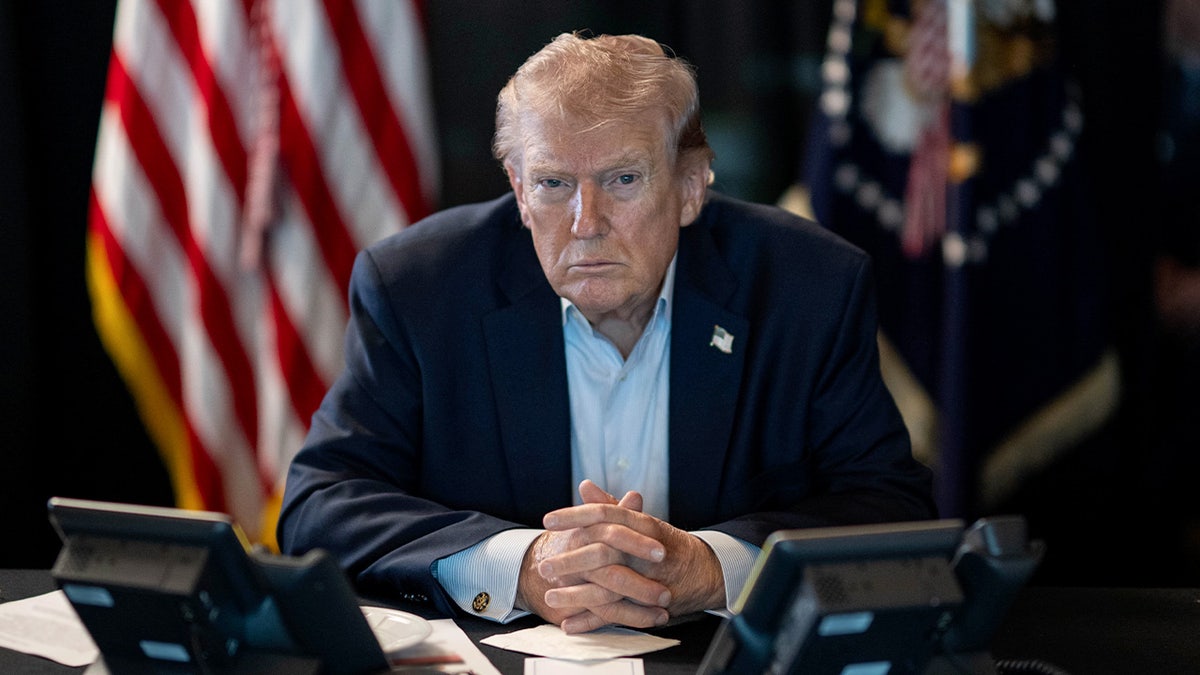
The Times’s lawsuit against Trump—filed in 2021—alleges defamation over his false claims about voter fraud. If the Iran accusations are added, the case could expand to include accusations of slander tied to national security. “The risk for Trump is that he’s now arguing the Times is engaged in treasonous activity, which could be seen as an admission of knowledge of falsity,” said Eugene Volokh, First Amendment scholar at the University of California, Los Angeles.
What the Times editorial said: The piece, titled *”What the Iran Strike Actually Achieved,”* argued that while the Soleimani operation eliminated a key Iranian military leader, it did not produce the broader strategic shift Trump administration officials had promised. “The strike was a tactical success but a strategic failure,” the editorial stated, citing continued Iranian-backed attacks on U.S. forces and regional allies.
“The strike was a tactical success but a strategic failure. Iran’s regional influence remains intact, and the U.S. has not achieved its stated goals of deterring further aggression.”
The New York Times, December 12, 2023
The Soleimani Strike: What the Data Shows—and Why the Debate Persists
The January 3, 2020, airstrike that killed Soleimani was one of the most consequential military operations of Trump’s presidency. The administration justified it as necessary to prevent imminent attacks on U.S. personnel, citing intelligence suggesting Soleimani was planning operations against American targets. However, the long-term impact remains debated.
U.S. Government Claims: Officials, including then-Secretary of State Mike Pompeo, argued the strike weakened Iran’s ability to project power in the region. A 2021 Pentagon report stated that Iranian-backed militia attacks on U.S. forces in Iraq and Syria had declined by 70% in the year following the strike. “The removal of Soleimani disrupted Iran’s command-and-control structure,” a former Defense Department official told The Washington Post in 2021.
Critics’ Counterarguments: Analysts at the International Crisis Group and The Wall Street Journal have noted that while Soleimani’s death created a power vacuum, Iran’s Revolutionary Guard Corps (IRGC) quickly filled the gap. Rocket attacks on U.S. bases in Erbil, Iraq, resumed within months, and Iranian proxies in Yemen and Syria continued operations. “Soleimani was a symbol, not the sole driver of Iran’s regional strategy,” said Trita Parsi, founder of the Quincy Institute for Responsible Statecraft.
A 2023 RAND Corporation study found that while the strike had a short-term deterrent effect, Iran’s long-term behavior was shaped more by economic sanctions and diplomatic isolation than by the removal of a single individual. “The strike was a high-profile event, but its strategic impact was limited,” the report concluded.
How Trump’s Attacks on the Media Fit Into a Broader Pattern
Trump’s accusations against the Times are part of a years-long campaign to discredit media outlets he perceives as hostile. Since leaving office, he has:

- Filed lawsuits against CNN, The Washington Post, and NBC News for what he calls “defamatory” reporting.
- Repeatedly labeled critical coverage as “fake news” or “propaganda,” including during his presidency.
- Encouraged supporters to boycott advertisers of media outlets he targets.
The Times is not the first outlet to face Trump’s wrath over Iran coverage. In 2020, he accused CNN of “lying about Iran” after the network reported on internal White House divisions over the Soleimani strike. Legal scholars warn that such rhetoric could normalize retaliation against journalists, particularly in an era of polarized politics.
“Trump is testing the boundaries of what’s acceptable in political discourse,” said Jane Kirtley, director of the Silha Center for Media Ethics and Law at the University of Minnesota. “If he can successfully argue that critical reporting is ‘treasonous,’ it sets a dangerous precedent for how future leaders might treat the press.”
What Happens Next: Legal Battles, Public Trust, and the Future of Press Freedom
The immediate next steps in this dispute are likely to include:
- The Times’s Response: The newspaper may seek to add Trump’s latest comments to its existing defamation lawsuit, arguing they reinforce a pattern of false and damaging statements. Legal experts suggest the Times could also file a countersuit for slander.
- Court Rulings: If the case proceeds, judges will need to determine whether Trump’s statements about the Times meet the legal standard for defamation—particularly given his status as a public figure. The Supreme Court’s 1964 New York Times v. Sullivan ruling makes it harder to prove defamation against public officials unless statements are made with “actual malice.”
- Public and Political Fallout: Polling suggests Americans are deeply divided over media trust, with 45% viewing Trump’s attacks on the press as justified and 52% seeing them as harmful to democracy (Gallup, 2023). The dispute could further polarize opinions.
- Broader Implications for Journalism: Free-speech advocates warn that Trump’s tactics could embolden other leaders to use legal and rhetorical pressure to silence critical reporting. “This isn’t just about one lawsuit—it’s about the erosion of a free press,” said Jill Abramson, CEO of the Committee to Protect Journalists.
Beyond the legal battle, the dispute underscores a broader crisis in U.S. media trust. A 2023 Pew Research Center survey found that only 22% of Americans trust national news organizations to report the news “fully, accurately, and fairly.” The Times’s coverage of the Soleimani strike—while critical—reflects a core journalistic function: holding power to account. Yet in an era of algorithm-driven outrage and political weaponization of the press, such reporting is increasingly framed as an act of betrayal.
How to Follow the Story: Key Developments and Where to Find Updates
For readers seeking to track this story’s evolution, here are the most reliable sources for updates:
- Legal Proceedings: The Times’s defamation lawsuit against Trump (New York State Court filings) will be the primary venue for developments. The next hearing is scheduled for March 15, 2024, though dates may shift.
- Media Coverage: For balanced analysis, follow The Washington Post, Reuters, and NPR, which have covered the legal and strategic angles without partisan bias.
- Public Statements: Trump’s Truth Social account and the Times’s editorial page will likely be the primary platforms for further comments.
- Expert Commentary: Scholars like Timothy Zick (University of San Francisco) and Ken Paulson (Free Speech Center) frequently weigh in on media-law disputes.
This story is developing rapidly. For real-time updates, bookmark this page or follow World Today Journal for further analysis. Have questions about press freedom or the legal implications? Share your thoughts in the comments below—or tweet your perspective using #MediaUnderFire.
Keep reading