
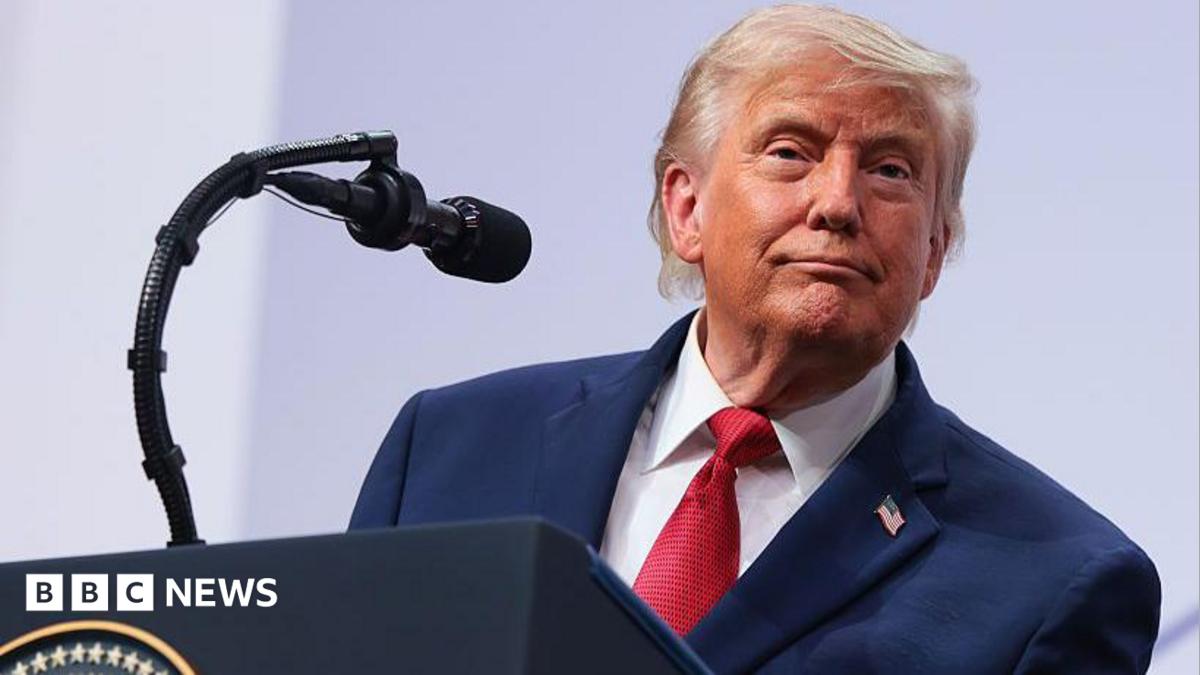
President Donald Trump has publicly accused major oil companies of engaging in price gouging at petrol pumps, claiming that fuel costs remain unfairly high for American consumers despite a broader decline in global oil markets. The former president’s remarks arrive amid ongoing volatility in energy sectors, as international crude benchmarks fluctuate in response to geopolitical tensions in the Middle East, specifically following the escalation of the conflict between Israel and Iran, according to data from the U.S. Energy Information Administration.
While global oil prices have retreated from their recent peaks, they continue to trade at levels elevated above those seen prior to the height of the regional unrest. This disconnect between global commodity prices and localized retail fuel costs has sparked renewed scrutiny from political figures and consumer advocates regarding the profit margins maintained by downstream refiners and distributors.
Market Dynamics and Retail Fuel Pricing
The price of gasoline at the pump is determined by a complex interplay of factors, including the cost of crude oil, refining capacity, distribution logistics, and federal or state taxes. According to the U.S. Energy Information Administration (EIA), crude oil costs typically account for the largest share of the retail price of gasoline. When global supply chains are disrupted by conflict, such as the ongoing hostilities involving Iran, market uncertainty often drives up the price of Brent and West Texas Intermediate (WTI) crude.
However, retail prices often exhibit a “sticky” quality, where they rise quickly in response to global market hikes but fall more slowly when those costs subside. This phenomenon, frequently described by economists as “rockets and feathers,” remains a central point of contention in the debate over potential price gouging. Critics argue that firms are slow to pass savings down to the consumer, effectively maintaining higher margins at the expense of household budgets.
Geopolitical Influence on Energy Costs
The current energy landscape is heavily influenced by the security of transit routes in the Middle East. The conflict involving Israel and Iran has intensified concerns regarding the stability of the Strait of Hormuz, a critical maritime chokepoint through which approximately 20% of the world’s total petroleum liquids pass, as noted by the U.S. Energy Information Administration. Even when physical supply is not immediately interrupted, the risk premium associated with potential supply blockages frequently keeps energy prices elevated.

Industry representatives often counter allegations of price gouging by pointing to the costs of maintenance, regulatory compliance, and the need for long-term capital investment. According to the American Petroleum Institute (API), the retail gasoline market is highly competitive and operates on relatively thin margins, with price fluctuations largely reflecting the global commodity market rather than corporate manipulation.
Regulatory Oversight and Consumer Protection
Accusations of price gouging are not new to the American political discourse. Historically, such claims have prompted investigations by the Federal Trade Commission (FTC), which is tasked with monitoring the oil and gas industry for potential anti-competitive behavior. The FTC maintains oversight to ensure that price increases are driven by legitimate market forces rather than illegal collusion or market power abuse.
Consumers seeking to monitor current fuel prices and state-level trends can utilize resources provided by the American Automobile Association (AAA), which tracks daily average prices across the United States. While political rhetoric often highlights the frustration of high costs, official government analysis continues to emphasize that market-driven supply and demand remain the primary drivers of the price consumers pay at the pump.
Looking Ahead
The next major checkpoint for energy markets will involve the upcoming release of the Short-Term Energy Outlook (STEO), which provides projections for global oil production and pricing trends. Market analysts will be watching for any revisions to supply forecasts that could further impact retail fuel prices heading into the next quarter. As the conversation regarding energy affordability persists, stakeholders on both sides of the aisle are expected to continue debating the necessity of increased domestic production versus the regulation of existing energy distributors.

What is your perspective on the current state of energy prices? Join the conversation in the comments section below and share this report with your network to keep others informed on the factors impacting your daily expenses.