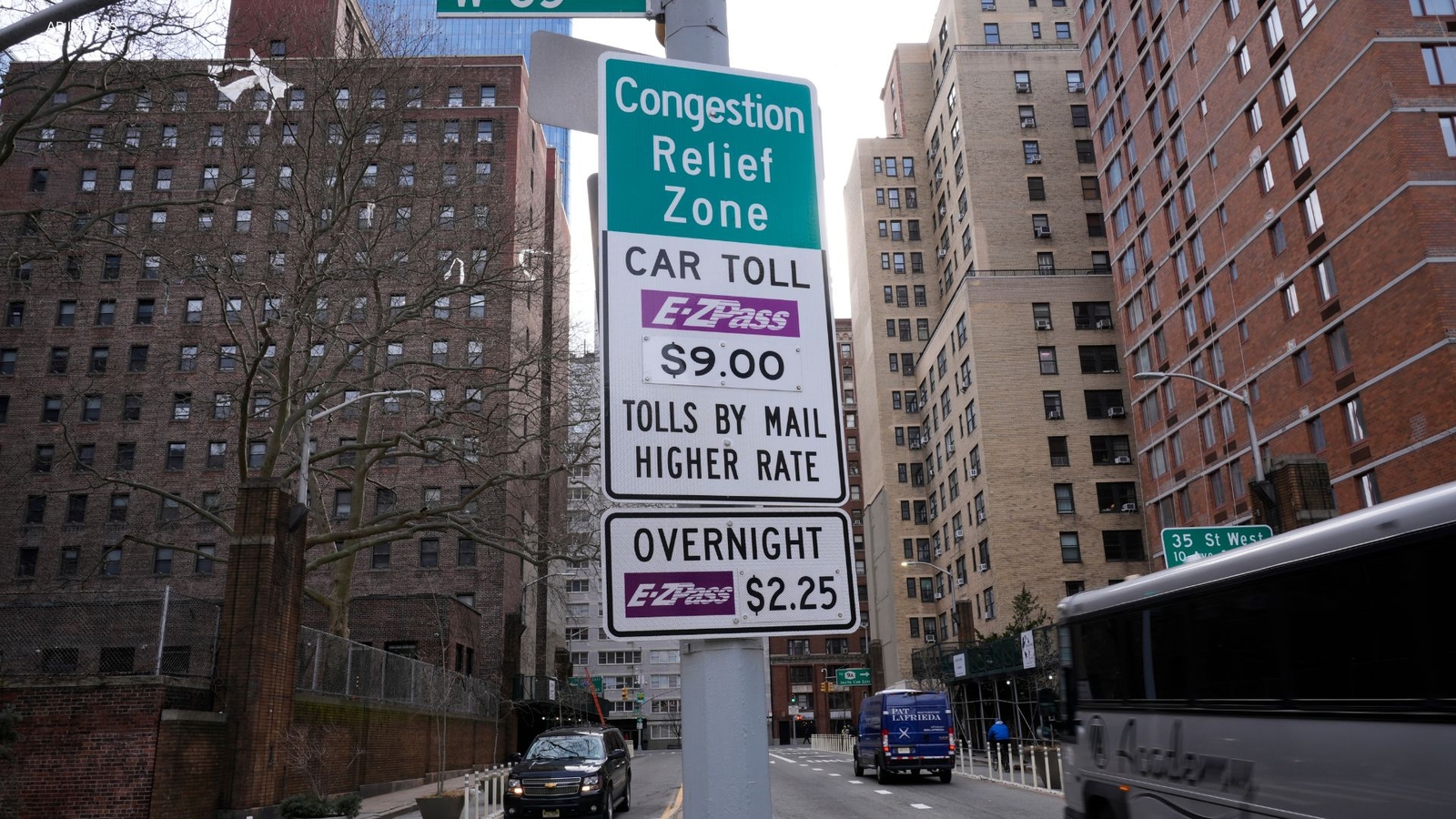
New York City’s ambitious congestion pricing plan, designed to alleviate traffic and fund vital improvements to the Metropolitan Transportation Authority (MTA), has survived a legal challenge from the Trump administration. A federal judge has ruled that the U.S. Department of Transportation lacked the authority to unilaterally overturn the program, marking a significant victory for the city and state of New York. The ruling, delivered on Tuesday, March 3, 2026, reaffirms the legality of the toll, currently set at $9, for vehicles entering Manhattan below 60th Street.
The legal battle stemmed from a reversal of approval initiated by the Trump administration, which argued against the program’s implementation. U.S. District Judge Lewis Liman, however, found that the Department of Transportation’s decision to rescind the previously granted approval was “arbitrary and capricious,” lacking a sufficient justification. This decision underscores the importance of adhering to established democratic processes and respecting the authority of state and local governments in addressing regional transportation challenges. The program, initially greenlit under the Biden administration, had faced fierce opposition from those concerned about its economic impact and potential burden on commuters.
Judge Liman’s Ruling: A Blow to Federal Overreach
In a detailed 149-page ruling, Judge Liman meticulously outlined the legal basis for his decision. He emphasized that the congestion pricing program was the result of a legitimate democratic process, having been passed by the New York State legislature, signed into law by the governor, and receiving the necessary federal approvals. As reported by the Associated Press, Liman wrote, “The democratic process worked,” highlighting the importance of respecting the decisions made by elected officials at the state and local levels. While the ruling doesn’t entirely preclude future legal challenges, it firmly establishes the program’s legality for the time being.
The judge acknowledged that the Trump administration retains the right to continue making public statements and to seek lawful means to end the program, but stressed that any future attempts must be grounded in sound legal reasoning. He specifically noted that the Secretary of Transportation could explore alternative avenues for challenging the program, but any such efforts would be subject to judicial review. This caveat underscores the ongoing potential for legal maneuvering, but reinforces the current validity of the congestion pricing scheme.
Congestion Pricing: A Year in Operation and its Impact
The congestion pricing program officially went into effect on January 5, 2025, and has already begun to demonstrate tangible benefits. New York Governor Kathy Hochul hailed the ruling as a vindication of a “once-in-a-lifetime success story,” citing reduced gridlock, faster travel times, improved air quality, and increased funding for mass transit upgrades. According to NBC New York, Hochul stated that the program has “yielded huge benefits” in its first year. The funds generated by the tolls are earmarked for modernizing the MTA’s aging infrastructure, including subway signals, train cars, and accessibility improvements.
MTA Chair and CEO Janno Lieber echoed Hochul’s sentiments, declaring that the judge’s ruling makes it clear that congestion pricing is “here to stay.” He emphasized that the program is not only legal but also effective, pointing to improvements in traffic flow and economic activity in the affected areas. Lieber also took a pointed jab at the Trump administration, stating that Secretary Duffy “failed” in his attempt to halt the program, while New York “is winning.” This underscores the political dimension of the legal battle and the strong commitment of state officials to the program’s success.
The Financial Implications and Future Funding
The congestion pricing program is projected to generate significant revenue for the MTA, estimated to be over $1 billion annually. This funding is crucial for addressing the agency’s substantial capital needs, including a $55 billion five-year capital plan. The funds will be used to modernize the subway system, improve bus service, and enhance accessibility for riders with disabilities. The program’s financial viability is further bolstered by the ruling, ensuring a stable source of funding for these critical infrastructure projects.
The initial toll of $9 is subject to potential adjustments based on traffic conditions and the MTA’s financial needs. The agency has the authority to modify the toll structure, but any changes would be subject to public review and approval. The long-term financial sustainability of the program will depend on maintaining a balance between revenue generation and minimizing the burden on commuters and businesses.
Political Reactions and Ongoing Opposition
The ruling has drawn strong reactions from political leaders on both sides of the aisle. Governor Hochul condemned the Trump administration’s attempts to interfere with New York’s self-governance, calling them “unlawful” and “spectacularly failed.” She vowed to continue fighting any future efforts to undermine the program. The ruling is seen as a significant victory for the Hochul administration and a testament to the state’s ability to defend its interests against federal overreach.
Despite the court’s decision, opposition to congestion pricing remains. Critics argue that the tolls are too high and disproportionately impact low-income commuters and businesses. Some have suggested alternative solutions to address traffic congestion, such as investing in public transportation and improving traffic management systems. However, proponents of congestion pricing maintain that We see the most effective way to reduce traffic, improve air quality, and generate much-needed funding for the MTA.
Potential for Further Legal Challenges
While Judge Liman’s ruling is a major setback for opponents of congestion pricing, the possibility of further legal challenges remains. The Trump administration could appeal the decision to a higher court, potentially prolonging the legal battle. Other parties could file lawsuits challenging the program on different grounds, such as environmental concerns or economic impact. The MTA is prepared to defend the program against any future legal challenges, but the outcome remains uncertain.
The legal landscape surrounding congestion pricing is complex and evolving. The MTA is closely monitoring any potential legal developments and working with state and federal officials to ensure the program’s continued success. The agency is committed to transparency and public engagement, and will continue to provide updates on the program’s implementation and performance.
Key Takeaways
- Legality Confirmed: A federal judge has upheld the legality of New York City’s congestion pricing program, rejecting the Trump administration’s attempt to block it.
- Democratic Process: The ruling emphasizes the importance of respecting the decisions made by democratically elected officials at the state and local levels.
- Funding for MTA: The program is expected to generate over $1 billion annually for the MTA, funding critical infrastructure improvements.
- Ongoing Opposition: Despite the ruling, opposition to congestion pricing persists, with critics raising concerns about its economic impact.
- Potential for Appeals: The Trump administration could appeal the decision, potentially prolonging the legal battle.
The future of congestion pricing in New York City appears secure, at least for now. However, the possibility of further legal challenges and political maneuvering remains. The MTA will continue to monitor the situation closely and perform to ensure the program’s long-term success. The next key development will be the MTA’s ongoing assessment of the program’s impact and any potential adjustments to the toll structure. Readers can find the latest updates on the MTA’s website: https://new.mta.info/congestion-pricing. We encourage you to share your thoughts on this important issue in the comments below.
Keep reading