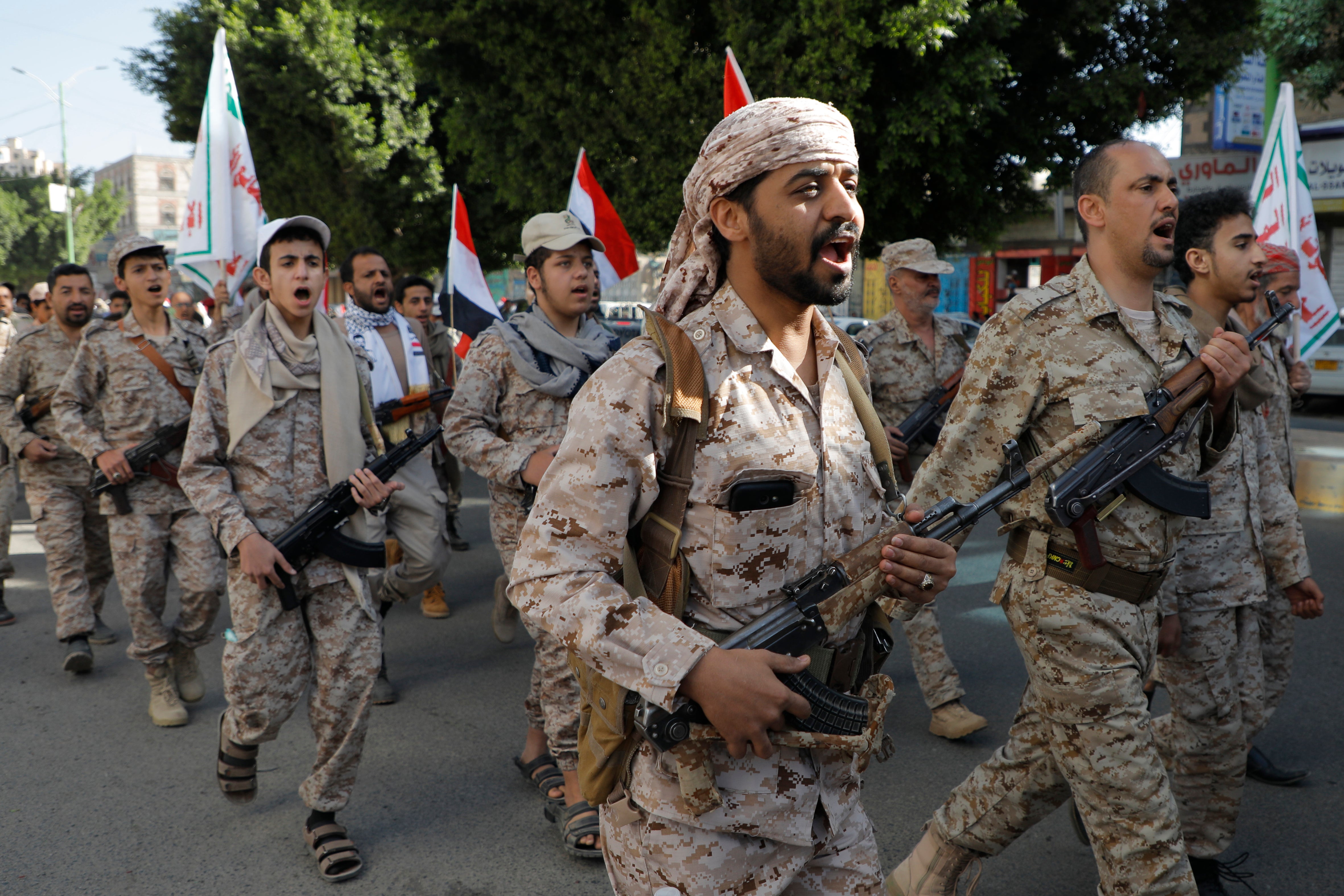
United States military forces have launched a series of targeted airstrikes against Iranian-backed infrastructure in response to an escalating campaign of attacks by Houthi militants against international commercial shipping in the Red Sea. The strikes, confirmed by the U.S. Department of Defense, represent a significant intensification of regional volatility as the U.S. seeks to secure critical maritime supply chains while managing a complex geopolitical alignment involving Saudi Arabia and other regional partners.
According to the U.S. Department of Defense, the strikes specifically targeted facilities used by Iranian-aligned groups to facilitate the transfer of weaponry and intelligence to Houthi forces in Yemen. These operations are intended to disrupt the rebels’ capability to conduct drone and missile strikes on tankers and cargo vessels navigating the Bab el-Mandeb Strait, a vital chokepoint for global oil and commodity trade.
The Impact of Houthi Attacks on Global Shipping
The security situation in the Red Sea has deteriorated significantly over the past several months. Houthi militants have repeatedly targeted commercial tankers, citing solidarity with Palestinians in Gaza. According to the International Maritime Organization (IMO), these actions have forced major shipping companies to reroute vessels around the Cape of Good Hope, adding thousands of miles to transit routes and causing a sharp increase in insurance premiums and fuel costs.
The U.S. response, often coordinated through multinational maritime task forces, has focused on intercepting incoming projectiles and conducting retaliatory strikes against launch sites. Despite these efforts, the frequency of attacks remains high, prompting concerns from industry analysts about the long-term stability of energy prices. The International Energy Agency (IEA) has noted that while global oil markets have shown resilience, prolonged disruption to the Red Sea corridor poses a persistent risk to supply chain efficiency.
Geopolitical Realignment and Regional Strategy
The strategic landscape in the Middle East is currently shifting as the U.S. bolsters its partnerships with regional powers, most notably Saudi Arabia, to create a unified front against Iranian influence. This approach reflects a broader effort to counter the growing involvement of Russia and China in regional security and economic infrastructure. By strengthening ties with Riyadh, Washington aims to establish a more stable security architecture that can withstand both militant insurgencies and the influence of external global rivals.
Analysts observe that the Saudi-U.S. coordination is not merely about maritime security but serves as a broader hedge against the expansion of the “no-limits” partnership between Moscow and Beijing. According to the Center for Strategic and International Studies (CSIS), the U.S. is prioritizing the consolidation of regional alliances to ensure that security cooperation remains focused on local stability rather than allowing external powers to fill power vacuums.
The Role of Iran in Regional Instability
U.S. officials maintain that the Houthis are heavily reliant on Iranian technical and material support. Tehran has consistently denied direct involvement in the specific maritime attacks, labeling the Houthi actions as independent decisions. However, Western intelligence agencies, including those within the Office of the Director of National Intelligence (ODNI), have provided evidence of Iranian-made components recovered from intercepted shipments destined for Houthi-controlled territory.
The U.S. raids are intended to signal a departure from passive deterrence. By directly targeting the logistical networks that enable the supply of advanced drones and anti-ship cruise missiles, the U.S. is attempting to raise the cost of Iranian support for its proxies. Whether this strategy will lead to a de-escalation or a broader regional confrontation remains a central question for policymakers in Washington and across the Middle East.
Next Steps in the Red Sea
The situation remains fluid. The next major checkpoint for the international community will be the upcoming session of the United Nations Security Council, where member states are expected to discuss the continued enforcement of maritime navigation rights and the potential for further sanctions on entities facilitating the flow of arms to non-state actors in Yemen. The U.S. military continues to maintain a high state of readiness in the region, with additional assets deployed to the Gulf of Aden to monitor for further threats to civilian and military vessels.
For ongoing updates on maritime advisories and security alerts, international shipping operators are directed to monitor the U.S. Maritime Administration (MARAD) official advisories. Readers are encouraged to share this article and join the discussion regarding the evolving security environment in the Middle East.