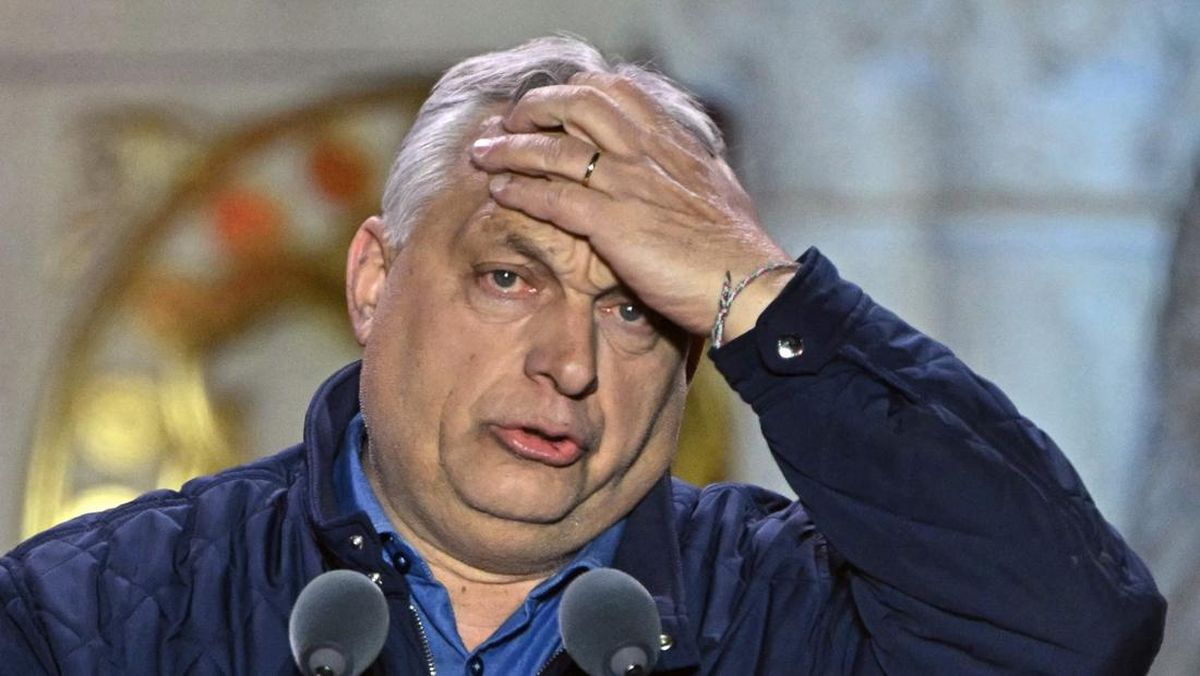
Hungary has entered a new political era after veteran nationalist leader Viktor Orbán conceded defeat in a landmark parliamentary election on Sunday, April 12, 2026. The result marks the end of Orbán’s 16-year grip on power, as voters turned out in record numbers to support the center-right, pro-EU opposition Tisza party led by Péter Magyar.
The victory for the upstart Tisza party represents a significant shift in the country’s geopolitical trajectory. With results based on 81.5% of votes counted, the Tisza party secured 137 seats, granting them a crucial two-thirds majority in the 199-member parliament CNBC. This “super-majority” allows the incoming administration to potentially undo constitutional changes implemented by Orbán to entrench Fidesz party control and weaken judicial independence NPR.
Viktor Orbán, 62, acknowledged the outcome at Fidesz campaign offices, stating, “The election result is painful for us, but clear” CNBC. Despite the concession, the outgoing leader pledged that his party “will serve our country and the Hungarian nation from the opposition” and vowed he would “never, never, never deliver up” The Guardian.
A Mandate for European Re-integration
Péter Magyar, the 45-year-old leader of the Tisza party, framed the election as a fundamental choice between “East and West.” Throughout his campaign, Magyar warned that Orbán’s confrontational relationship with Brussels would further isolate Hungary from the European mainstream CNBC. Following his victory, Magyar promised to bring Hungary back into the main fold of European politics, pledging a pro-EU and pro-NATO course for the nation The Guardian.
The scale of the victory was reflected in the final projections. With 98% of votes counted, Tisza was projected to hold 138 seats in the 199-seat parliament, while Orbán’s Fidesz party dropped to 55 seats, and the far-right Mi Hazank party secured 6 seats The Guardian. This decisive shift was fueled by a record voter turnout, estimated at 79% or more, the highest since the fall of communism in the 1990s CNBC; NPR.
The atmosphere in Budapest following the announcement was one of jubilation. Tens of thousands of people took to the streets to celebrate the end of the 16-year rule of Fidesz The Guardian. For many young voters, the moment felt like a rare opportunity to change the systemic structure of the country CNBC.
Geopolitical Implications and Global Alliances
The defeat of Viktor Orbán is viewed as a significant setback for his international allies, specifically in Russia and the United States. Orbán had been openly backed during the election by U.S. President Donald Trump and Vice President JD Vance, as well as various far-right leaders across Europe The Guardian.
During the campaign, Orbán attempted to paint the Tisza party as a risk to national security, claiming that Magyar would drag Hungary into an “unwanted war with Russia,” a charge that Magyar denied CNBC. The transition to a pro-EU administration is expected to have wide-reaching implications for the European Union and Ukraine, as Hungary moves away from the isolationist and often disruptive role it played under Orbán’s leadership CNBC.
Comparison of Parliamentary Strength
| Party | Projected Seats | Political Orientation |
|---|---|---|
| Tisza | 138 | Center-right, Pro-EU |
| Fidesz | 55 | Nationalist, Populist |
| Mi Hazank | 6 | Far-right |
The Path Forward for Péter Magyar
As the incoming prime minister, Péter Magyar faces the task of dismantling the political machinery built by Orbán over nearly two decades. The Tisza movement rallied various opposition forces around the central themes of fighting corruption and re-integrating Hungary into the European mainstream NPR.
The immediate priority for the new government will likely be the restoration of judicial independence. Because Tisza has secured a two-thirds majority, Magyar possesses the legislative power to reverse the constitutional changes that previously allowed Fidesz to maintain a tight grip on political life NPR.
The transition occurs at a critical juncture for the region. The shift from a nationalist, Russia-friendly stance to one that is firmly aligned with the EU and NATO is expected to alter the dynamics of Eastern European security and diplomacy. The “watershed moment” described by many Hungarians suggests a desire for a systemic change that extends beyond a simple change in leadership CNBC.
With the election results now clear, the focus shifts to the formal transition of power and the first legislative actions of the Tisza-led parliament. We will continue to monitor the official certification of the final vote tallies and the appointment of the new government cabinet.
Do you believe this shift will stabilize EU relations with Eastern Europe? Share your thoughts in the comments below and share this story with your network.
Worth a look