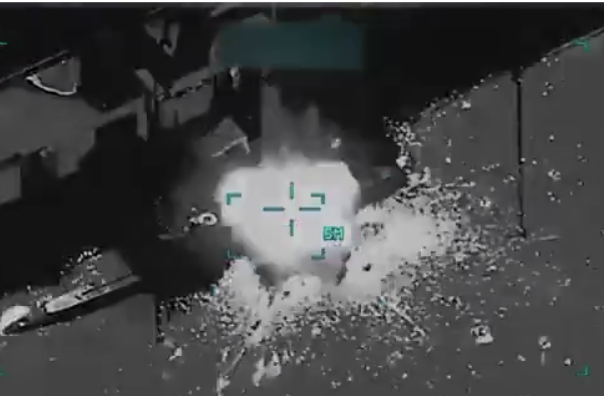
Sofia, Bulgaria – Tensions in the Middle East escalated dramatically this week as the United States and Israel continue military operations against targets in Iran, with reports emerging of a direct confrontation in the critical Strait of Hormuz. The situation remains highly volatile, raising concerns about wider regional instability and potential disruptions to global energy supplies. On Tuesday, former U.S. President Donald Trump announced via his social media platform, Truth Social, that U.S. Forces had “destroyed” ten Iranian mine-laying vessels in the Strait of Hormuz, a claim that is now being examined in light of official statements and ongoing military activity.
The announcement, made on the eleventh day of the joint U.S.-Israeli intervention in Iran, comes amid heightened rhetoric from Washington regarding Iran’s potential to disrupt maritime traffic through the strategic waterway. Trump warned that any attempt by Iran to mine the Strait of Hormuz would be met with a swift and overwhelming military response, stating, “If Iran has placed any mines in the Strait of Hormuz, and we have no reports that they have, we want them removed, IMMEDIATELY! If for any reason mines were placed and not removed immediately, the consequences for Iran will be on a military level like never before.” This assertive stance underscores the importance the U.S. Places on maintaining freedom of navigation in the region, a vital artery for global oil trade. The situation is further complicated by recent reports of injuries to U.S. Military personnel stationed in the Gulf region.
The Strategic Importance of the Strait of Hormuz
The Strait of Hormuz, a narrow waterway connecting the Persian Gulf to the Gulf of Oman and the Arabian Sea, is one of the world’s most strategically important chokepoints for oil and gas. According to the U.S. Energy Information Administration, approximately 21% of global oil consumption passed through the Strait in 2023 . Disruptions to traffic through the Strait, whether due to military conflict, political instability, or deliberate acts of sabotage, could have significant consequences for the global economy, leading to price spikes and supply shortages. The current escalation raises fears that Iran might attempt to block the Strait, potentially using naval mines or other asymmetric tactics, in response to the ongoing military pressure.
The U.S. Navy has a long-standing presence in the region, tasked with ensuring the free flow of commerce and protecting shipping lanes. Recent incidents, including the alleged destruction of the Iranian mine-laying vessels, highlight the potential for direct confrontation between U.S. And Iranian forces. While the Trump administration’s claim of destroying ten vessels has yet to be independently verified, the U.S. Navy did confirm on Wednesday, March 11, 2026, that it had struck Iranian vessels near the Strait of Hormuz, identifying them as mine-laying ships . The U.S. Central Command stated that the action was taken in response to Iranian threats to maritime navigation and to protect international shipping.
Impact on Global Oil Markets and Beyond
The escalating tensions in the Persian Gulf are already impacting global oil markets. While oil prices initially rose on fears of supply disruptions, they subsequently retreated, even after a reported erroneous claim by the U.S. Energy Secretary regarding a naval escort of a tanker through the Strait of Hormuz . This volatility demonstrates the sensitivity of the market to geopolitical events in the region. Analysts warn that a prolonged conflict could lead to a significant and sustained increase in oil prices, impacting consumers and businesses worldwide.
Beyond the economic implications, the current situation also raises concerns about the potential for a wider regional conflict. Iran has close ties with various non-state actors in the region, and any escalation could draw in other countries, potentially leading to a protracted and destabilizing war. The U.S. And Israel have repeatedly stated their commitment to preventing Iran from developing nuclear weapons, and the current military operations are widely seen as an attempt to deter Iran from pursuing its nuclear ambitions. However, the effectiveness of this strategy remains uncertain, and the risk of miscalculation or unintended consequences is high.
Reports indicate that the conflict has already resulted in casualties. The Pentagon reported that approximately 140 U.S. Military personnel have been injured in attacks launched by Iranian forces against bases in the Gulf region, with eight service members in serious condition. At least seven U.S. Military personnel have died in attacks attributed to Iran, including six who were killed in a drone attack in Kuwait . U.S. Officials have indicated that Tuesday, March 11th, was expected to be the most intense day of bombing in Iran since the start of the conflict, claiming that Tehran’s ability to respond has been diminished as the offensive progresses, focusing on Iran’s defense industry.
Key Takeaways
- Escalating Tensions: The U.S. And Israel are engaged in ongoing military operations against Iran, raising the risk of a wider regional conflict.
- Strait of Hormuz: The strategic waterway remains a critical chokepoint for global oil supplies, and disruptions could have significant economic consequences.
- Trump’s Announcement: Former President Trump claimed U.S. Forces destroyed ten Iranian mine-laying vessels, a claim partially confirmed by the U.S. Navy.
- Casualties Reported: Both U.S. Military personnel have been injured and killed in attacks attributed to Iran.
- Oil Market Volatility: The conflict is contributing to volatility in global oil markets, although prices have shown some fluctuation.
The situation remains fluid and unpredictable. The U.S. And its allies are closely monitoring Iran’s actions and are prepared to respond to any further provocations. The international community is urging all parties to exercise restraint and to seek a diplomatic solution to the crisis. Further updates are expected from the Pentagon and the State Department in the coming days regarding the ongoing military operations and the evolving security situation in the region. The next significant development to watch for will be the Iranian government’s official response to the U.S. Actions and any potential escalation of hostilities.
This is a developing story. We encourage readers to share their thoughts and perspectives in the comments below.
Related reading