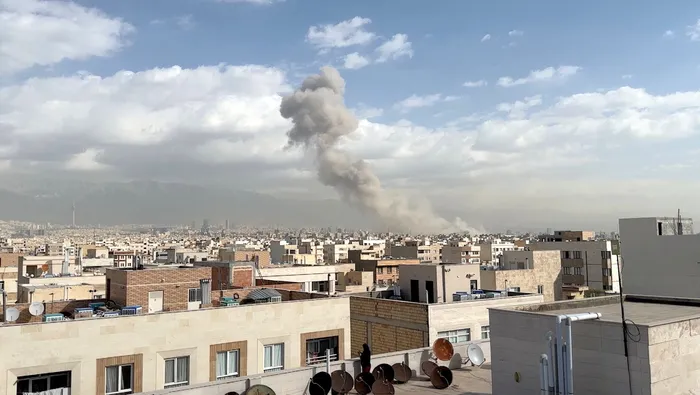
Escalating Tensions: US and Israel Conduct Strikes Against Iran, Prompting Calls for Regime Change
The geopolitical landscape in the Middle East shifted dramatically on February 28, 2026, as both the United States and Israel launched strikes against targets within Iran. These actions, occurring in close succession, have ignited a latest phase of conflict and drawn sharp reactions from international leaders, including former US President Donald Trump, who called for the overthrow of the Iranian government. The developments mark a significant escalation in a region already grappling with numerous interconnected crises, raising concerns about a wider regional war. The situation remains highly fluid, with ongoing monitoring of potential retaliatory measures from Iran and its regional allies.
The strikes come amidst a backdrop of escalating tensions, fueled by Iran’s regional activities and its nuclear program. For years, the US and Israel have voiced concerns over Iran’s support for proxy groups in Lebanon, Syria, Iraq, and Yemen, as well as its ballistic missile development. While the specific targets of the strikes have not been fully disclosed, initial reports suggest they were aimed at military infrastructure and facilities linked to Iran’s Islamic Revolutionary Guard Corps (IRGC). The timing and coordination of the US and Israeli actions suggest a unified strategy aimed at deterring further Iranian aggression and disrupting its destabilizing activities.
Trump Calls for Regime Change in Iran
Former President Donald Trump responded to the strikes with a video message posted on his Truth Social platform. In the video, Trump stated that the United States had begun “major combat operations” in Iran, with the stated goal of eliminating threats posed by the country’s regime. He accused the Iranian government of waging “an unending campaign of bloodshed and mass murder” and endangering US troops, bases, and allies worldwide. Trump explicitly called for regime change, a stance that echoes his previous rhetoric regarding Iran. “For 47 years, the Iranian regime has chanted ‘Death to America’,” Trump said in the video. The former president’s comments have added another layer of complexity to the situation, raising questions about the potential long-term objectives of US policy towards Iran.
Israel Confirms Preemptive Strike
Israeli Defense Minister Israel Katz confirmed that the Israeli military carried out a strike against Iran on February 28th. According to Katz, the attack was a “pre-emptive” measure designed to “remove threats to the State of Israel.” The specific targets of the Israeli strike remain largely undisclosed, but reports indicate they were located within Iran and targeted facilities associated with Iran’s military capabilities.
Simultaneously with the strike, sirens sounded across Israel, and the Israel Defense Forces (IDF) issued alerts instructing residents to seek shelter. The IDF stated on X that the alerts were a proactive measure to prepare the public for the possibility of missile launches towards Israel. This suggests an expectation of potential retaliation from Iran or its proxies. The alerts triggered a nationwide response, with citizens seeking refuge in bomb shelters and safe rooms. The IDF has mobilized additional forces and is on high alert for further attacks.
Regional Reactions and International Concerns
The strikes have elicited a range of reactions from countries across the Middle East and beyond. Iran has condemned the attacks as a violation of its sovereignty and has vowed to retaliate. Statements from Iranian officials have indicated a commitment to responding “decisively” to the strikes, raising fears of a potential escalation of the conflict. Regional allies of Iran, including Hezbollah in Lebanon and Houthi rebels in Yemen, have also expressed their support for Iran and warned against further aggression.
The international community has largely urged restraint and called for de-escalation. The United Nations has expressed deep concern over the situation and has called for an emergency meeting of the Security Council to discuss the developments. Several European countries have also urged all parties to exercise caution and avoid actions that could further destabilize the region. The European Union’s foreign policy chief has called for a return to diplomatic efforts to address the underlying issues driving the conflict. The United States has briefed its allies on the rationale for the strikes and has sought to reassure them of its commitment to regional stability.
Historical Context and Underlying Tensions
The current escalation is rooted in a long history of tensions between Iran and the United States, as well as Israel. The 1979 Iranian Revolution, which ousted the US-backed Shah and established an Islamic Republic, marked a turning point in relations between the two countries. Since then, the US and Iran have been at odds over a range of issues, including Iran’s nuclear program, its support for regional proxies, and its human rights record.
Israel views Iran as an existential threat, citing its nuclear ambitions and its support for groups like Hamas and Hezbollah, which are hostile to Israel. Israel has repeatedly warned that it will not allow Iran to develop nuclear weapons and has hinted at the possibility of military action to prevent it. The US has also maintained a policy of preventing Iran from acquiring nuclear weapons, and has imposed sanctions on Iran in an effort to curb its nuclear program. The 2015 nuclear deal, formally known as the Joint Comprehensive Plan of Action (JCPOA), offered a temporary respite from these tensions, but the deal was abandoned by the US in 2018 under the Trump administration, leading to a renewed escalation of tensions.
Potential Scenarios and Future Outlook
The immediate aftermath of the strikes is likely to be characterized by heightened tensions and a period of uncertainty. Iran is expected to retaliate, potentially through its proxies in the region or through direct attacks on US or Israeli targets. The nature and scale of Iran’s response will be a key factor in determining the future course of the conflict.
Several scenarios are possible. A limited exchange of strikes could lead to a de-escalation, with both sides signaling a willingness to return to negotiations. However, a more sustained and intense conflict could erupt, potentially drawing in other regional actors and leading to a wider war. The involvement of the United States and Israel significantly raises the stakes, and the potential for miscalculation and unintended consequences is high. The international community will play a crucial role in attempting to mediate a resolution and prevent a further escalation of the conflict. The situation is further complicated by the ongoing conflicts in Syria, Yemen, and Ukraine, which are already straining regional and international resources.
The strikes against Iran represent a dangerous escalation of tensions in the Middle East. The region now faces a period of heightened uncertainty and the risk of a wider conflict. The coming days and weeks will be critical in determining whether a diplomatic solution can be found or whether the region will be plunged into a new era of instability. The international community must prioritize de-escalation and work towards a peaceful resolution to the underlying issues driving the conflict.
Further updates on this developing situation will be provided as they become available. The US State Department is expected to hold a press briefing on February 29th to address questions regarding the strikes and the US response. Readers are encouraged to share their thoughts and perspectives in the comments section below.
- 80-Year-Old Woman Dies Fleeing Okanagan Wildfire as 20,000 Evacuate in Western Canada
- Ukraine Launches Massive Drone Strikes on Major Russian Oil Refineries and Chemical Plants
- Netanyahu Rejects Trump’s Gaza Plan: No Hamas Disarmament or Israeli Withdrawal (archyworldys.com)
- Federal Reserve Data Reveals Worsening Financial Security and Job Loss for Black Americans in Trump Economy (world-today-news.com)