President Donald Trump has announced a two-week ceasefire in Iran, suspending imminent threats of wide-scale destruction against the nation’s civilian and military infrastructure. The decision comes after a period of extreme tension and a series of targeted strikes, marking a sudden diplomatic shift just as a hard deadline for an all-out attack was set to expire.
The ceasefire, facilitated by Pakistan, is contingent upon Iran agreeing to reopen the Strait of Hormuz, a critical global oil trading route. This agreement follows a volatile weekend where the U.S. President issued an ultimatum warning that “a whole civilization will die tonight” if a deal was not reached by 8 p.m. ET on Tuesday, April 7, 2026 according to NPR.
The sudden pivot to a ceasefire follows a day of active combat. On Tuesday, U.S. And Israeli forces conducted strikes across Iran, targeting transportation routes, railway bridges, and military sites. Whereas the U.S. Struck military sites on Kharg Island—Iran’s primary export oil hub—officials stated they did not target the oil facilities themselves as reported by CNN.
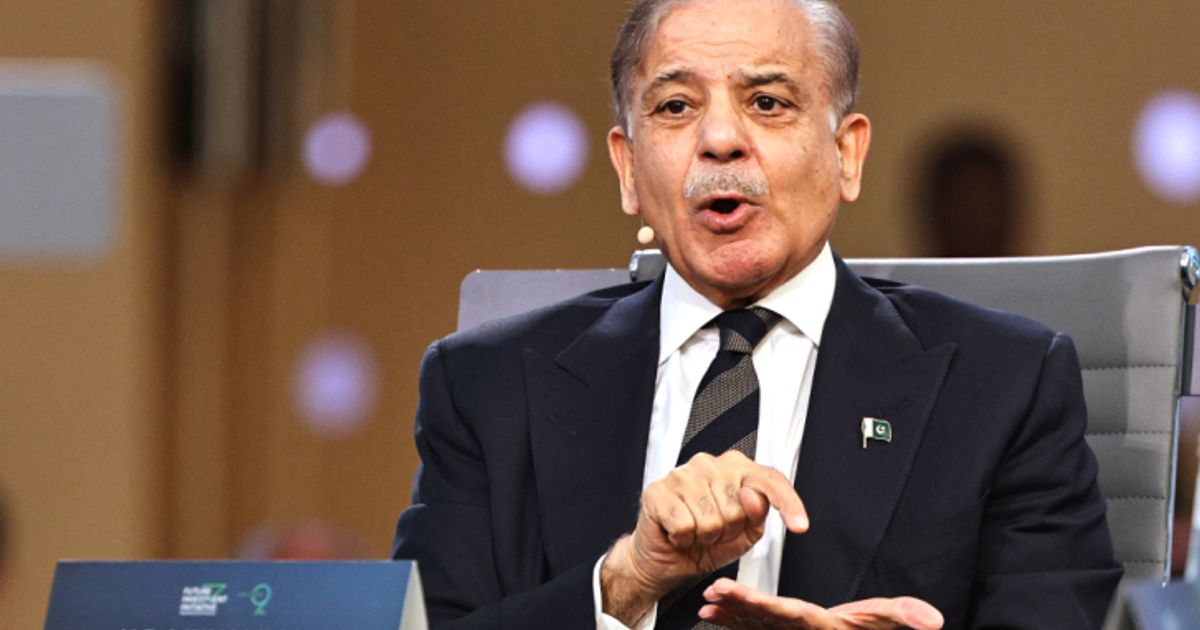
The diplomatic breakthrough was driven largely by the efforts of Pakistani Prime Minister Shehbaz Sharif, who proposed the two-week window to allow for the finalization of a peace agreement. President Trump stated that Iran has proposed a “workable” 10-point peace plan addressing previous points of contention, which he claims have now been agreed upon between the two nations via NPR.
The Escalation: From Ultimatums to ‘Power Plant Day’
The path to this ceasefire was marked by increasingly aggressive rhetoric. On Easter Sunday, April 5, President Trump used Truth Social to issue an expletive-laden threat, demanding that Iran “Open the F—— Strait” or face “Hell” per USA TODAY. He specifically threatened a coordinated attack on domestic infrastructure, stating, “Tuesday will be Power Plant Day, and Bridge Day, all wrapped up in one, in Iran.”

This was not the first time the administration had set such a deadline. A pattern of ultimatums began on March 21, when Trump gave Iran 48 hours to reopen the Strait of Hormuz. That deadline was extended by five days on March 23, with the president citing negotiations with a “top person” in the Iranian government—though he specified this individual was not the new Supreme Leader, Mojtaba Khamenei according to USA TODAY. At the time, Iranian officials, including parliament speaker Mohammad-Bagher Ghalibaf, denied that any such talks were taking place.
The tension peaked on April 7, when the president doubled down on threats to bomb water treatment facilities, power plants, and bridges. The rhetoric reached a crescendo on Tuesday morning, with Trump posting that a “whole civilization will die tonight, never to be brought back again” per USA TODAY.
Military Action and Civilian Impact
Despite the eventual ceasefire, the hours leading up to the 8 p.m. ET deadline saw significant military activity. Israeli and U.S. Forces carried out joint operations in Tehran, and Israeli sources confirmed that all transportation routes across Iran were targeted on Tuesday as reported by CNN.
The strikes caused tangible damage to Iranian infrastructure. Multiple freeways and railway lines were hit; specifically, one attack on a railway bridge resulted in the deaths of two people per CNN. Vice President JD Vance stated that these strikes did not represent a “change in strategy” and were not intended to replace the president’s ultimatum.
The conflict also extended beyond Iran’s borders. Throughout Tuesday night and into Wednesday morning, the United Arab Emirates, Qatar, and Bahrain were forced to intercept drones and missiles according to CNN, highlighting the regional instability triggered by the standoff.
The Terms of the Two-Week Ceasefire
The current suspension of hostilities is described by President Trump as a “double sided CEASEFIRE.” According to the president’s social media posts, the U.S. Has “already met and exceeded all Military objectives,” and the ceasefire is intended to provide time to finalize a definitive agreement for long-term peace in the Middle East via NPR.
The core components of the current arrangement include:
- The Strait of Hormuz: The ceasefire is subject to Iran agreeing to reopen this critical oil trading route.
- The 10-Point Plan: Iran has proposed a peace plan that the U.S. Administration describes as “workable,” covering previously contested points of contention.
- Pakistani Mediation: The ceasefire was a direct proposal from Pakistani Prime Minister Shehbaz Sharif, who noted that diplomatic efforts were “progressing steadily” per NPR.
Critics of the administration’s approach have raised concerns regarding the legality of the threatened strikes. Many human rights advocates and legal experts pointed out that the targeted bombing of civilian infrastructure, such as power plants and water treatment facilities, could be classified as a war crime as reported by CNN.
Timeline of the April 2026 Crisis
| Date | Event | Outcome/Detail |
|---|---|---|
| March 21 | Initial Ultimatum | Trump gives Iran 48 hours to reopen the Strait of Hormuz. |
| March 23 | First Extension | Deadline extended by five days due to alleged negotiations. |
| April 5 | Truth Social Threat | Trump warns of “Power Plant Day” and “Bridge Day” on Tuesday. |
| April 7 (Day) | Military Strikes | U.S. And Israel strike bridges, railways, and Kharg Island. |
| April 7 (Evening) | Ceasefire Announced | Two-week pause agreed upon via Pakistani mediation. |
The international community now looks toward the expiration of this 14-day window. The primary objective remains the reopening of the Strait of Hormuz and the formal signing of the 10-point peace plan. If these conditions are not met, the threat of wide-scale destruction of civilian and military infrastructure remains a possibility.
The next confirmed checkpoint is the conclusion of this two-week ceasefire period, during which the U.S. And Iran aim to finalize the “definitive Agreement” mentioned by the president.
We invite our readers to share their perspectives on this diplomatic development in the comments below.