
President Donald Trump has announced a significant strategic shift in the United States’ military infrastructure, declaring the relocation of the U.S. Space Force headquarters from Colorado Springs, Colorado, to Huntsville, Alabama. The announcement, made on September 2, 2025, marks a reversal of a 2023 decision by former President Joe Biden, who had designated Colorado Springs as the permanent home for the service’s command center.
The move to relocate the U.S. Space Force headquarters represents more than just a change in geography; it is a decision that carries substantial economic and political weight. By shifting the command to Alabama, the administration is moving the hub of space-based military operations to a region already deeply integrated with aerospace and defense industries, potentially altering the strategic landscape of U.S. Orbital defense management.
During a press conference in the Oval Office, President Trump emphasized his affinity for the state of Alabama, though he dismissed the idea that the state’s strong electoral support for him—noting a victory margin of approximately 47 points—was the primary driver of the decision. He instead focused on the economic potential of the move, asserting that Huntsville is poised to become the “Rocket City,” promising the creation of over 30,000 jobs and significant capital investment via Jiji Press.
The Strategic Transition from Colorado to Alabama
The U.S. Space Force, established in 2019 during Trump’s first administration, has been operating its headquarters tentatively at the Peterson Space Force Base in Colorado Springs. According to congressional records, the facility currently employs approximately 1,700 personnel via Reuters. The transition to Alabama will uproot this administrative and operational core, moving it from a Democratic-leaning state to a Republican stronghold.
Huntsville is uniquely positioned to absorb this command due to its existing aerospace ecosystem. The city is already home to NASA’s Marshall Space Flight Center and serves as a primary hub for major defense contractors, including L3Harris and Lockheed Martin. This concentration of technical expertise and industrial capacity is likely a key factor in the administration’s decision to center its space operations in the region.
The decision has already sparked political tension. Because the previous administration had formally committed to Colorado Springs, Democratic lawmakers are expected to voice opposition to the reversal. Observers suggest the move may reflect a broader pattern of rewarding states that supported the President during the election while potentially hindering those that did not via Reuters.
Economic Impact and the ‘Rocket City’ Vision
The economic implications of the relocation are central to the administration’s narrative. President Trump has framed the move as a catalyst for regional growth, claiming it will generate “over 30,000 jobs” and attract “massive investment” into the Alabama economy via Jiji Press. This projection suggests a significant expansion of the Space Force’s footprint beyond the current 1,700-person staff residing in Colorado.
By integrating the military command with the existing NASA infrastructure and private defense firms in Huntsville, the administration aims to create a synergistic “cluster” of space technology. This approach seeks to streamline the pipeline between research, development and operational military application, leveraging Huntsville’s established identity as a center for rocket and satellite engineering.
Key Details of the Relocation
| Feature | Previous/Current Status | New Destination |
|---|---|---|
| Location | Colorado Springs, Colorado | Huntsville, Alabama |
| Current Staffing | Approx. 1,700 personnel | Projected 30,000+ jobs |
| Local Industry | Peterson Space Force Base | NASA Marshall Space Flight Center, L3Harris, Lockheed Martin |
| Political Context | Democratic stronghold | Republican stronghold |
What This Means for Global Space Security
The relocation of the command center occurs at a time of heightened global competition in the space domain. The U.S. Space Force is tasked with overseeing military activities in orbit, ensuring the security of satellite communications, and monitoring potential threats from adversaries. While the physical location of the headquarters does not change the orbital nature of the mission, the shift to a concentrated industrial hub in Alabama may accelerate the procurement and deployment of new space technologies.
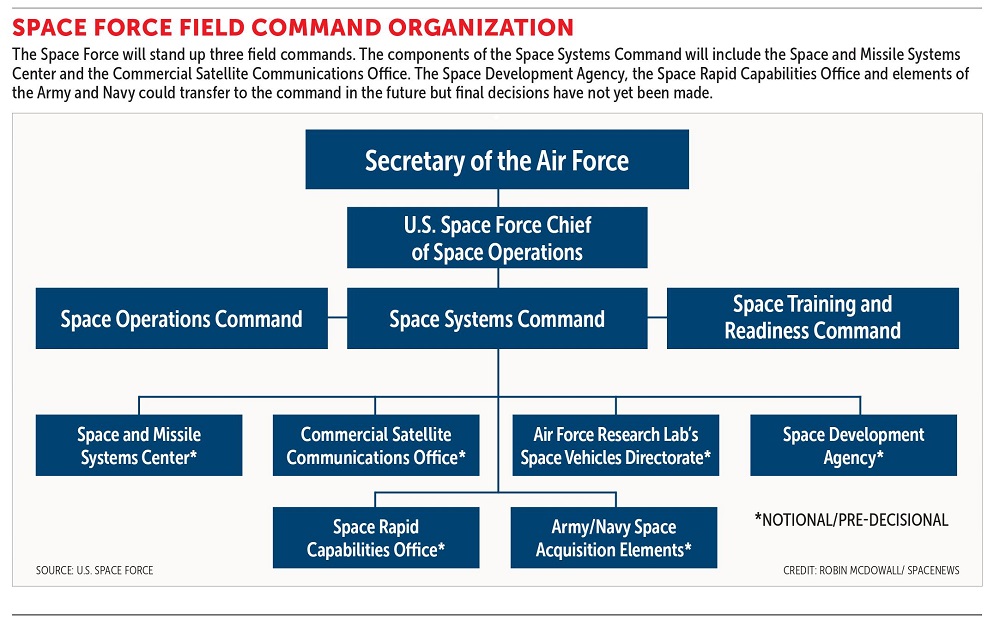
The move as well highlights the evolving nature of the Space Force, which remains the newest branch of the U.S. Armed Forces. By shifting its headquarters, the administration is essentially redefining the institutional identity of the branch, tying it more closely to the industrial heartland of the American aerospace sector.
As the administration moves forward with this plan, the focus will shift toward the logistics of transferring thousands of personnel and sensitive operational equipment. The timeline for the full migration remains to be detailed, but the announcement sets a definitive course for the future of American space command.
The next expected developments will involve the formal budgetary allocations and legislative approvals required to fund the construction and transition of the headquarters to Huntsville. We will continue to monitor official government filings for a specific relocation timeline.
Do you believe the relocation of military headquarters should be based on industrial synergy or political considerations? Share your thoughts in the comments below.
Keep reading
- Kumamoto Earthquake Recovery: Inspiring Stories of Heat Relief and Volunteer Support
- Waiter/Waitress Wanted – Bar Restaurant Paris (20th)
- Spokane Wildfires Destroy 700 Structures and Force 60,000 to Evacuate (archyworldys.com)
- Israel Raises Security Concerns Over Trump-Brokered Hamas Disarmament Deal (time.news)