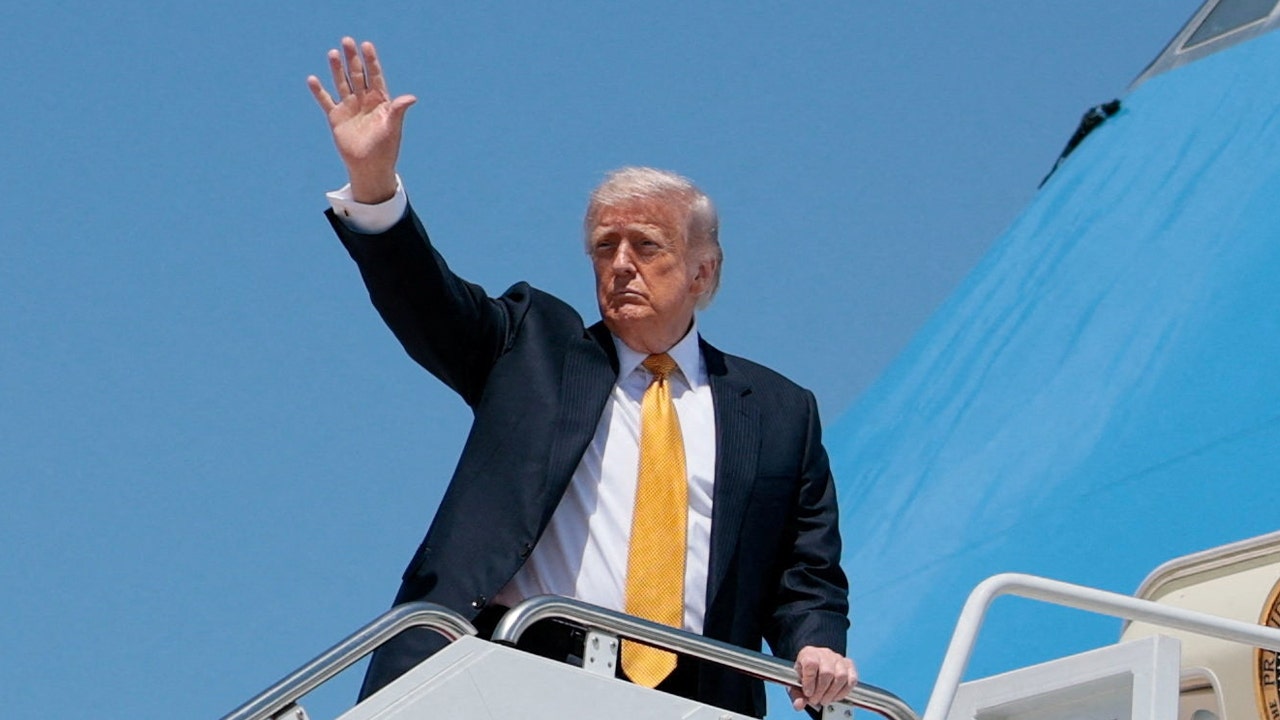
BEIJING — U.S. President Donald Trump arrived in China’s capital Wednesday evening for a high-stakes state visit with Chinese President Xi Jinping, marking the first face-to-face summit between the world’s two largest economies since tensions escalated over trade, technology, and Taiwan. The visit, originally scheduled for March but delayed due to the ongoing U.S.-Israel conflict with Iran, carries global economic and geopolitical implications as leaders seek to stabilize relations amid a volatile international landscape.
Trump’s arrival was met with ceremonial pomp, including a red-carpet welcome by Chinese Vice President Han Zheng—a higher-level reception than the one Trump received during his 2017 visit. The U.S. Delegation included a delegation of corporate leaders, including tech executives such as Elon Musk (Tesla), Jensen Huang (Nvidia), Tim Cook (Apple), and Larry Fink (BlackRock), underscoring the economic stakes of the discussions. In a pre-arrival post, Trump emphasized his goal to push for China’s economic liberalization, stating, *“I will be asking President Xi, a Leader of extraordinary distinction, to ‘open up’ China so that these brilliant people can work their magic.”*
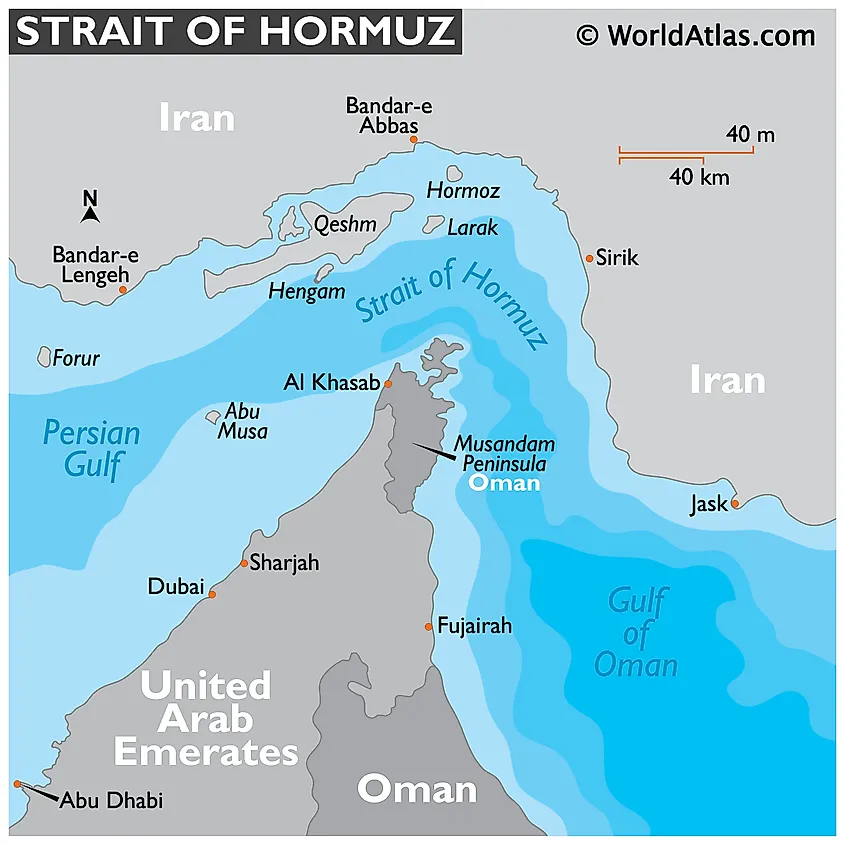
While trade and technology will dominate the agenda, the shadow of the Iran conflict looms large. Trump has reportedly urged Xi to leverage China’s influence over Iran—its ally—to reopen the Strait of Hormuz, a critical chokepoint for global oil trade, and to facilitate a ceasefire. However, with the war showing no signs of resolution, analysts warn that the summit’s success hinges on whether Beijing is willing to exert pressure on Tehran. Meanwhile, Taiwan remains a contentious issue, with China expected to press the U.S. On its support for the self-governing island, which Beijing claims as its territory.
Trade and Technology: The Core Agenda
At the heart of the summit are long-standing trade disputes, including tariffs and market access, which have strained U.S.-China relations for years. Trump, who has framed his presidency as a champion of American industry, is expected to push for concessions that could ease restrictions on U.S. Companies operating in China while addressing Beijing’s subsidies and state-led industrial policies. The delegation of corporate executives signals a dual-track approach: diplomatic pressure paired with direct engagement from the private sector.
Technology rivalry, particularly in semiconductors and artificial intelligence, will also take center stage. The U.S. Has imposed strict export controls on advanced chips and AI tools to China, citing national security concerns. Xi is likely to counter with demands for reciprocity, arguing that China’s tech sector—home to global leaders like Huawei and BYD—deserves equal market access. The outcome of these discussions could reshape the global semiconductor supply chain, with implications for industries from automotive to defense.
Key Takeaways:
- Economic Liberalization: Trump’s push for China to “open up” could target restrictions on foreign investment, intellectual property protections, and market access for U.S. Firms.
- Iran Mediation: The U.S. Seeks China’s help to stabilize oil flows through the Strait of Hormuz and broker a ceasefire, though Beijing’s leverage over Tehran remains unclear.
- Taiwan Tensions: China is expected to reiterate its “one China” policy and demand U.S. Recognition of its sovereignty claims over the island.
- Tech War: Negotiations on semiconductor exports and AI restrictions could determine the future of high-tech trade between the two superpowers.
The Iran Factor: A Distraction or a Dealbreaker?
The U.S.-Israel conflict with Iran has cast a long shadow over Trump’s visit. Originally postponed in March, the trip was rescheduled as the war dragged on, with Trump describing the ceasefire efforts as *“on massive life support.”* Analysts suggest the delay was an attempt to avoid overshadowing the summit, but the conflict’s persistence has forced Iran onto the agenda. Trump’s request for China to use its influence with Iran to reopen the Strait of Hormuz—currently a flashpoint for attacks on commercial shipping—reflects the economic stakes of the war. Disruptions in the Strait have sent global oil prices surging, exacerbating inflationary pressures worldwide.
China’s role in mediating between the U.S. And Iran is complicated by its own economic ties to Tehran, including oil imports and trade partnerships. While Beijing has historically avoided direct intervention in Middle East conflicts, the scale of the current crisis may force it to take a more active stance. However, with no clear path to a ceasefire, the summit’s ability to address Iran may be limited to symbolic gestures rather than concrete breakthroughs.
Taiwan: The Elephant in the Room
Taiwan remains one of the most sensitive issues in U.S.-China relations. The U.S. Maintains unofficial diplomatic ties with Taipei and has increased military support to the island in recent years, viewing it as a critical counterbalance to China’s rise. Beijing, however, considers Taiwan a core national security issue and has not ruled out the use of force to reunify the island with the mainland.
During the summit, Xi is expected to press Trump to roll back U.S. Support for Taiwan, including arms sales and diplomatic recognition. The U.S. Position remains unchanged: it does not support Taiwan’s independence but opposes any unilateral change to the status quo by force. The outcome of these discussions could have profound implications for regional stability, with potential ripple effects on global supply chains that rely on Taiwan’s semiconductor industry.
What’s Next: A Summit with High Stakes and Uncertain Outcomes
The two-day summit will conclude with a joint press conference, where leaders are expected to outline any agreements reached. While Trump has framed the visit as an opportunity to secure tangible wins—such as trade deals or tech concessions—realists caution that the summit’s success will depend on managing expectations. The absence of a clear peace deal with Iran, combined with deep-seated differences over Taiwan and technology, suggests that any breakthroughs will likely be incremental rather than transformative.
The next critical checkpoint will be the release of a joint statement following the summit, expected within 48 hours of its conclusion. Official updates can be tracked through the White House press office and the Chinese Foreign Ministry. For businesses, the U.S. Trade Representative’s office will provide updates on trade-related developments.
As the world watches, the outcome of this summit will shape not only U.S.-China relations but also the broader geopolitical and economic landscape. With no signs of a ceasefire in Iran and tensions over Taiwan at an all-time high, the ability of Trump and Xi to find common ground will determine whether this visit marks a step toward stability—or another chapter in a prolonged cold war.
What do you think the summit’s priorities should be? Share your insights in the comments below, and stay tuned for live updates as the discussions unfold.
Worth a look