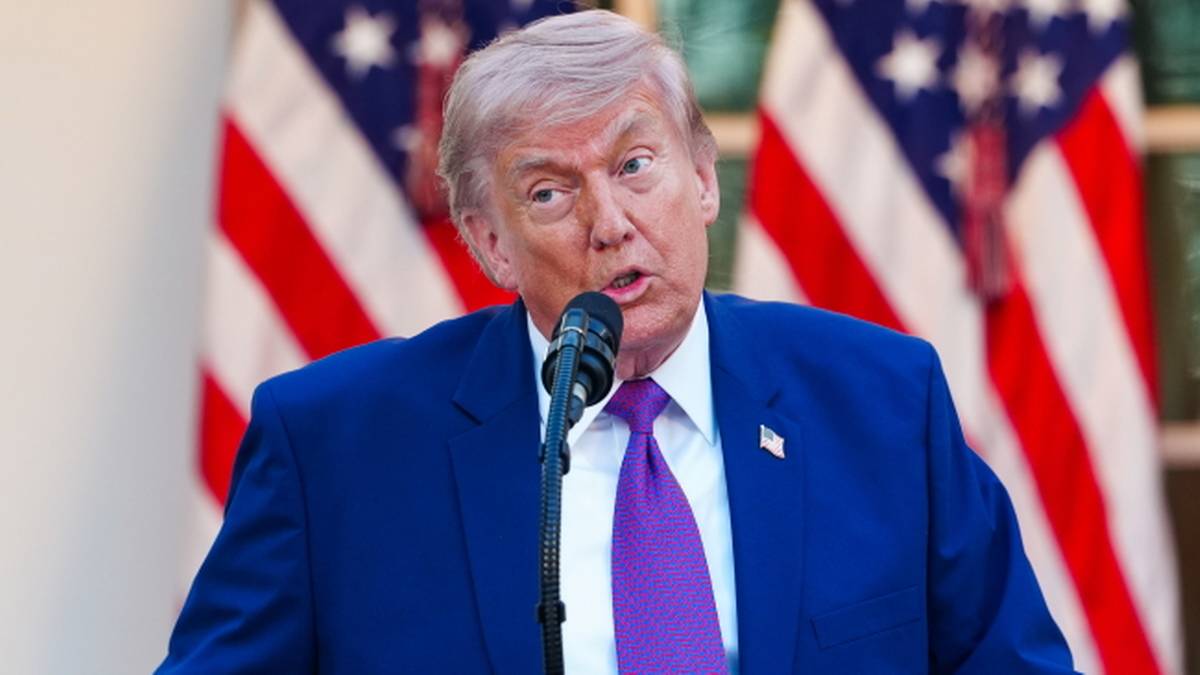
In a series of remarks that have sent ripples through the diplomatic corridors of the Western Hemisphere, President Donald Trump has once again turned his attention to the Caribbean, specifically targeting the current state of the Cuban government. Characterizing the island nation as a “failed state” that is effectively “asking for help,” the President’s comments suggest a potential recalibration of how the United States approaches its long-standing, complex relationship with Havana.
The rhetoric, which emphasizes the internal collapse of Cuban institutions, marks a significant moment in the 47th administration’s foreign policy trajectory. While the administration has maintained a hardline stance on the island, the specific framing of Cuba as a nation in a state of desperation—rather than merely an adversary—opens new questions regarding the nature of future engagement, whether through humanitarian channels, intensified economic pressure, or a fundamental shift in diplomatic recognition.
For observers of Caribbean geopolitics, these statements are more than mere political posturing. They signal a recognition of the profound economic and social instability currently gripping the island. As the administration evaluates its next steps, the international community is closely watching to see if “asking for help” will translate into a new mechanism for relief, or if it will serve as a justification for even more stringent measures to accelerate a change in leadership.
The ‘Failed State’ Designation: Analyzing the Rhetoric
The use of the term “failed state” is a heavy geopolitical descriptor. In political science, a failed state is typically defined by a government’s inability to maintain a monopoly on the legitimate use of force, provide basic public services, or uphold the rule of law. By applying this label to Cuba, the Trump administration is moving beyond the traditional language of “rogue regimes” or “totalitarianism” and instead focusing on the functional collapse of the state’s capacity to govern.
This distinction is critical. While previous administrations have focused on the ideological illegitimacy of the Cuban government, the current administration’s focus on “failure” shifts the conversation toward the practical realities of life on the island: the breakdown of the power grid, the scarcity of food and medicine and the inability of the state to manage its own economy. This framing provides a dual-edged sword for U.S. Policymakers: it justifies continued pressure by highlighting the regime’s incompetence, while simultaneously providing a platform for the administration to claim it is responding to a humanitarian crisis.
The President’s assertion that Cuba is “asking for help” adds a layer of ambiguity to this stance. It remains unclear whether this “help” is being sought through clandestine diplomatic channels, via the massive waves of migration currently reaching U.S. Shores, or through the direct appeals of the Cuban people themselves. For the White House, the challenge lies in responding to this perceived plea without inadvertently legitimizing the existing government or violating the long-standing principles of the U.S. Embargo.
A Nation at the Breaking Point: The Economic Backdrop
The President’s remarks do not exist in a vacuum; they are grounded in the visible and deepening economic crisis currently unfolding across the Cuban archipelago. The island has faced a convergence of factors that have pushed its social and economic infrastructure to the brink of total exhaustion.

Years of systemic inefficiencies, coupled with the lingering effects of global economic shifts and the impact of international sanctions, have left the Cuban economy in a state of chronic contraction. Key indicators of this instability include:
- Energy Instability: Frequent and prolonged blackouts have become a standard feature of daily life, crippling local industries and undermining the quality of life for millions.
- Food and Medicine Insecurity: Severe shortages of basic staples and essential medical supplies have forced many citizens to rely on informal markets or international aid to survive.
- Hyperinflationary Pressures: The rapid devaluation of the local currency has eroded the purchasing power of the average Cuban, making even basic necessities increasingly unattainable.
- Migration Surges: The economic desperation has fueled a historic exodus, with hundreds of thousands of Cubans seeking refuge in the United States and other parts of the Americas.
These conditions provide the empirical weight behind the “failed state” label. When a government can no longer guarantee electricity, food security, or the basic movement of its citizens, the theoretical definition of a failed state becomes a lived reality for its population. The Trump administration’s recent comments appear to be a direct response to these indicators, framing the internal collapse as a matter of urgent American interest.
Navigating the Diplomacy of ‘Asking for Help’
The most significant question arising from the President’s comments is what “help” looks like in the context of U.S. Foreign policy. Historically, U.S. Policy toward Cuba has oscillated between the “maximum pressure” approach—designed to starve the regime of resources—and periodic attempts at “thaw” or normalization intended to facilitate engagement with the Cuban people.
The current administration’s rhetoric suggests a possible third path: a policy that acknowledges the state’s failure while attempting to address the humanitarian consequences without providing direct support to the central government. This could involve several strategic avenues:
1. Targeted Humanitarian Corridors: The U.S. Could potentially seek ways to facilitate the flow of essential goods directly to the Cuban people or through non-governmental organizations (NGOs), bypassing the state apparatus to mitigate the “failed state” symptoms.
2. Enhanced Support for the Diaspora: By leveraging the influence and resources of the Cuban-American community, the administration could create a more robust support network that addresses the needs of the island without formal state-to-state recognition.
3. Strategic Pressure for Reform: The “failed state” narrative could be used as leverage in negotiations, where the U.S. Offers specific types of assistance or relief in exchange for tangible democratic reforms and the restoration of basic services.
However, these options are fraught with difficulty. Any move that provides relief risks being co-opted by the Cuban government to bolster its own legitimacy. Conversely, any move that maintains strict isolation may exacerbate the highly “failure” the President has highlighted, potentially leading to even greater regional instability and migration pressures.
Geopolitical Implications for the Western Hemisphere
The implications of this shift extend far beyond the shores of Cuba. The stability of the Caribbean is a cornerstone of U.S. National security, and a “failed state” in this region creates a vacuum that other global powers are eager to fill. As the United States redefines its stance, the competition for influence in the Caribbean is likely to intensify.
The administration’s approach will be closely watched by regional partners in Latin America and the Caribbean. Some nations may see the Trump administration’s focus on Cuba’s “failure” as a call to action for regional stability, while others may view it as a return to outdated Cold War-style confrontations that do little to solve the underlying socio-economic issues.
the intersection of Cuba’s internal crisis and the broader global landscape—including the administration’s ongoing diplomatic maneuvering with China—cannot be ignored. The ability of the United States to manage the Cuban situation will be seen as a litmus test for its broader “America First” foreign policy and its capacity to lead in an increasingly multipolar world.
Key Takeaways: The Trump-Cuba Dynamic
- New Framing: The administration has moved toward characterizing Cuba as a “failed state,” focusing on functional collapse rather than just ideological opposition.
- Humanitarian Angle: The claim that Cuba is “asking for help” introduces a potential humanitarian dimension to U.S. Policy.
- Economic Drivers: The rhetoric is heavily influenced by Cuba’s severe energy, food, and medical shortages.
- Policy Uncertainty: It remains to be seen whether this will lead to increased pressure or a new, more nuanced form of engagement.
- Regional Impact: The outcome will significantly affect Caribbean stability, and U.S. Influence in the Western Hemisphere.
As the administration continues to refine its strategy, the next critical checkpoint will be any official White House briefing or State Department announcement regarding specific policy shifts or humanitarian initiatives directed at the island. We will continue to monitor these developments as they unfold.
What are your thoughts on the administration’s recent comments regarding Cuba? Do you believe a shift in policy is necessary to address the island’s crisis? Let us know in the comments below and share this article with your network.