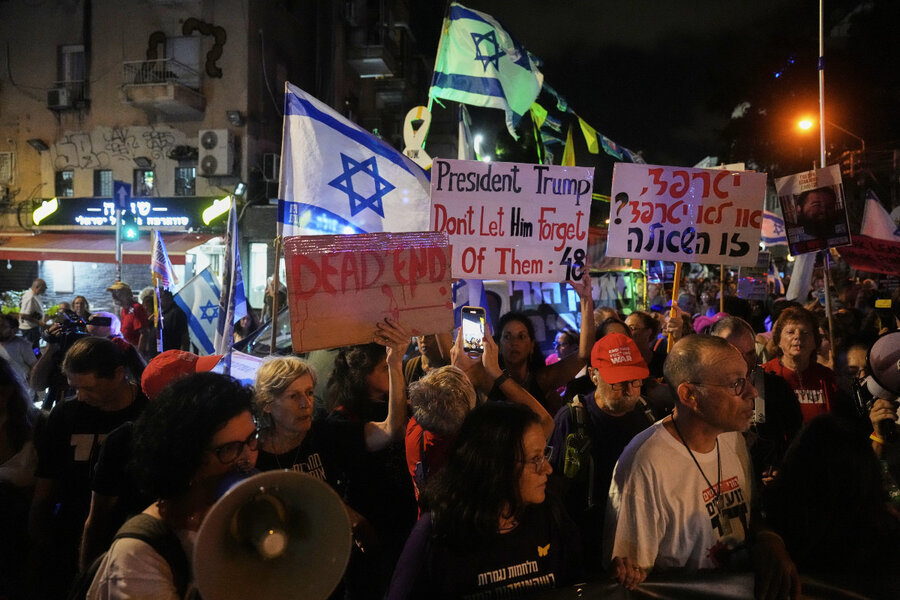
Fragile hope for Gaza: Trump-Netanyahu Plan Faces Hurdles Despite Hamas’ Conditional Acceptance
The possibility of ending the devastating conflict in Gaza hangs in the balance as Hamas offers a conditional acceptance of a new peace proposal spearheaded by former U.S. President Donald Trump and Israeli Prime Minister Benjamin Netanyahu. While international mediators express cautious optimism, important obstacles remain, especially regarding the timeline for hostage release and the future governance of the territory. This analysis delves into the details of the plan, the key players’ positions, and the challenges that lie ahead, drawing on decades of experience in Middle East conflict resolution and geopolitical analysis.
The core of the Proposal: A Complex Exchange
The Trump-Netanyahu plan, unveiled earlier this week, proposes an immediate release of the remaining 48 hostages held by Hamas – approximately 20 of whom are believed to be alive – in exchange for a phased Israeli withdrawal from much of Gaza, a cessation of military operations, and the release of hundreds of Palestinian prisoners. Crucially, the plan also addresses the humanitarian crisis, promising a substantial influx of aid and resources for reconstruction. A previously considered, and highly controversial, plan to relocate a significant portion of Gaza’s population to other countries has been shelved.
However, the plan’s moast ambitious and possibly problematic element involves placing Gaza under international governance, overseen by Trump himself and former British Prime Minister tony Blair. This interim administration would be responsible for stabilizing the territory and facilitating eventual reconstruction. Notably, the proposal does not outline a pathway for the reunification of Gaza with the Israeli-occupied West Bank, a core demand of Palestinian leadership and a essential component of a two-state solution.
International Response: A Chorus of Hope and Urgency
The international community has largely welcomed the developments,albeit with measured optimism. Key mediators Egypt and qatar, instrumental in previous hostage negotiations, have pledged to continue discussions. UN Secretary-General Antonio Guterres urged all parties to seize this ”opportunity to bring the tragic conflict in Gaza to an end,” while french president Emmanuel Macron declared on social media that “the release of all hostages and a ceasefire in Gaza are within reach!” These statements reflect a growing international consensus that a resolution is urgently needed to alleviate the immense suffering in gaza.
Hamas’ Conditional Acceptance: A Balancing Act
Hamas’ response, while appearing to accept the “formula” of the plan – specifically the prisoner-hostage exchange – is laden with caveats.Senior Hamas official Mousa Abu Marzouk, speaking to Al Jazeera, emphasized that the proposal “cannot be implemented without negotiations.” This underscores Hamas’ desire to leverage its remaining bargaining chip – the hostages – to secure more favorable terms.
A key point of contention is the 72-hour deadline for the release of all hostages. Abu Marzouk acknowledged the logistical difficulties of locating the remains of some captives within such a short timeframe,suggesting a more realistic timeline is necessary. Furthermore, while Hamas has signaled willingness to hand over its weapons to a future Palestinian governing body, this commitment was not included in the official statement, raising concerns about its sincerity.
Perhaps the most significant obstacle is Hamas’ firm rejection of foreign administration of Gaza. Osama Hamdan, another Hamas official, stated that the entry of foreign forces would be “unacceptable,” highlighting the group’s commitment to Palestinian self-determination, even if it means prolonged conflict. This stance reflects a deep-seated distrust of external intervention and a desire to maintain control over its own affairs.
Israel’s Position: Maintaining Pressure and Seeking Security
Israel, having suffered a devastating attack on October 7th, 2023 - which resulted in the deaths of 1,200 Israelis and the abduction of 251 others – remains focused on dismantling Hamas’ military capabilities and ensuring its future inability to launch attacks. The country has maintained intense military pressure on Gaza since ending a previous ceasefire in March, severely restricting access to essential goods and services and inflicting widespread destruction.
While the Trump-Netanyahu plan offers a potential path towards achieving these objectives, Israel is likely to insist on stringent security guarantees and a verifiable commitment from Hamas to disarm and relinquish power. Prime Minister Netanyahu has previously rejected Hamas’ demands for a lasting ceasefire and complete withdrawal, suggesting a willingness to continue military operations if his conditions are not met.
The Road Ahead: A delicate and Uncertain Path
The current situation is incredibly fragile. Donald Trump’s public ultimatum – threatening an even greater military onslaught if Hamas doesn’t agree by Sunday evening – adds further pressure and risks derailing the negotiations. Such tactics,while potentially intended to force a swift decision,could backfire by hardening Hamas’ resolve and undermining trust.
The success of this plan hinges on several critical factors
Worth a look