
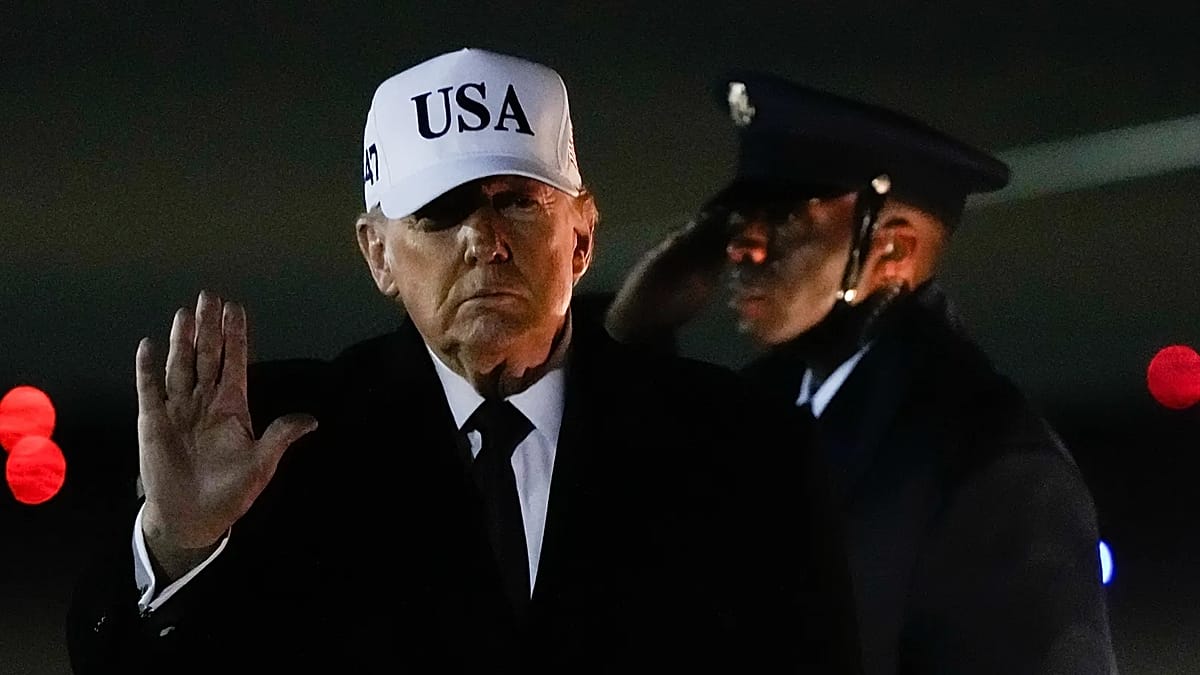
The geopolitical landscape shifted dramatically this week as the United States took increasingly assertive action in both Venezuela and Mexico, raising questions about the extent of its foreign policy reach. President Donald Trump publicly identified himself as the “acting president of venezuela” in a post on his Truth Social account Monday, a claim that underscores a rapidly evolving situation in the South American nation.
This declaration, accompanied by a digitally altered image of a Wikipedia page, followed a reported military operation on January 3rd that resulted in the capture of Venezuelan President Nicolás Maduro and his wife. According to reports,the pair were transported to the United States following the operation conducted by US special forces. This intervention has sparked international debate and scrutiny.
Last Thursday, President Trump indicated the US could potentially manage Venezuela’s significant oil reserves for an extended period. “Only time will tell” regarding the duration of direct US oversight, he stated in an interview with The New york Times, adding that the timeframe would likely “be much longer” than a few months. This statement signals a potentially long-term commitment to influencing Venezuela’s future.
Despite these assertions, interim Venezuelan President Delcy Rodríguez vehemently refuted any notion of foreign governance. Who governs Venezuela? The power of the people and thier constitutional government, so there is no doubt, there is no uncertainty,
she declared on Saturday. She emphasized that the Venezuelan people maintain control and that her government, under her leadership during Maduro’s detention, remains in power.
Interestingly, even as tensions escalate, Caracas announced on Friday its intention to re-establish diplomatic ties with the United States. The Venezuelan government confirmed that officials from the US Department of State were visiting the capital,with a reciprocal visit to Washington under consideration. This suggests a parallel track of communication alongside the more forceful actions.
President trump has indicated that Rodríguez is fully
cooperating with US authorities, and that Venezuela is providing Washington with everything that we feel is necessary.
However, his official Wikipedia entry currently reflects his position as President of the United States since January 2025, and does not acknowledge any role in Venezuela.
Escalating Tensions: Oil Tanker Seizures and Actions in Mexico
The US has also been actively disrupting Venezuela’s economic activity, seizing two oil tankers linked to the country in the past week. The first tanker was intercepted in the North Atlantic after a prolonged pursuit, while the second was boarded in the caribbean. These seizures are part of a broader naval blockade aimed at limiting venezuela’s oil exports.
The initial operation targeting Maduro has drawn criticism from various South American leaders, prompting President Trump to issue warnings to other nations in the region. Just three days ago, he announced the deployment of US forces into Mexico to combat drug cartels, building on existing naval operations in the Pacific and Caribbean.
We are going to start now hitting land with regard to the cartels. The cartels are running Mexico,
Trump stated during a Fox News interview with Sean Hannity. He did not provide specific details regarding the timing or scope of these ground operations, leaving many to speculate about the potential implications.
Key Developments: US Intervention in Venezuela & Mexico (January 2026)
| Event | date | Details |
|---|---|---|
| maduro Capture | January 3, 2026 | US Special Forces capture President nicolás Maduro and his wife. |
| Trump’s Venezuela Claim | January 8, 2026 | President Trump declares himself “acting president of Venezuela” on Truth Social. |
| Oil Tanker Seizures | January 9-10, 2026 | US seizes two Venezuela-linked oil tankers. |
| Mexico Cart
Previous Article  Jessie Buckley Husband & Family: All About the Golden Globe WinnerSancheoneo Festival: Ice Fishing & Winter Fun in South Korea  Related Posts
China Stock Turnover Reaches $500 Billion, Boosting RMB Asset App ...January 12, 2026
Conservative Legal Group Challenges CFPB Mortgage Data Rule on Ra ...January 12, 2026
NYC Mayor Adams’ First Gracie Mansion Press Conference: Key Annou ...January 12, 20261  2  3  4 5  |