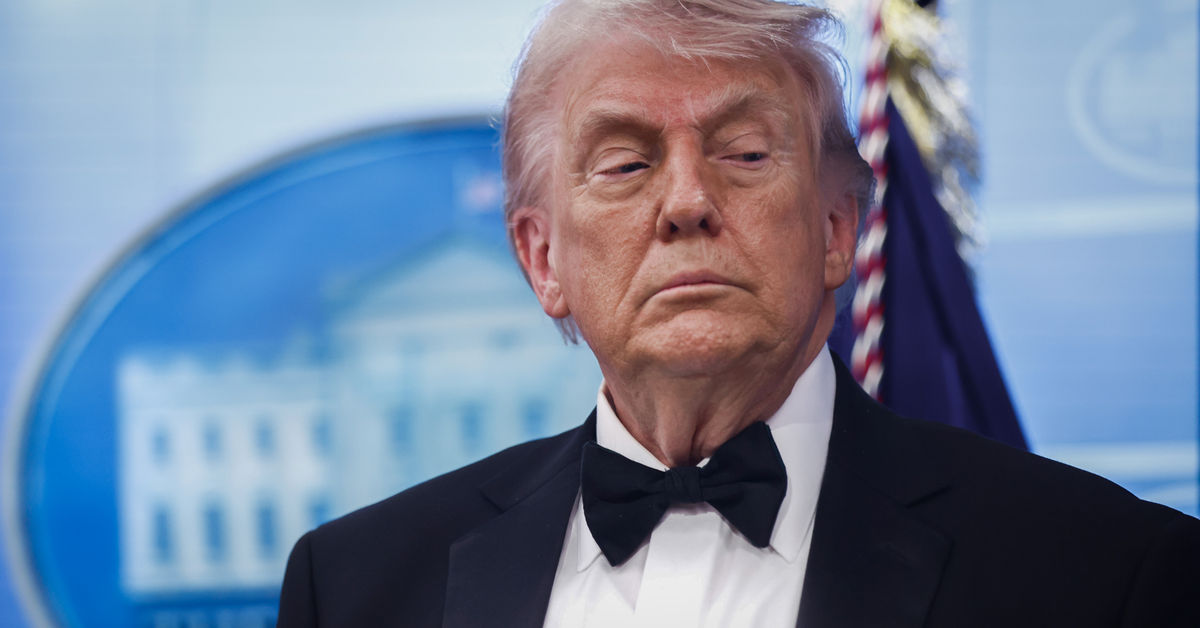
Trump Escalates Attacks, Targeting Leaders in Italy and Spain
Former U.S. President Donald Trump has continued a series of public criticisms of European leaders, expanding his attacks beyond Germany to include the prime ministers of Italy and Spain. This latest volley of statements comes amid ongoing tensions regarding defense spending and perceived burdensharing within NATO, and follows Trump’s repeated threats to reconsider U.S. Commitments to the alliance. The escalating rhetoric raises questions about the future of transatlantic relations should Trump return to office.
Trump’s recent comments, made on his social media platform Truth Social, directly targeted Italian Prime Minister Giorgia Meloni and Spanish Prime Minister Pedro Sánchez. He accused both leaders of not meeting their financial obligations to NATO, and suggested they were taking advantage of the United States. The former president has consistently advocated for NATO members to increase their defense spending to at least 2% of their gross domestic product (GDP), a benchmark many European nations have struggled to consistently meet.
The attacks are part of a broader pattern of Trump criticizing allies who he believes are not contributing enough to collective security. He has repeatedly singled out Germany, and specifically Friedrich Merz, the leader of the Christian Democratic Union (CDU), for questioning his potential policies regarding European defense. Trump has demanded that Merz “stop interfering” and focus on “fixing his broken country,” a sentiment he echoed in his criticisms of Italy and Spain.
NATO Spending and Transatlantic Tensions
The core of Trump’s grievance centers on the issue of defense spending within NATO. The alliance has a guideline that members should spend 2% of their GDP on defense, but many countries have historically fallen short of this target. NATO’s official website details the defense spending of member countries, showing varying levels of commitment. Trump has long argued that the U.S. Bears an unfair share of the financial burden for the alliance’s defense, and has threatened to reduce U.S. Contributions if other members do not increase their spending.
In 2023, only eleven of NATO’s 31 member states met the 2% spending target. While several countries have pledged to increase their defense budgets in recent years, spurred in part by Russia’s invasion of Ukraine, progress has been uneven. The conflict in Ukraine has highlighted the importance of collective defense and has prompted a reassessment of security priorities across Europe. Still, economic challenges and domestic political considerations continue to complicate efforts to reach the 2% goal.
The debate over defense spending is not simply a financial one. It also reflects differing views on the nature of the threats facing the alliance and the appropriate strategies for addressing them. Some European leaders argue that a greater emphasis should be placed on diplomatic solutions and non-military forms of security cooperation, while Trump has consistently favored a more assertive and unilateral approach.
Specific Criticisms of Italy and Spain
Trump’s criticisms of Italy and Spain, while less detailed than his attacks on Germany, followed a similar pattern. He accused both countries of relying too heavily on U.S. Protection without contributing their fair share to the cost. He specifically questioned Italy’s commitment to increasing its defense spending, and suggested that Spain was not adequately investing in its own security.
Italian Prime Minister Giorgia Meloni’s government has pledged to increase defense spending to 2% of GDP by 2028, but has faced challenges in implementing these plans due to budgetary constraints. Reuters reported in November 2023 that Italy is working to overcome these obstacles and demonstrate its commitment to NATO. Spain, meanwhile, has been slower to increase its defense spending, and currently spends around 1.2% of its GDP on defense.
The timing of Trump’s attacks is significant. European leaders are grappling with a range of challenges, including the war in Ukraine, rising energy prices, and economic uncertainty. Trump’s criticisms add another layer of complexity to an already challenging situation, and raise concerns about the potential for further disruption in transatlantic relations.
Potential Implications for Transatlantic Relations
The escalating rhetoric from Trump has sparked concern among European leaders and analysts. His repeated questioning of the value of NATO and his demands for increased defense spending have raised doubts about the future of U.S. Commitments to the alliance. Some fear that a second Trump administration could lead to a weakening of transatlantic ties and a more isolationist U.S. Foreign policy.

Trump’s past actions while in office provide some indication of his potential future behavior. He frequently clashed with European allies over issues such as trade, climate change, and the Iran nuclear deal. He also threatened to withdraw the U.S. From NATO on several occasions, although he ultimately did not follow through on those threats.
The potential consequences of a weakened transatlantic alliance are significant. NATO plays a crucial role in maintaining security and stability in Europe, and a reduction in U.S. Involvement could embolden Russia and other potential adversaries. It could also undermine efforts to address global challenges such as terrorism, climate change, and pandemics.
Key Takeaways
- Former President Trump has broadened his criticism of European allies to include Italy and Spain, accusing them of insufficient defense spending.
- The core issue remains NATO funding, with Trump demanding member states meet the 2% of GDP target.
- Trump’s rhetoric raises concerns about the future of transatlantic relations and U.S. Commitment to NATO.
- Italy has pledged to reach the 2% target by 2028, while Spain’s defense spending remains significantly lower.
The situation remains fluid, and the response from European leaders will be closely watched. The next major event to watch for is the NATO summit scheduled to take place in Washington, D.C., in July 2024, where these issues are likely to be discussed. Further developments are expected as the U.S. Presidential election approaches, and the potential for a shift in U.S. Foreign policy becomes more apparent. Readers are encouraged to share their thoughts and perspectives in the comments section below.