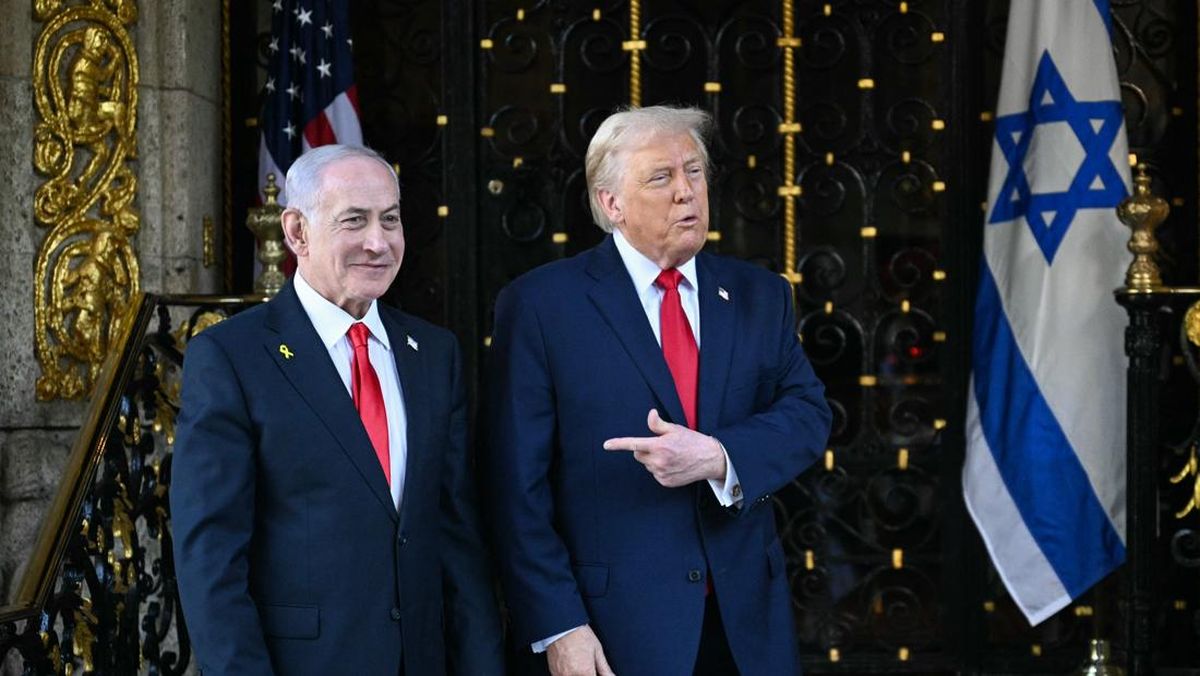
The question of when the recent military escalation involving the United States, Israel, and Iran will conclude is increasingly intertwined with the ongoing strategic partnership between U.S. President Donald Trump and Israeli Prime Minister Benjamin Netanyahu, according to reports. Although the ultimate decision rests with President Trump, his administration is heavily factoring in the assessments and counsel of the Israeli leader, signaling a close alignment in navigating the complex geopolitical landscape.
This dynamic was highlighted in a recent interview with the Times of Israel, where Trump indicated that determining the end of the conflict is, to a significant extent, a joint decision. “I suppose it’s a joint decision to a certain extent. We are continuing to discuss. I will make a decision at the appropriate time, but all considerations will be taken into account,” Trump stated. The President’s comments underscore the degree to which Netanyahu’s input is valued in the unfolding situation, a relationship that has been cultivated over years of shared security concerns, particularly regarding Iran’s regional influence.
A Long-Standing Alliance Forged on Shared Concerns
The current crisis represents a culmination of years of escalating tensions between Iran and both the United States and Israel. Netanyahu has consistently advocated for a firm stance against Iran, viewing its nuclear program and support for regional proxies as existential threats to Israel’s security. Trump, during his presidency, has mirrored this concern, withdrawing the United States from the Joint Comprehensive Plan of Action (JCPOA), commonly known as the Iran nuclear deal, in 2018 and reimposing sanctions on Tehran. Reuters reported on March 4, 2026, that Netanyahu’s ambition to dismantle Iran’s leadership has been realized, but the strength of this alliance is now being tested as the crisis expands.
The recent coordinated strikes, which reportedly resulted in the deaths of Iranian Supreme Leader Ayatollah Ali Khamenei, Minister of Defense Amir Hatami, and IRGC Commander Mohammed Pakpour, represent a significant escalation in this long-running conflict. According to reports, these strikes were predicated on intelligence regarding a planned meeting of top Iranian officials in Tehran, information reportedly shared with President Trump by Prime Minister Netanyahu. The Independent detailed on March 9, 2026, that Netanyahu informed Trump about the location of these leaders, allowing for a precisely targeted operation.
The Intelligence Sharing and Decision-Making Process
The timeline of events leading up to the strikes reveals a close collaboration between Washington and Jerusalem. According to The Independent, Netanyahu contacted Trump on February 23, 2026, providing crucial intelligence about the planned gathering of Iranian leaders. The CIA subsequently confirmed this intelligence by February 27, 2026, the same day President Trump authorized “Operation Epic Fury,” as confirmed by Joint Chiefs of Staff Chairman Gen. Dan Caine.
Prior to authorizing the strikes, Trump had been considering diplomatic solutions, but was informed on February 27th that negotiations with Iranian officials in Geneva were failing to yield satisfactory results. This assessment, coupled with the confirmed intelligence regarding the location of key Iranian leaders, ultimately led to the decision to proceed with military action. The President initially projected a campaign lasting four to five weeks, but acknowledged the possibility of a prolonged conflict.
The Succession Plan in Iran and U.S. Response
Following the strikes, Iran’s Majlis Experts Council announced the appointment of Mojtaba Khamenei, the son of the late Ayatollah Ali Khamenei, as the new Supreme Leader. This move prompted a swift response from President Trump, who, in a separate interview with ABC News, warned that the new leader would not “last long” without the approval of the White House. This statement underscores the U.S. Administration’s willingness to exert influence over Iran’s internal affairs and its commitment to shaping the future leadership of the country.
The appointment of Mojtaba Khamenei raises questions about the future direction of Iran’s policies and its potential response to the ongoing conflict. While the specifics of his ideology and political agenda remain to be seen, his close ties to the hardline faction within the Iranian regime suggest a continuation of the country’s assertive foreign policy and its opposition to Western influence.
The Potential for Continued Conflict and Israel’s Role
The question of whether Israel would continue military operations even if the United States were to halt its involvement remains unanswered. Trump, when pressed on this issue, declined to comment, stating, “I don’t think that will be necessary.” However, the close coordination between the two countries and Netanyahu’s long-held stance on Iran suggest that Israel is prepared to act independently if it deems its security to be at risk.
The current situation presents a complex set of challenges for both the United States and Israel. While the elimination of key Iranian leaders may have temporarily disrupted the country’s command structure, This proves unlikely to resolve the underlying tensions that have fueled the conflict for decades. The potential for retaliatory strikes by Iran, the risk of escalation involving regional proxies, and the humanitarian consequences of a prolonged war all pose significant risks.
The influence of Benjamin Netanyahu on President Trump’s decision-making process is undeniable. The close relationship between the two leaders, forged on shared security concerns and a mutual distrust of Iran, has played a crucial role in shaping the current crisis. As the conflict unfolds, the extent to which this alliance will continue to dictate the course of events remains to be seen.
The White House, through spokesperson Karoline Leavitt, has indicated that the conflict is projected to last between four and six weeks. However, this timeline remains subject to change depending on a variety of factors, including Iran’s response to the strikes, the effectiveness of international diplomatic efforts, and the evolving political dynamics within both countries.
The situation remains highly volatile, and the path forward is uncertain. The coming weeks will be critical in determining whether the conflict can be contained or whether it will escalate into a wider regional war. The close collaboration between the United States and Israel, and the influence of Prime Minister Netanyahu on President Trump’s decisions, will undoubtedly play a central role in shaping the outcome.
The next key development to watch will be the response from Iran, and any potential diplomatic initiatives aimed at de-escalating the conflict. The international community is closely monitoring the situation, and further developments are expected in the coming days.
What are your thoughts on the evolving situation in the Middle East? Share your perspectives in the comments below, and please share this article with your networks to keep the conversation going.
- Russia Claims Destruction of Over 150 Ukrainian Drones Over European Territory
- Ukraine War Updates: Deadly Strikes on Kyiv and Sumy Amid Rising Tensions
- Trump Pushes SAVE Act to Mandate Voter ID and Proof of Citizenship (newsdirectory3.com)
- Tariff vs. Price Floor: What Trump's New Solar Rule Does (daybreakwire.com)