
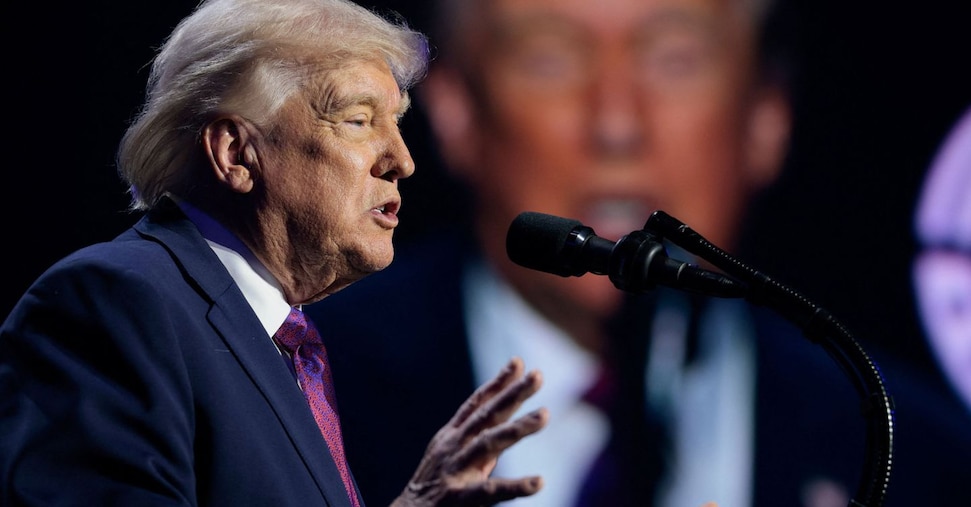
President Donald Trump has extended the temporary ceasefire between the United States and Iran until Tehran presents a formal proposal to end the ongoing conflict, according to multiple Italian news outlets reporting on April 22, 2026. The extension comes amid continued U.S. Naval operations in the Strait of Hormuz, where American forces have been enforcing a blockade aimed at preventing ships from paying tolls to Iran’s Islamic Revolutionary Guard Corps (IRGC).
The decision follows the collapse of direct talks in Islamabad last weekend, where Vice President JD Vance led the U.S. Delegation but reported that Iran had “chosen not to accept our terms.” Despite the breakdown, Trump announced via his Truth Social platform that the ceasefire would remain in place to allow time for Iran to submit a peace proposal, signaling a shift from immediate confrontation to conditional diplomacy.
Web search results confirm that the U.S. Blockade of Iranian ports in the Strait of Hormuz began approximately one week prior to the announcement, with U.S. Central Command (Centcom) reporting that 27 vessels had been directed to turn around or return to Iranian ports since the operation commenced. U.S. Forces intercepted and seized an Iranian-flagged cargo ship for the first time in the conflict after it attempted to breach the blockade, an action Tehran condemned as an “act of piracy” and a violation of the fragile ceasefire.
Iran has maintained its own restrictions on maritime traffic through the Strait of Hormuz for nearly two months, requiring vessels to obtain clearance codes and accept IRGC-escorted passage through a single controlled corridor. Analysts from Lloyd’s List Intelligence have described this as a de facto “toll booth” regime, with at least two vessels having paid fees in Chinese yuan to guarantee safe passage. Iran has indicated it might seek to formalize such tolls under a long-term peace deal, a prospect the Trump administration has repeatedly opposed.
The extended ceasefire is set to remain in effect until Iran presents its proposal, though no specific deadline has been given. U.S. Officials have not confirmed whether Iran intends to attend a second round of talks in Pakistan, with reports indicating that Tehran has not yet decided on its participation. Security remains heightened in Islamabad in anticipation of potential negotiations, though Vance has not yet departed Washington for the scheduled talks.
Trump has characterized the blockade as “absolutely destroying Iran” and asserted that the U.S. Is winning the conflict “by a lot,” although warning that any Iranian forces firing at U.S. Or peaceful vessels would be “BLOWN TO HELL!” His administration continues to link the lifting of the blockade directly to the achievement of a verifiable agreement with Tehran.
Strait of Hormuz: A Critical Flashpoint in Global Energy Markets
The Strait of Hormuz, located between Oman and Iran, is one of the world’s most strategically key waterways, through which approximately 20% of global oil trade passes. Any disruption to shipping in the narrow channel—just 21 miles wide at its narrowest point—can trigger immediate spikes in global energy prices, as seen during previous periods of tension between the U.S. And Iran.
Iran’s de facto toll system, operated by the IRGC Navy, has added a layer of complexity to maritime transit, with ships required to submit documentation, obtain clearance, and often accept armed escorts. While Iran frames these measures as necessary for security and sovereignty, the U.S. And international shipping organizations have criticized them as unlawful impediments to freedom of navigation under international law.
The U.S. Blockade, which involves naval vessels intercepting and warning ships attempting to enter or exit the strait, represents a direct countermeasure to Iran’s toll regime. By targeting vessels that have paid fees to Iran, the U.S. Aims to undermine the financial basis of Tehran’s control over the waterway while pressuring the regime to negotiate.
Diplomatic Efforts Amid Military Standoff
Despite the escalation in naval actions, diplomatic channels remain open, albeit fragile. The initial ceasefire, agreed upon five days before the Islamabad talks, was intended to create space for negotiations. Its extension suggests that the Trump administration, while maintaining a hardline posture through military means, is still seeking a diplomatic resolution to avoid a broader regional conflict.

Vice President JD Vance, who is leading the U.S. Negotiation team, has not publicly detailed the specific terms offered to Iran, but his statement that Tehran “has chosen not to accept our terms” implies that the proposal included demands related to the cessation of toll collection and possibly broader concessions on Iran’s regional activities or nuclear program.
Iranian officials have not issued a detailed public response to the ceasefire extension, but state media has consistently framed U.S. Actions as aggressive and unlawful. Tehran maintains that it has the right to regulate traffic in its territorial waters and views the U.S. Blockade as a violation of international maritime law.
Humanitarian and Economic Implications
The prolonged standoff in the Strait of Hormuz continues to affect global shipping, with increased insurance premiums and rerouting of vessels adding costs to international trade. Energy markets remain volatile, reacting to any signal of escalation or de-escalation in the Gulf region.
While no direct casualties have been reported from the naval interceptions thus far, the risk of miscalculation remains high. Both sides have issued stark warnings, increasing the potential for an accidental confrontation that could rapidly escalate.
International organizations, including the International Maritime Organization (IMO), have urged restraint and called for the protection of commercial shipping lanes. However, no formal mediation effort has yet succeeded in bridging the gap between the U.S. And Iranian positions.

As of now, the next confirmed checkpoint is Iran’s submission of a formal peace proposal, which would trigger a review by the U.S. Administration regarding the potential lifting of the blockade. No date has been set for this submission, and officials have not indicated whether a second round of talks in Pakistan will proceed.
Stay informed about this developing situation by following trusted international news sources and official statements from the U.S. Department of State and Iran’s Ministry of Foreign Affairs. Share this article to aid others understand the complex dynamics at play in one of the world’s most critical maritime chokepoints.