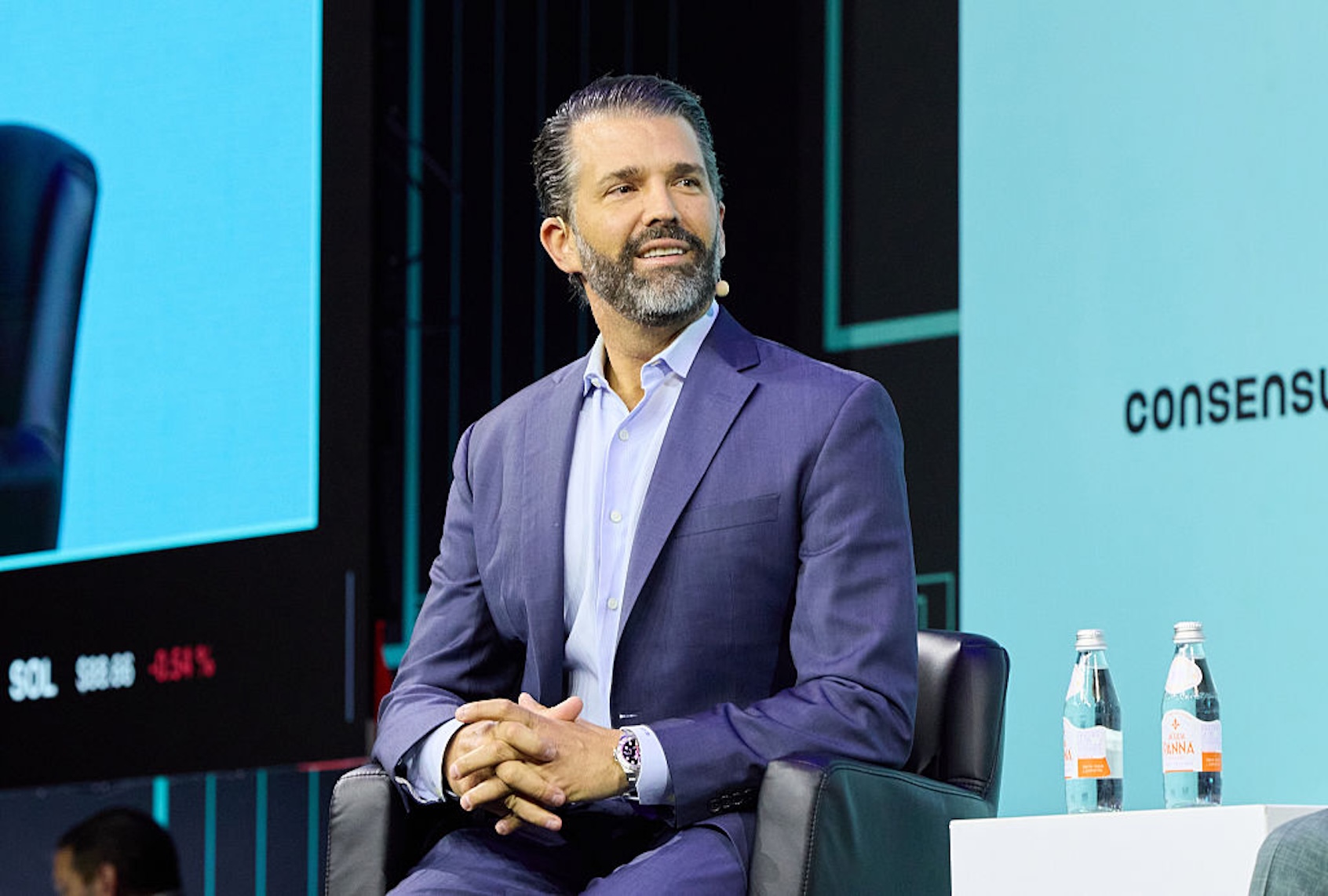
The Trump administration is pursuing a sweeping rollback of federal firearms regulations, a move that aligns with long-standing Republican policy goals while simultaneously creating new business opportunities for Donald Trump Jr. The administration’s current regulatory agenda, which includes efforts to modify more than three dozen rules governing gun safety and sales, has drawn sharp focus to the intersection of executive policy and the private interests of the president’s family. Central to this development is the administration’s push to ease restrictions on online gun sales, a sector where Donald Trump Jr. holds a significant financial stake.
According to reporting from the New York Times, the administration is moving to eliminate numerous regulations established during the previous term. These proposed changes include raising the legal threshold for the revocation of federal firearms dealer licenses, loosening restrictions on gun purchases by individuals previously flagged for mental health or financial competency concerns, and removing additional scrutiny on stabilizing braces—accessories often associated with high-capacity modifications.
Regulatory Shifts and the ATF
In February 2025, the executive branch initiated a broad review of federal gun policies through executive action. The directive instructed the Department of Justice to examine and challenge what the administration characterizes as “ongoing infringements” of Second Amendment rights. This effort includes targeting state-level bans on specific semi-automatic weapons and restrictions on handgun sales. The Bureau of Alcohol, Tobacco, Firearms and Explosives (ATF) has signaled a departure from previous enforcement strategies, including a shift away from a zero-tolerance policy toward federally licensed gun dealers found to be in violation of federal law.
Furthermore, the Department of Veterans Affairs has moved to allow veterans previously categorized as unable to manage their own financial affairs to purchase firearms, reversing prior internal guidance. Simultaneously, the Department of Health and Human Services has ceased the collection of data regarding gun-related deaths and has discontinued funding for research into gun violence prevention, citing a shift in departmental priorities.
Donald Trump Jr. and the Online Firearms Market
The administration’s regulatory changes extend to the logistical framework of the firearms industry. The ATF has proposed eliminating the long-standing requirement that background checks for firearm purchases be conducted in person. This requirement originated in 1968, following the assassination of President John F. Kennedy, who was killed with a rifle purchased via mail order using a pseudonym. Additionally, the administration is working to rescind a century-old prohibition on the shipment of handguns through the United States Postal Service, following a legal opinion from the Department of Justice’s Office of Legal Counsel.
These policy shifts provide a direct commercial advantage to online retailers, most notably GrabAGun. The company, which markets itself as a major online firearms platform, has sought the ability to conduct digital background checks and facilitate direct-to-consumer sales without the current requirement for a licensed intermediary. Donald Trump Jr. became involved with the company in December 2025, shortly after his father began his second term. According to reports from the Washington Post, Trump Jr. serves as a consultant and spokesman for the company and holds 300,000 shares of stock. He was present on the floor of the New York Stock Exchange to participate in the company’s public listing ceremony.
Industry Impact and Conflict of Interest
Industry analysts cited by Reuters suggest that the removal of in-person background check requirements and the authorization of handgun shipments are poised to drive significant growth in the online firearms market. This growth is expected to result in increased profitability for major online sellers, including the firm in which Trump Jr. maintains a financial interest.
The dual nature of these developments—the systemic deregulation of the firearms industry and the personal financial involvement of the president’s son—has prompted questions regarding potential conflicts of interest. While representatives for the company and associated parties have maintained that Trump Jr.’s role is focused on the promotion of Second Amendment advocacy, critics point to the timing of his involvement and the direct correlation between the administration’s policy rescissions and the company’s business model. As of the latest updates, the administration continues to move forward with the administrative rule-making process to finalize these changes.
The next major checkpoint in this regulatory process will involve the conclusion of the public comment period for the proposed ATF rule changes, followed by formal administrative review. Updates regarding the status of these federal regulations can be monitored through the official Federal Register.